
Recent News
Sikhs in U.S. to commemorate victims of 1984 riots after Indira Gandhi’s assassination
It has been 35 years since, one of the worst tragedies struck India. Riots broke out across India after the October 31, 1984 assassination of then Indian Prime Minister Indira Gandhi. The Sikh community suffered an irreparable loss with killings, looting and arson by mobs that engulfed parts of India. To mark the 35th anniversary of the tragic events, the Sikh community in Connecticut will be organizing a commemoration event at Norwich City Hall on November 9. Last year, Connecticut became the first state in the U.S. to officially remember the Sikh Genocide Memorial Day on November 30 each year.
India-Pakistan ‘peace corridor’ opens Sikh temple to tourists
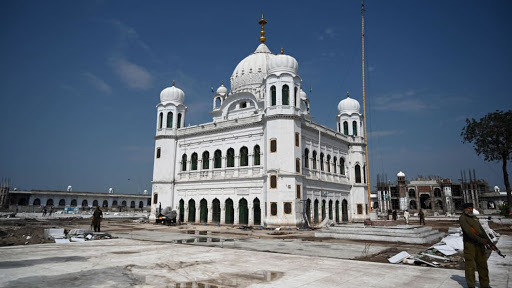
After more than 70 years, Sikhs will now be able to visit one of the religion’s holiest sites by crossing the international border with Pakistan without a visa. The Kartarpur Corridor is a 4.1 kilometer (2.5 mile) overland passage that links the Dera Baba Nanak shrine in northwest India’s Gurdaspur with the Gurdwara Darbar Sahib in Kartarpur, Pakistan. The Gurdwara is believed to be where Guru Nanak Dev Ji lived and died at the start of the 16th century. Around 5,000 devotees from India will be able to use the corridor each day.
Indiana Sen. Todd Young introduces first Senate resolution honoring Sikh community
Resolutions have been introduced to the United States Congress to honor Sikh Americans for their contributions and sacrifices. This is the first Senate resolution introduced to honor the Sikh community. Sen. Todd Young, R-Indiana, and Sen. Ben Cardin, D-Maryland, submitted the resolutions on Thursday, which includes recognizing Guru Nanak’s 550th birthday. The resolutions work to further Americans understanding and appreciation of the Sikh experience and history, according to Senator Young’s release. Senator Young added that “This resolution honors Sikh Americans, a vital part of our Nation’s rich culture and diversity.”
It’s Time India Accept Responsibility for Its 1984 Sikh Genocide
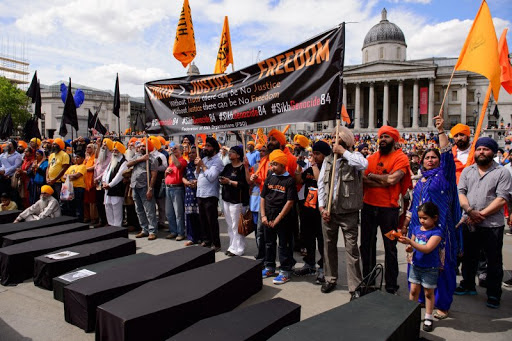
In June of 1984, Prime Minister Indira Gandhi ordered a military assault on the most significant religious center for the Sikhs, Darbar Sahib in Amritsar, Punjab. Mrs. Gandhi’s assassination triggered genocidal killings around the country, particularly in India’s capital city, New Delhi. Frenzied mobs of young Hindu thugs, thirsting for revenge, burned Sikh-owned stores to the ground, dragged Sikhs out of their homes, cars and trains, then clubbed them to death or set them aflame before raging off in search of other victims. Eyewitness accounts describe how law enforcement and government officials participated in the massacres by engaging in the violence, inciting civilians to seek vengeance and providing the mobs with weapons. The pogroms continued unabated, and according to official reports, within three days nearly 3,000 Sikhs had been murdered (unofficial death estimates are far higher), at a rate of one per minute at the peak of the violence.
Sikh American, Harry Sidhu was certified Anaheim, California’s new mayor. Sidhu held a wide margin – with almost 40 percent of the vote – in a race that drew eight candidates. Sidhu added that “The residents of Anaheim know that it’s time to move past the divisiveness and get back to working with all residents, businesses, and workforce that make Anaheim what it is today.” Once sworn in, Sidhu will be one of the few Sikh American mayors in the United States, which includes Mayor Ravinder Singh Bhalla of Hoboken, New Jersey; and Mayor Preet Didbal of Yuba City, California.
A Hunger Strike in ICE Detention
In June of 2018, Ajay Kumar, left India because political opponents had been intimidating him for being a loud and persistent activist and that they had eventually forced him to leave. Two months after he left India, Kumar reached the U.S.-Mexico border, and turned himself in to Border Patrol. This article is a must read on current conditions at detention facilities. “When Kumar reached California, he spent a few days in a packed cell, and then he and other asylum seekers were put on buses and planes—with chains around their hands, feet, and stomach, “as if we were some criminals,” Kumar recalled—and sent to New Mexico.