Promoting Diversity and Inclusion in Sports

Like many Sikh Americans, Tej Dhingra knows how it feels to not have his background fully understood. He was born and raised in Texas, where Sikhs make up only .05% of the state population. After noticing a lack of alternatives for turbans when it came to athletic sportswear, Tej decided to create his own solution.

Currently a sophomore at Bowdoin College, Tej is the founder of TAJ, which creates lightweight, breathable turbans designed for physical activity. Over the summer, Tej was accepted into the SALDEF Innovation Fellows program, where he was able to continue building TAJ with the support of a large Sikh network. 

The Innovation Fellows program provides the opportunity for aspiring Sikh American entrepreneurs to develop professionally through the exposure and evaluation of breakthrough technologies emerging out of federal laboratories and academic research centers. Fellows were given the opportunity to pitch their startups at the 2022 SikhLEAD Innovation Startup Competition. 

TAJ, which means “crown” in Punjabi, was selected as the winner of this competition. 

Turbans are a significant article of the Sikh faith. It represents equality, self-respect, and commitment to their religion: most visibly, long and uncut hair which observant Sikh men and some women wrap in a turban. Although he does not personally wear a turban, Tej has heard his Sikh peers and family members complain about the overheating and excessive sweating that turbans cause while exercising. 

“Sports meant everything to me as a child and it still occupies a huge role in my life,” said Tej, who grew up playing competitive tennis year-round. “The court is a safe space that gives me peace, confidence, and the ability to express myself in a unique way. So, the motivation behind TAJ was pretty simple. I wanted to create a product that allowed Sikh athletes to feel confident in their hair, and that didn’t force them to sacrifice comfort for their religious expression.”

Tej leveraged the Innovation Fellows Program to bring his idea to fruition. A major draw of the program for him was the mentorship that participants received. 

“The most valuable piece of advice I received was that before jumping to develop a solution or product, you need to first become obsessed with the problem itself, and analyze it from all angles.” 

Tej acted on this advice by conducting ‘customer insight interviews’ with dozens of Sikh athletes, college students, hair scientists, designers, and leaders in the smart-fabric industry. 

“Each conversation I had not only gave me a deeper insight into the emotional significance that turbans hold but also challenged assumptions I had previously held regarding the major pain points for Sikhs. This allowed me to tweak my strategy as I transitioned into prototype development.” 

The new and improved rendition of the product features a 100% polyester base and an elastic, spandex-like band to ensure a snug fit for the wearer. In his pitch, Tej also discussed incorporating anti-microbial elements such as copper to combat the bacteria that typically build up underneath the turban cloth.

Now, as an aspiring business leader, Tej hopes to continue channeling his passion for both sports and entrepreneurship to empower the Sikh community.

“The sports industry fascinates me, and I think there is definitely a rising demand for innovation centered around increasing diversity in sports. That is why I’m so excited to continue working on TAJ and hopefully raise awareness towards the Sikh American community in the process.”

Navraj Singh knows what it feels like to be the only Sikh in a room – especially ones where important decisions are being made.

Currently a junior at the University of Pennsylvania, Navraj interned at the White House Initiative on Asian Americans, Native Hawaiians, and Pacific Islanders (WHIAANHPI) through the SikhLEAD Internship program. The White House Initiative on Asian Americans, Native Hawaiians, and Pacific Islanders (WHIAANHPI) was established by President Joe Biden through Executive Order 14031 and is responsible for coordinating a whole-of-government agenda to advance equity, justice, and opportunity for AA and NHPI communities.

During his SikhLEAD internship, Navraj facilitated coordination between the federal government and AANHPI communities across the country. From gaining first-hand experience in government administration to drafting proposals and memos, Navraj further developed his professional skills. Through his prestigious internship, he had the unique opportunity to have one-on-one conversations with senior White House officials and establish long-term professional relationships. Navraj even discovered various pathways to the federal government that he was previously unaware of. In fact, Navraj emphasized that the White House Initiative internship “introduced him to officials at both the U.S. Department of Labor and the Small Business Administration who encouraged me to apply for their internship programs that could lead to full-time employment.”

Furthermore, during a SikhLEAD panel session, Navraj was introduced to a U.S. State Department employment pathway program for professional opportunities. In discussing the benefits of the SikhLEAD program, Navraj expressed that “I got the chance to meet professionals who had varied educational backgrounds from law to public policy to finance, and even engineering, who found themselves working in high-level positions in both the public and private sectors. This experience helped ease the personal tensions I carried surrounding my educational pursuits, because I realized that work experience and drive, in many ways, can be more important factors in one’s career trajectory than one’s specific educational background.”

Along with building his professional network, Navraj worked on issues surrounding COVID-19 recovery in Asian American communities. In his internship role, he was tasked with attending staffing meetings between the White House and regional organizations to gain an understanding of how COVID-19 had uniquely impacted various communities. When asked about the impact of working on this project, Navraj expressed that his “perspective as a Sikh American encouraged me to ensure that my notes uplifted voices that might have been otherwise ignored.”

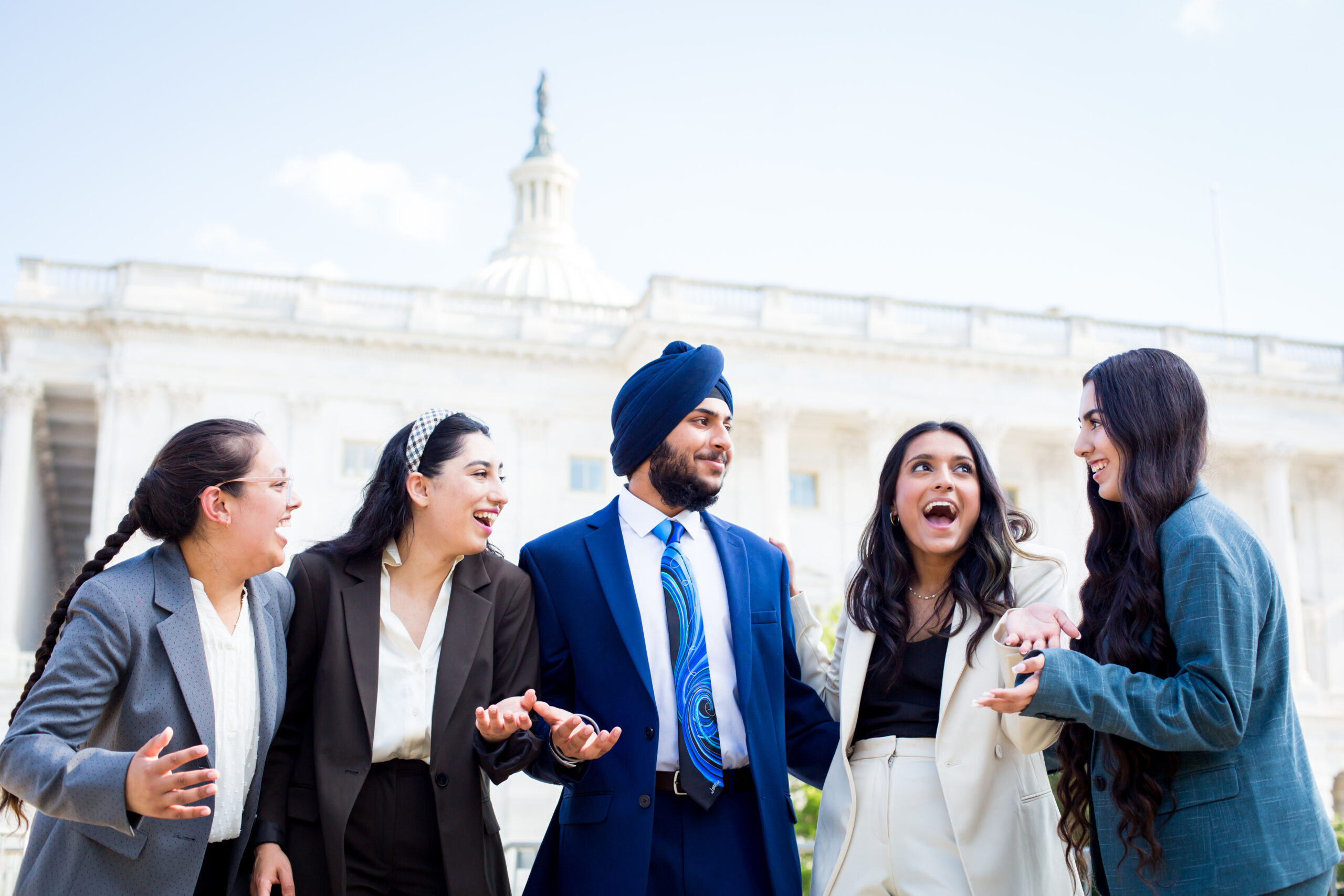
In their commitment to creating a more inclusive, more diverse, and ultimately stronger United States, SALDEF launched the SikhLEAD D.C. Internship Program in 2011. Since then, the SikhLEAD Internship program has continued to create a robust pipeline through which Sikh American students can gain experience working in the government at various levels. “SikhLEAD had a significant impact on my career in that it exposed me to opportunities I would not have otherwise considered or even been aware of,” said Navraj Singh as he reflected on his SikhLEAD experience.

For over a decade, through SikhLEAD, Sikh youth have been placed in halls of power across Capitol Hill, in federal agencies, and at non-profit organizations. From Senators to Representatives, to Assemblymen—the offices where the SikhLEAD interns are placed give them the opportunity to gain hands-on experience. The offices themselves get to engage, interact, and learn more about the Sikh religion and culture by hosting SikhLEAD interns.

“I was also able to develop meaningful connections both within the SikhLEAD Alumni community and within my internship at the White House. I never thought that at 19 years old I would have been having lunch with senior White House officials, let alone working directly with them to shape the future.”

If you are interested in starting your professional career in the nation’s capital, please visit www.saldef.org/dcintern to learn more about the SikhLEAD DC Internship Program and its sister program the SikhLEAD Regional Internship Program at www.saldef.org/regionalintern/