

How do you explain Guru Nanak Dev Ji to a toddler growing up watching Cocomelon?
How do you pass on the Janamsakhis when your children’s world looks so different from the one you grew up in?
Shawn Singh Ghuman felt this too. As he prepared for fatherhood in 2023, he realized the stories he grew up loving needed a refresh for this generation of Sikh American kids.
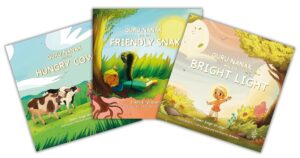
So he created Guru Nanak Stories, a children’s book series that brings our Guru’s adventures to life through modern, beautifully illustrated picture books. Today, his books are read in homes, classrooms, and gurdwaras around the world, turning bedtime into a bridge between heritage and identity.
In our Faith in Action series, we celebrate Sikh Americans like Shawn who live their values and strengthen our community through action.

SALDEF: Can you share what inspired you to create Guru Nanak Stories and bring Janamsakhis to life for today’s children?
Shawn: During the pandemic, I saw a wave of self-published books with Sikh characters come to life, which was wonderful to see. At the same time, teachers like Nanak Naam were making Sikhi accessible in modern, thoughtful ways. Those trends felt powerful to me.
I grew up loving the Janamsakhis, and I always felt they deserved a refresh — especially for our children who are being raised in such a different cultural context than previous generations. Those three threads came together and sparked the idea for Guru Nanak Stories.
In 2023, as my wife and I were preparing for parenthood, I realized I wanted to create something that would help me explain Guru Nanak Dev Ji and Sikhi to my own children one day. That personal intention is what ultimately brought the series to life, and now I get to read these stories to my 18-month-old son!
SALDEF: Is there a reaction from a parent or child that has stayed with you or affirmed the impact of this project?
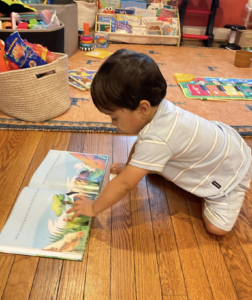
Shawn: Yes! One in particular stays with me. A family friend I had gifted the books to shared a photo of her daughter reading one because the story “made her feel better.”
That touched me deeply because it reminded me that children often turn to stories for grounding, comfort, and meaning, and the fact that Guru Nanak Dev Ji’s message played that role was incredibly moving.

I also often hear that kids want to re-read the books over and over. Now that I’m a dad, I fully understand that. My own son wants to re-read the same few books every night.
It makes me happy knowing Guru Nanak Dev Ji is becoming part of that nightly comfort ritual for families.
SALDEF: How do you hope these stories strengthen Sikh identity, confidence, and connection in young children growing up in the diaspora?”
Shawn: As more generations are born and raised in the diaspora, our understanding of “Sikh culture,” or the shared immigration stories and community structures our parents leaned on, naturally becomes diluted over time.
But the beliefs and values of Sikhi are timeless. They apply anywhere and at any age. The challenge is that they must be taught in ways that are accessible, meaningful, and relatable to children growing up in an ever-changing world.
SALDEF: What has this journey taught you about the responsibility and power of telling Sikh stories?
Shawn: This journey has taught me that kids absorb everything — the tone, the images, the values. They understand more than we think, especially when spirituality is offered with clarity and love.
That means every detail matters.
Sikhi is not inherited; it is experienced. And for many children, these early stories become their first experience of Sikhi. This has made me more thoughtful and intentional about how I present concepts and morals in each book.
I’m grateful that families resonate with the stories and support the mission. Our history is kept alive not only through gurdwaras and classrooms, but through the stories we choose to tell at home.
SALDEF: What message would you share with Sikh parents, caregivers, and educators who want to pass Sikhi on to the next generation?
Shawn: You don’t need to be perfect. You just need to try.
Sikhi is passed through small moments like a story at bedtime or a line from Gurbani shared during a car ride. It can be as simple as explaining Seva or Vand Chakko to your little one when helping a neighbor.
Shawn’s work reminds us that preserving our faith isn’t just about what happens in the gurdwara, it’s about the stories you choose to share at home, the moments you create with your children, and the values you model every day.
At SALDEF, we’re committed to creating space for Sikh Americans like Shawn who are building bridges between our heritage and our future. Your support makes this work possible.
Learn more about Guru Nanak Stories → www.gurunanakstories.com or at Amazon
 Social media gave me a platform to share that information in a way that’s immediate and engaging, and to be a voice that people of all ages—whether they speak Punjabi or English—can connect with. It’s always been about helping people feel informed, represented, and connected, whether through highlighting cultural events, important news, or resources that can make a real difference in someone’s life.