Joint Sikh Organizational Statement on Anti-Sikh Sentiments and Narratives in California
FOR IMMEDIATE RELEASE
October 2, 2024
Contact: Amrita Kular, SALDEF Director of Communications
(202) 393-2700 | media@saldef.org
Joint Sikh Organizational Statement on Anti-Sikh Sentiments and Narratives in California
October 2, 2024 (Sacramento, CA) — The Sikh American Legal Defense and Education Fund (SALDEF), the Sikh Coalition, the Jakara Movement, and the American Sikh Caucus Committee issued the following joint statement in response to the Sacramento Bee’s October 2 story, “In the shadow of a freeway shooting lurks the fear of Sikhs threatened in California.”
“As organizations working for the civil rights of the Sikh community throughout the United States, we are grateful to the Sacramento Bee for their comprehensive reporting on these critical issues. We have long raised concerns about a concerted effort to blur the lines between Sikhs, supporters of Khalistan, and terrorists or extremists; much of the information and many of the claims made by those quoted in this article validates those fears.”
“First, we are deeply disturbed to know that advocacy groups have been pushing a political agenda in their trainings to law enforcement. It is in the interest of all communities that crimes—including acts of vandalism at houses of worship—are investigated promptly and transparently so that perpetrators can be held to account; to our knowledge, there is no evidence that pro-Khalistan or Sikh individuals are responsible for any such crimes in California. In any case, it is incumbent on law enforcement to ensure that they are receiving objective information about threats to the communities that they serve. We look forward to conducting our own outreach in the interest of correcting any misinformation or disinformation that may have been shared.”
“Second, we are alarmed at the reports of the October 2023 meeting between Fresno Mayor Jerry Dyer, former Fresno Chief of Police Paco Balderrama, and numerous activists of unknown background or qualifications. The idea that individual Sikh community members are being singled out, accused of links to terrorism, and suggested to be ‘monitored’—all without any evidence of wrongdoing—is profoundly disturbing. To think that one community could do this to another in a post-9/11 world is beyond disheartening.”
“And finally, we are angered by the insinuation of Hindu America Foundation (HAF) Community Outreach Director Ramya Ramakrishnan that northern California gurdwaras (Sikh houses of worship) are somehow institutionally connected to drugs, weapons, and organized crime. Given the shared reverence in the Hindu and Sikh faith traditions for the importance of houses of worship, we fully expect that HAF will issue a public apology for these remarks immediately.”
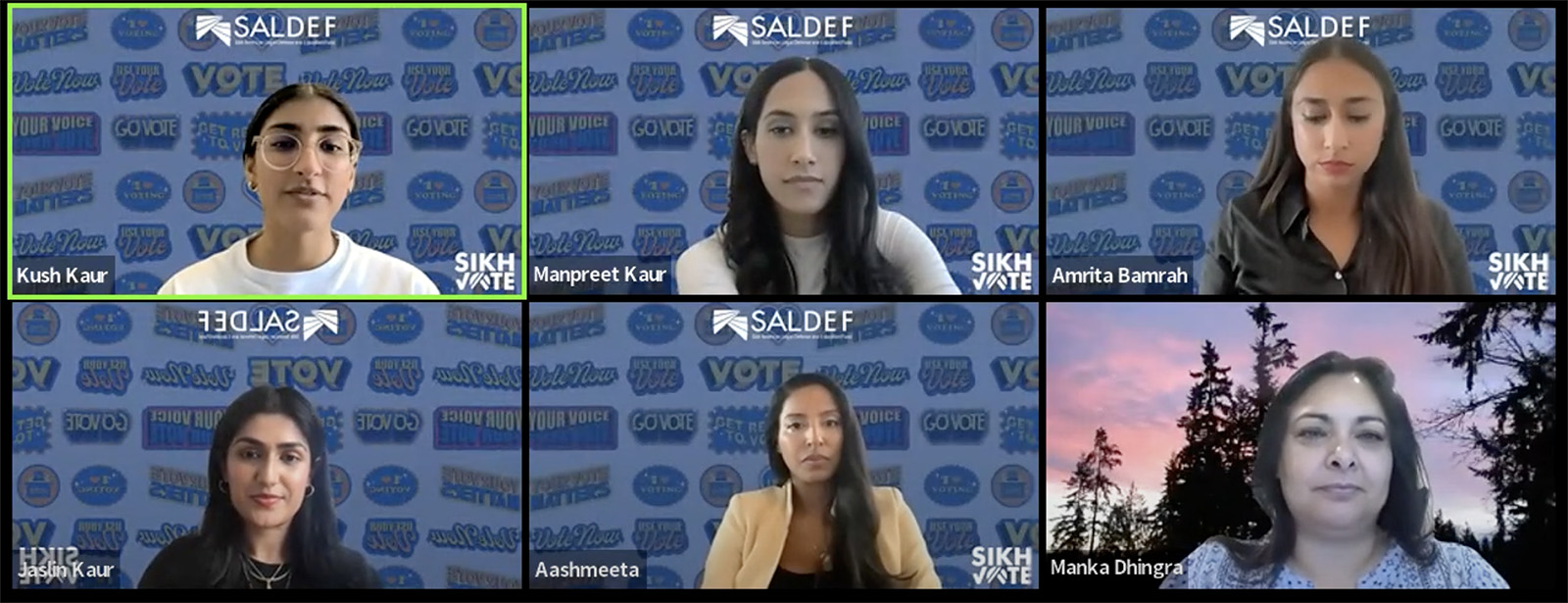
(RNS) — On National Voter Registration Day, Sikh women leaders spoke at ‘Kaur Power Hour,’ a webinar dedicated to raising up ‘the minority within the minority’ to recognize their voting power in this upcoming election.
The Sikh faith has a long history of political activism in India. On National Voter Registration Day Tuesday (Sept. 17), Sikh women drew on that legacy to encourage their community in the U.S. to vote in the upcoming presidential election.
Amrita Bamrah, executive director of Dasvandh Network, a nonprofit fundraising platform based in the Sikh value of giving, spoke to more than a hundred “Kaurs,” or Sikh women, for “Kaur Power Hour,” an online event hosted by the Sikh American Legal Defense and Education Fund.
“Our ancestors didn’t wait for change, they made it,” Bamrah told those gathered online. “And today, in that same spirit, our vote is one of the most powerful tools that we have to really continue that legacy.”
Kaur, the surname or middle name taken by many Sikh women as a symbol of equality and spiritual empowerment, was as much of a catchy webinar title as it was a call to action. Sikhism, also called Sikhi, is an Indic faith native to Punjab, India, that teaches scripture from the Guru Granth Sahib.
“We are a part of a history just woven with angles of those who stood up for justice, equality and the rights of individuals,” Bamrah said. “Our faith is built on these principles of courage and compassion and time and again, when we look at history, our community has risen to confront oppression, to uplift those who were silenced, and to create change where it was needed.”
The organizers of Kaur Power Hour said in the U.S. there is still work to be done to politically motivate the community. Though Sikhs can be found “truly everywhere,” reaching out to women is especially crucial, said Jaslin Kaur, Sikh organizer and former Queens City Council candidate.
Jaslin Kaur addresses the Kaur Power Hour virtual event, hosted by the Sikh American Legal Defense and Education Fund. (Video screen grab)
“Unfortunately, campaigns already don’t reach out to Sikhs enough, but they sure don’t reach out to Sikh women,” she said to the audience. “I think it’s our job as fellow sisters to reach out behenji (sister) to behenji and ensure that our fellow Sikh women are registered and ready to vote.”
The Power Hour, said SALDEF’s executive director, Kiran Kaur Gill, had a twofold objective: getting as many Sikh Americans as possible registered to vote and emphasizing how important Sikh women are in the national conversation.
As the oldest Sikh advocacy organization in the nation, SALDEF has led a voter education program called SikhVote for over a decade. Directly after 9/11, many Sikhs — especially those wearing turbans and other outward signs of their faith — were racialized and attacked over their misperceived Muslim identity. That galvanized many Sikh Americans to get involved in the political sphere. Sikhs organized especially for issues of religious freedom, hate crimes and workplace discrimination, including the protected ability to carry a kirpan, or Sikh sword, and the right to wear a turban in the U.S. military.
But according to Gill, while Sikh women are incredibly involved with their cultural, social and religious leadership, they have not necessarily been at the forefront of political engagement.
“We noticed that with phone banking, one of our volunteers mentioned that when he would call and ask about voter registration, sometimes, you know, women would hand the phone over to their husband,” she said. “And so, we are trying to say: ‘No, you know, this conversation is for everyone. Everyone has the right to vote and should exercise that right.’”
There are an estimated half a million Sikh Americans in the U.S., and the number continues to grow, according to the Sikh Coalition, a nonprofit advocacy group. But civic participation has been hampered by language, citizenship status and a feeling among some members of the religious minority that their voice doesn’t matter.
Reaching the largely immigrant sangat, or Sikh fellowship, at their gurdwaras has been a key mission of SALDEF. Connecting U.S. political engagement with the Sikh value of seva, or service, has been especially rewarding for grassroots organizers such as Kush Kaur, Texas native and Sikh American National Youth Council Southern chair.
“I remember when an elderly uncle approached my table who had been a U.S. citizen for over a decade, but had never voted, believing his voice wouldn’t matter,” she told the audience. “But after a conversation about the power of each vote and the importance of Sikh representation, he was eager to begin his voting registration process and to tell his grandchildren about our conversation.”
The organizers believe that with this presidential election, the stakes are especially high.
“When Donald Trump won, I was really concerned for the future of this country, because we had just elected a man who brags about sexually assaulting women, a man whose rhetoric has resulted in having some of the most increases in hate crimes in our country, and a man who made fun of people with mental health issues,” said Manka Dhingra, the first Sikh woman elected to the Washington state Legislature. She started her career as a prosecuting attorney, overseeing issues of domestic violence and sexual crimes that she said more commonly affect women of color.
“For our national election, I am concerned that misogyny will rear its ugly head, and we cannot let it,” she said. “We have to make sure we trust women, we believe women, and we are going to follow the lead of women, because we know that when women are elected, they elevate everyone.”
More Sikh women than ever have been elected to political offices, noted Manpreet Kaur, the city councilwoman of Bakersfield, California, where Punjabi is the third most spoken language and the economy mirrors the agricultural society of Punjab.
“Kaurs are leaders, both in the home and clearly in governance as well, and that’s very important, because I also watched Kaurs lead within my own household and within my gurdwara,” Manpreet Kaur said, telling the story of her nani, or grandmother. “I don’t know anyone who was as excited to vote as my nani when she obtained citizenship. But it was more exciting to see my nani actually be able to read her own voter information ballots and information packets in Punjabi.
“That was a moment that will always stand out to me, because it really built on the history about the Kaurs before me and the Kaurs that are going to come beyond me,” she added.
Mayor Neena Singh of Montgomery Township, New Jersey, is the first Indian and Sikh woman elected to that post in her state. She spoke about the excitement she sees among Sikh youth. Finding a place of belonging, especially amid hateful rhetoric and ignorance, she said, is easier when there is representation in place.
“I think when we are in leadership, we have such an opportunity to empower not just our own community, but to let others know who we are and what we stand for, because I think that helps not just us, but our kids, and that’s the reason representation matters,” Singh said.
SALDEF Welcomes FBI’s Release of Punjabi PSA on Transnational Repression
SALDEF Acting Executive Director, Kavneet Singh said, “By releasing this announcement in Punjabi, the FBI is validating the ongoing and very real threat of transnational repression against Sikhs in America”.
WASHINGTON D.C. : The Sikh American Legal Defense and Education Fund (SALDEF) welcomes the Federal Bureau of Investigation (FBI) for releasing a public service announcement (PSA) in Punjabi, addressing transnational repression.
“By releasing this announcement in Punjabi, the FBI is validating the ongoing and very real threat of transnational repression against Sikhs in America, ” said SALDEF Acting Executive Director, Kavneet Singh. “This release builds on months of discussions with the Administration on how to effectively ensure the safety of the community in light of deep concerns shared with us by the sangat and other minority communities. Issuing it in Punjabi means that this information will reach the most members of our community as possible. This public service announcement underscores how seriously the government is taking our concerns around the safety, security, and sovereignty of America and its residents.”
The PSA highlights various forms of transnational repression such as surveillance, stalking, harassment, and cyberattacks. It underscores the FBI’s commitment to protecting individuals in the United States from foreign threats and ensures that reports of repression are taken seriously, without the fear of information being shared with foreign governments.
This critical development is a direct result of SALDEF’s continuous advocacy and engagement with the FBI, Congress, and the Administration to protect the rights and freedoms of the Sikh American community.
With detailed research reports in the past and a forthcoming report on transnational repression, SALDEF continues to lead the charge engaging with national leaders regarding the safety and advancement of Sikh American civil rights. SALDEF urges community members and the press to listen to and share the PSA, and to report any instances of transnational repression. The PSA is a crucial tool in our collective efforts to combat intimidation and threats from foreign entities.
Contact: Amrita Kular, SALDEF Director of Communications
(202) 393-2700 | media@saldef.org
Schiff Introduces the Transnational Repression Reporting Act to Track Cases of Foreign Repression in the U.S.
Washington, D.C.— Today, Representative Adam Schiff (D-Calif.) introduced the Transnational Repression Reporting Act of 2024 which would require the Attorney General, in coordination with other relevant federal agencies, to submit a report of cases of transnational repression against U.S. citizens or people in the United States. Schiff’s bill comes after the 2023 attempted assassination against prominent Sikh activist, Gurpatwant Singh Pannun.
“With transnational repression on the rise, the American people deserve to know if foreign governments are working to intimidate, harass, harm or kill individuals within the United States whom they view as hostile to their regimes,” said Rep. Schiff. “My bill will require a comprehensive report on cases of foreign governments targeting individuals here at home and American citizens abroad. I will continue to work with my colleagues to safeguard fundamental rights and freedoms, both domestically and around the world.”
Transnational repression violates the fundamental rights to free speech and privacy granted to all individuals in the United States – including foreign citizens, U.S. residents, and naturalized and U.S.-born citizens. According to the FBI, the most common targets of transnational repression are political and human rights activists, dissidents, journalists, political opponents, and members of religious or ethnic minority groups. Methods of transnational repression may include physical and digital stalking, harassment, computer hacking, criminal threats, assaults, attempted kidnappings, coerced repatriation, and detaining family members in the home country.
“The Transnational Repression Reporting Act is a major step forward in protecting the freedom of speech and civil rights of Americans,” said Kiran Kaur Gill, Executive Director of the Sikh American Legal Defense and Education Fund (SALDEF). “When foreign governments infringe upon American sovereignty, there must be full transparency around the violation for the safety of our communities. Through this bill, Congress sends a strong message to both allies and adversaries that violating the constitutional rights of Americans will not be tolerated. SALDEF and the Sikh American community thank Congressman Schiff for his leadership in protecting the rights of all Americans.”
“We are deeply grateful to Congressman Schiff for proposing this legislation and taking the continuing threat of all transnational repression, including India’s recent targeting of Sikhs, seriously. It is essential for our national security that the United States is not seen abiding such egregious violations of democratic values or international norms–including India’s harassing, harming, and plotting to kill U.S.-based Sikhs–without consequence. We hope that others in congress will join Congressman Schiff to support this significant step forward,” said Harman Singh, Executive Director of the Sikh Coalition.
“India must be made accountable for transnational repression on Sikhs and this bill helps combat the oppression and intimidation Sikhs are facing in America,” said Swaranjit Singh Khalsa, City Council Member from Norwich, Connecticut and one of the Directors of Sikh Assembly of America.
The Transnational Repression Reporting Act of 2024 is cosponsored by Representatives Daniel S. Goldman (D-N.Y), Ilhan Omar (D-Minn.), Barbara Lee (D-Calif.), James McGovern (D-Mass.), Eleanor Holmes Norton (D-D.C.), and Eric Swalwell (D-Calif.).
Schiff’s bill is also supported by Human Rights Watch, Sikh American Legal Defense and Education Fund, Sikh Coalition, Sikh Assembly of America, American Sikh Caucus Committee, International Defenders Council, Public Affairs Alliance of Iranian Americans, Middle East Democracy Center, Hong Kong Democracy Council, Committee for Freedom in Hong Kong Foundation, and Falun Dafa Association.
Schiff has been a consistent leader in protecting Americans from transnational repression. He introduced the Stop Transnational Repression Act which would bolster the prosecution and oversight of transnational repression in 2022 and reintroduced the bill in December of 2023.
LOCAL AND NATIONAL SIKH ORGANIZATIONS CELEBRATE THE APPOINTMENT OF RAJ SINGH BADHESHA TO THE FRESNO COUNTY SUPERIOR COURT BENCH
Judge Raj Singh Badhesha Represents a Historic First for the Sikh Community in the United States
FRESNO, CA — In a momentous occasion for the Sikh community in the United States, the Jakara Movement, the Sikh American Legal Defense and Education Fund (SALDEF), and the Sikh Coalition, are proud to celebrate the historic appointment of Raj Singh Badhesha to the Fresno County Superior Court Bench.
An enrobing ceremony was held Thursday, July 11, 2024, at Fresno City Hall.
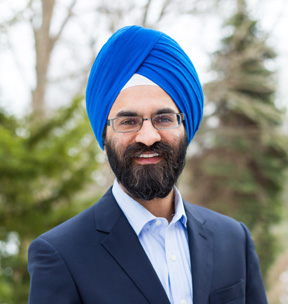
Raj Singh Badhesha’s appointment is not just a professional achievement; it represents the culmination of decades of perseverance and dedication by Sikhs in America. He is the first ever Sikh to wear a judge’s robe in Fresno County; he is also the first Amritdhari (fully initiated) Sikh Judge in the United States that wears the Dastar (Sikh turban) or Pagri, per reporting. Badhesha’s presence on the bench symbolizes the rich cultural heritage and the enduring spirit of the Sikh community.
In response to his appointment, Badhesha remarked, “It is my hope moving forward, that the Sikh youth present here today know that they can use this example and aspire to serve this county, this state, and this nation, in any position they wish to pursue.” He added, “As I step into this new phase of service, I am aware of the great weight of the responsibilities bestowed upon me…I will strive to do my best each and every day, act impartially, honorably, and with the utmost integrity.”
The Sikh community has deep roots in California’s Central Valley, with Sikh farmers and laborers having settled in the region over a century ago. Their contributions to agriculture and local industry have been invaluable, and their cultural influence is woven into the fabric of the region. Today, Sikhism is the fifth-largest religion in the world, with millions of adherents who follow its teachings of equality, justice, and selfless service.
Immediately before his appointment, Badhesha served as Chief Assistant City Attorney in the Fresno City Attorney’s Office since 2022 and served in several roles in that office since 2012. He was an Associate at the law firm of Baker Manock & Jensen, PC from 2008 to 2012. Badhesha earned a Juris Doctor degree from the University of California College of the Law, San Francisco (formerly UC Hastings).
Naindeep Singh, Executive Director of the Jakara Movement, expressed his excitement, stating, “Raj Singh Badhesha’s appointment is a groundbreaking moment for Sikhs in America. It reflects our community’s resilience and our contributions to the broader society. We are incredibly proud of Raj for breaking this glass ceiling and confident that he will bring his unwavering commitment to justice and equality to the bench.”
“Raj Singh Badhesha’s appointment is a proud moment for the Sikh community in the Central Valley, throughout California and across the Country. He has displayed decades of dedication to justice and community advocacy, and serves as an inspiration to all those looking to serve and make change,” added SALDEF Executive Director Kiran Kaur Gill.
Harman Singh, Executive Director of the Sikh Coalition also commented on this milestone: “This appointment is a significant step towards greater representation and diversity within our judicial system. Raj Singh Badhesha’s journey and achievements inspire us all and highlight the importance of inclusion and equality in all spheres of public service.”
The Jakara Movement, SALDEF and the Sikh Coalition, will continue to support and advocate for the Sikh community, celebrating milestones like this that pave the way for future generations.
Pictures of Judge Badhesha’s Enrobing Ceremony are available here.
SALDEF at the Forefront of Protecting Sikh Americans
Faith-based communities in America have repeatedly come under attack.
These attacks not only threaten individual faith groups, such as Sikh Americans, but they also threaten the idea of religious freedom, one of the core principles under which our nation was founded.
At SALDEF, the safety and security of the Sikh American community is our top priority.
We’re proud to share a significant step forward achieved through SALDEF’s leadership.
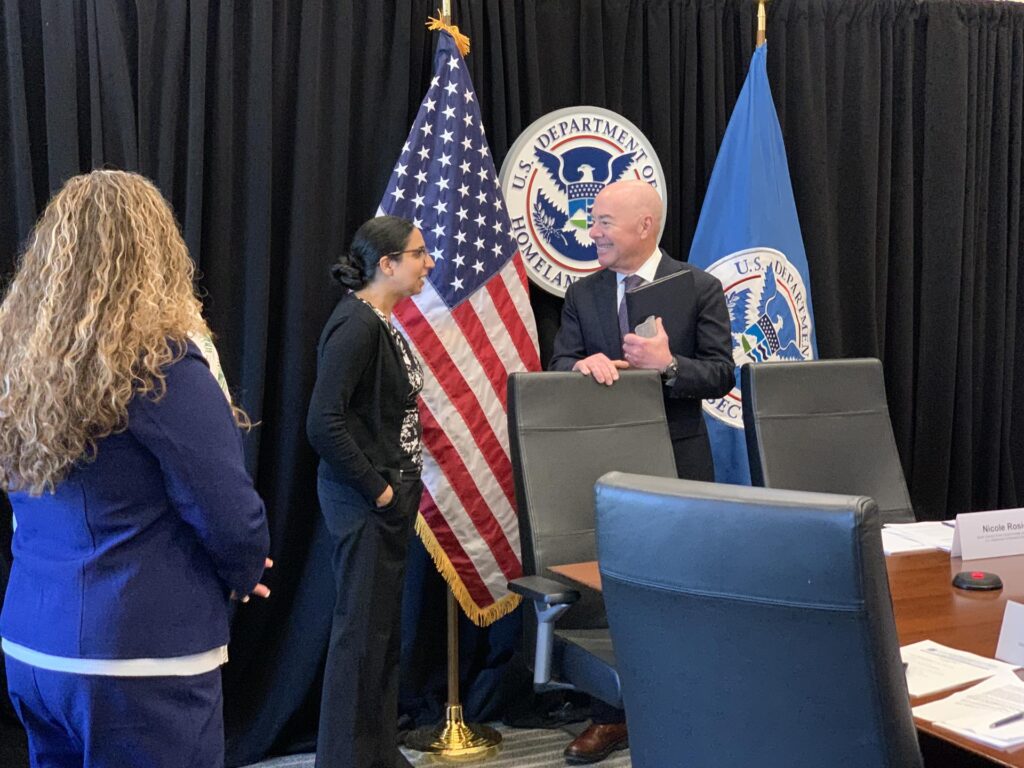
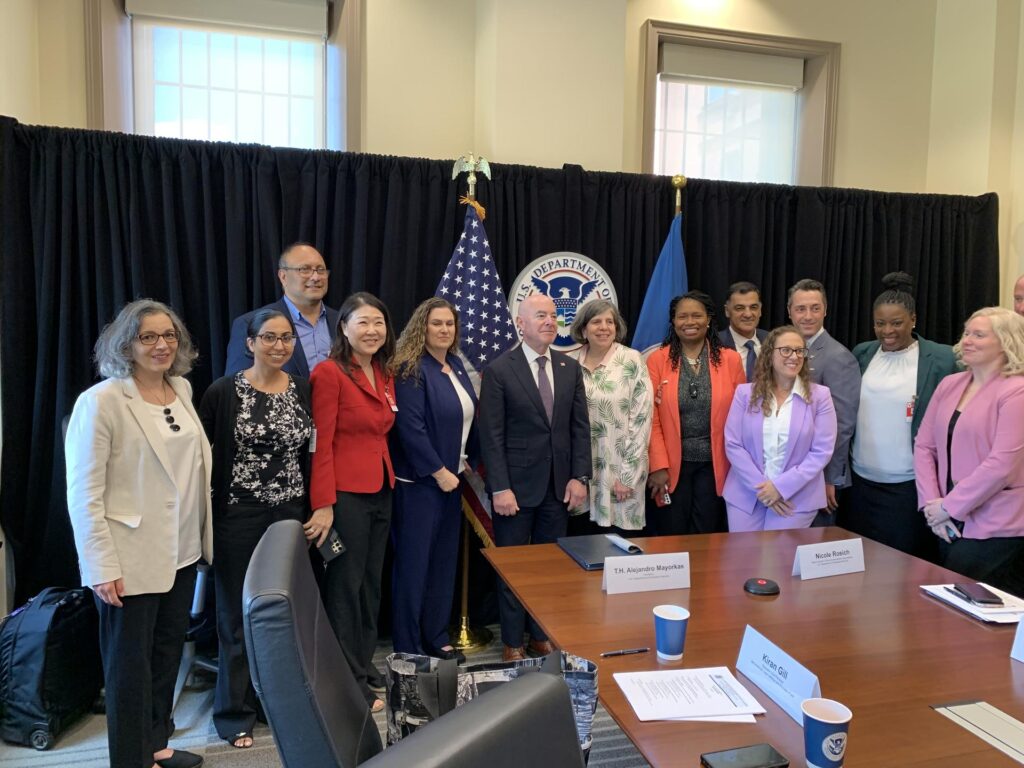
Since 2022, SALDEF Executive Director Kiran Kaur Gill has served as Chair of the Department of Homeland Security’s (DHS) Faith-Based Security Advisory Council (FBSAC). This council plays a vital role in ensuring houses of worship, faith communities, and faith-based organizations have the resources and support they need to stay safe.
Leadership Leads to Action
Under Kiran’s leadership and based on SALDEF research and analysis, the committee has worked to identify substantive and meaningful recommendations to support and enhance faith-based communities’ ability to be able to prevent, respond to, and recover from acts of targeted violence.
In an effort to protect Sikh Americans and others from incidents of transnational repression, the subcommittee has published recommendations that the government should enact.
Not only does the report heighten domestic awareness of this threat, but it also includes recommendations for prosecuting perpetrators of transnational repression, increased victim support services for targeted communities and language-accessible resources and outreach.
The DHS also announced an increase of $390 million in grant funding for faith-based institutions and nonprofit organizations, bringing the total FY2024 total to over $664 million.
Earlier this year, SALDEF engaged in successful advocacy to get Congressional funding for our sangats through this program.
SALDEF’s leadership role in this DHS committee demonstrates our ongoing commitment to the safety and security of all faith-based communities. SALDEF’s work in protecting the Sikh American community never stops. We will continue to advocate for your safety and security at every level.
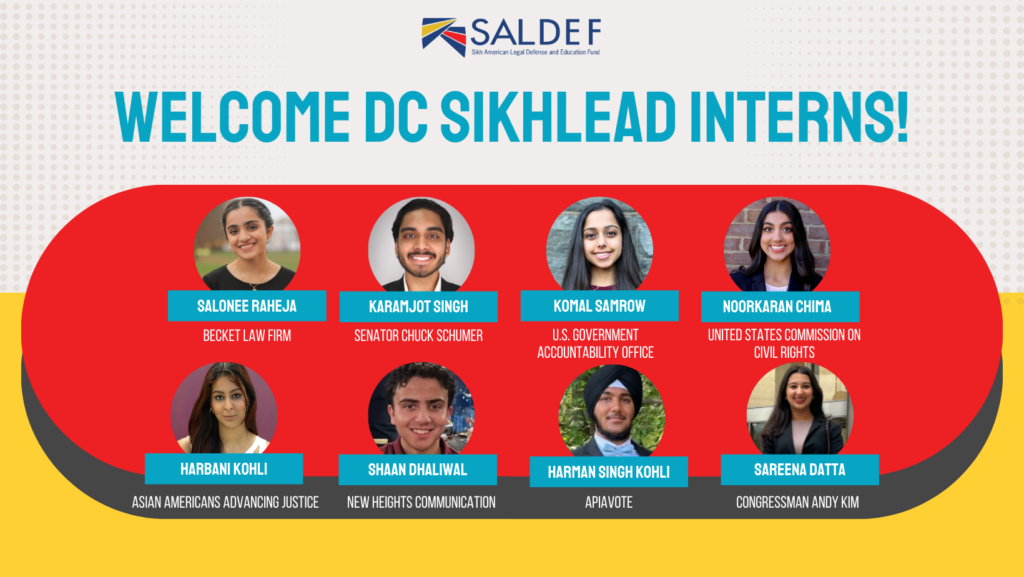
WELCOME 2024 SikhLEAD DC INTERNS!
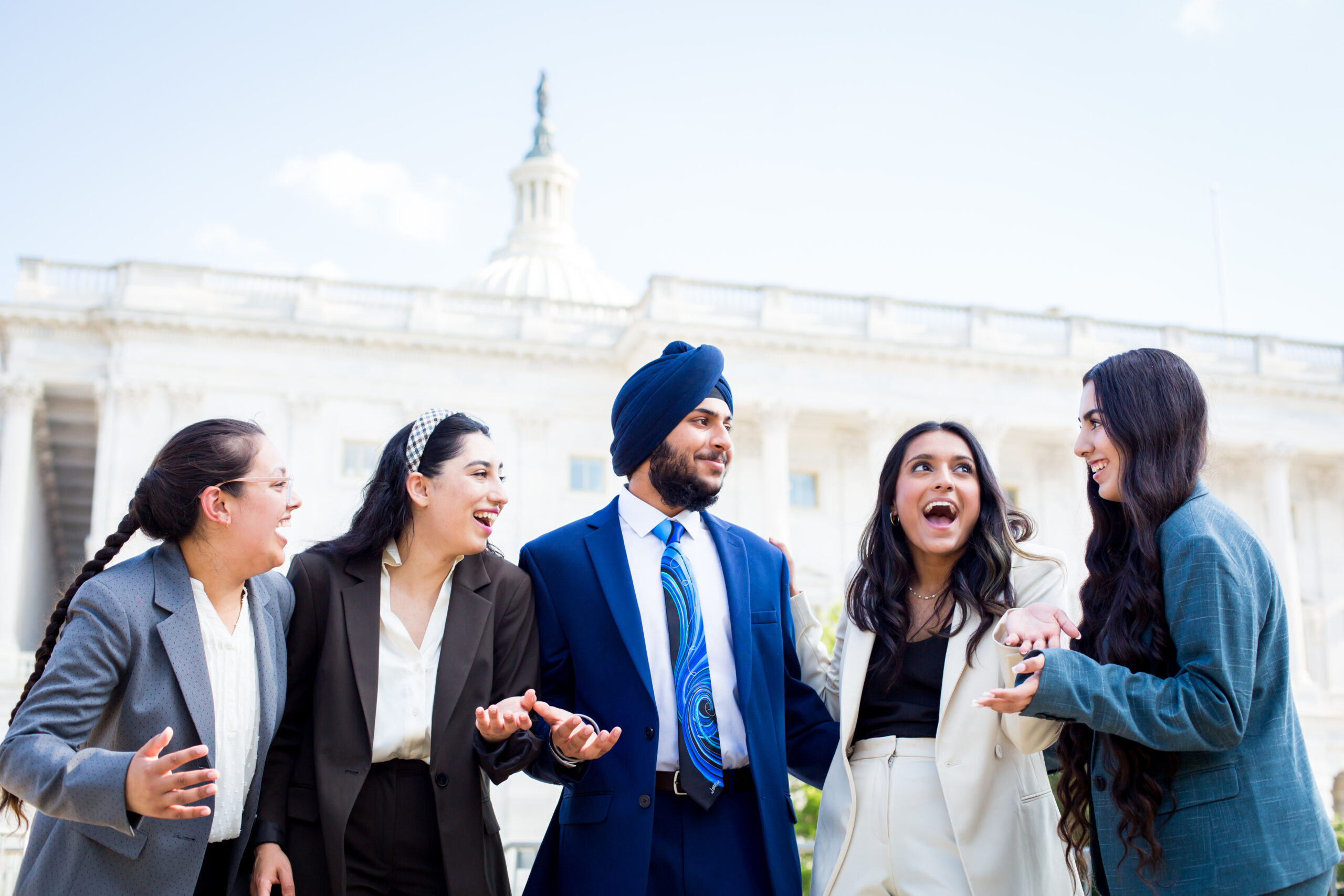
We are thrilled to announce the arrival of our exceptional Washington DC SikhLEAD Summer Internship participants at SALDEF!
This year’s cohort brings together eight talented young Sikh professionals from diverse communities across the nation:
Salonee Raheja | Becket Law Firm
Karamjot Singh | Senator Chuch Schumer
Komal Samrow | United States Government Accountability Office
Harbani Kohli | Asian Americans Advancing Justice (AAJC)
Shaan Dhaliwal | New Heights Communication
Noorkaran Chima | United States Commission on Civil Rights
Sareena Datta | Congressman Andy Kim
Harman Singh Kohli | APIAVOTE
Throughout the summer, they will have a unique opportunity to engage with influential leaders in Washington, D.C., including those on Capitol Hill, at key federal agencies, and at esteemed organizations like Becket Law Firm and the United States Government Accountability Office.
Through their participation in the SikhLEAD Internship Program, these interns will not only cultivate relationships with our nation’s leaders but also learn how to align their Sikh values with their chosen careers. Additionally, they will gain valuable professional experience that will equip them to serve the Sikh community effectively.
As a reminder, we have a summer fundraising goal of $75,000 to support the SikhLEAD Internship Program.Your contribution to this campaign will help us empower these and future aspiring leaders.
On behalf of these inspiring young leaders and the entire SALDEF team, thank you for your continued support!
Strengthening Our Community: Welcome SALDEF’s New Civic Engagement Leader!
We’re thrilled to announce the arrival of a powerful new voice on the SALDEF team: Jaslin Kaur! As our Senior Manager of Civic Engagement and Community Outreach, Jaslin will play a pivotal role in amplifying Sikh American voices and building bridges across communities.
Jaslin brings a wealth of experience in community organizing and has worked across an array of issues, from hyperlocal worker campaigns in her hometown to national causes for immigrant families. You may even recognize her from her run for New York City Council in 2021 in a competitive race with support from Senator Bernie Sanders, 1199 SEIU, and the Working Families.
With Jaslin’s leadership, we’ll be even more effective in:
Mobilizing Sikh Americans: Jaslin will spearhead initiatives to increase voter participation, advocate for our community’s needs, and build a stronger civic presence.
Fostering Understanding: Through outreach programs and community partnerships, Jaslin will help bridge divides and promote understanding of the Sikh American experience.
We believe Jaslin’s passion and expertise will be instrumental in achieving our goals.
Your continued support is essential in empowering SALDEF to champion the Sikh American community. With your help, we can raise awareness, advocate for our rights, and build a brighter future for all.
Thank you for your generosity!
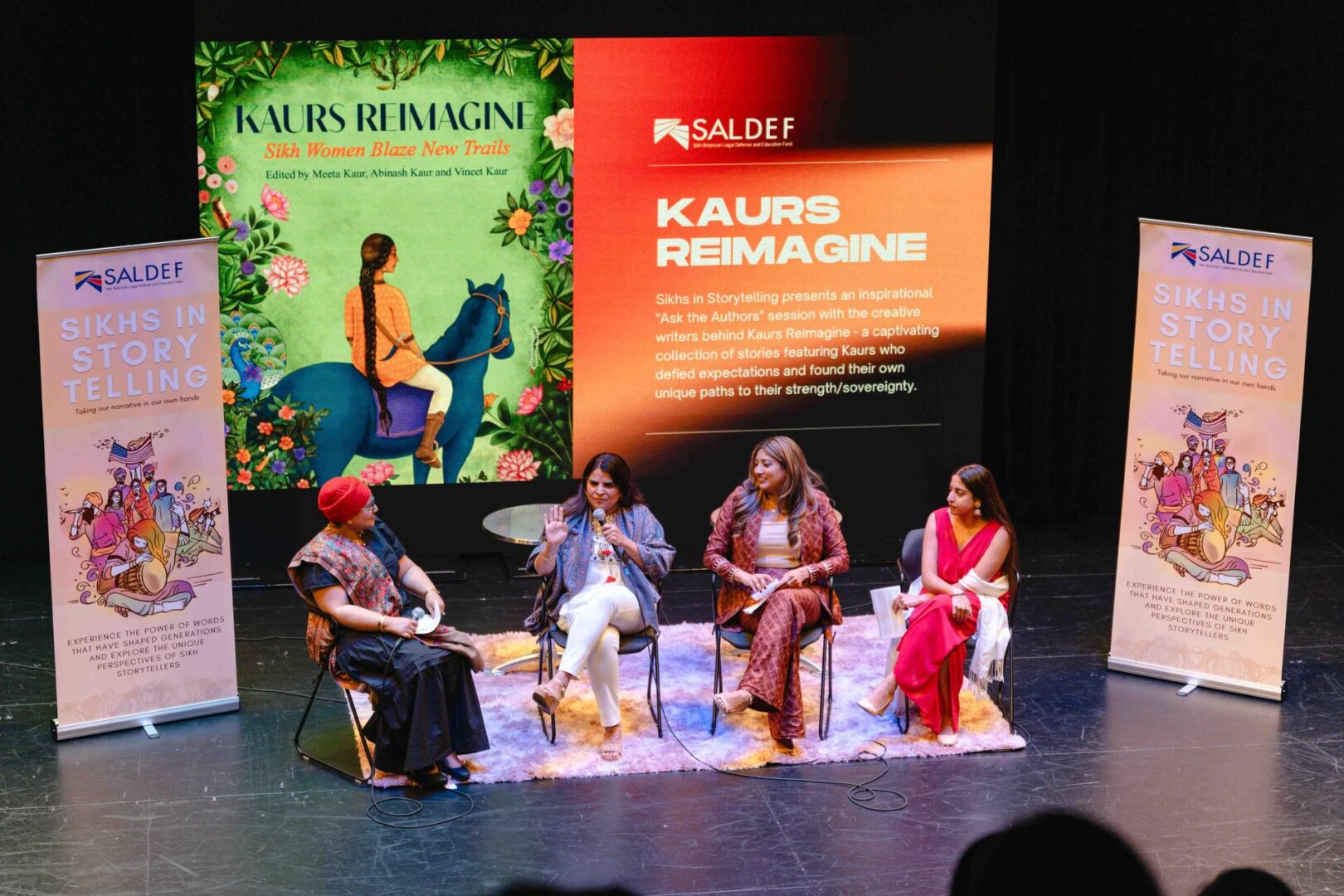
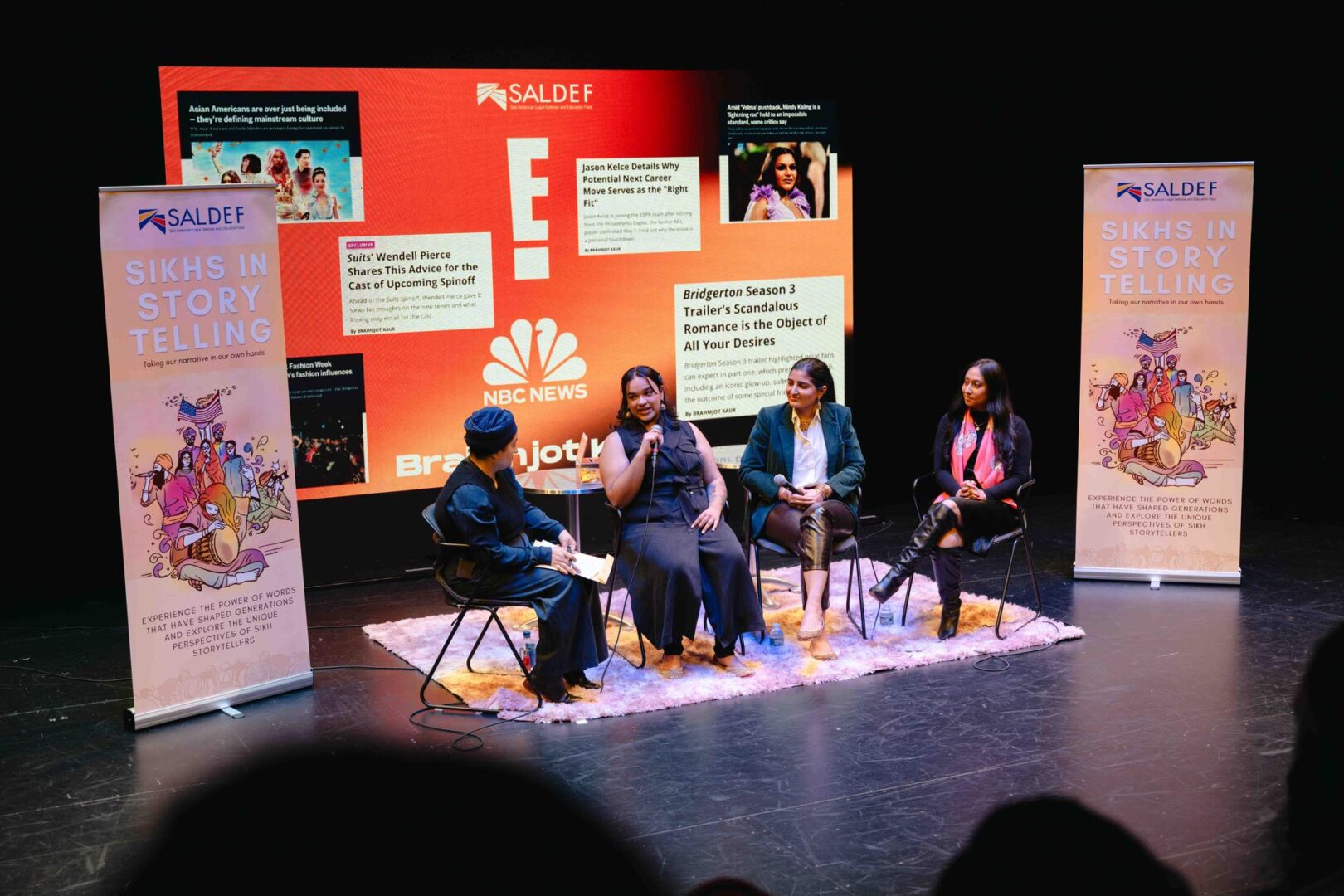
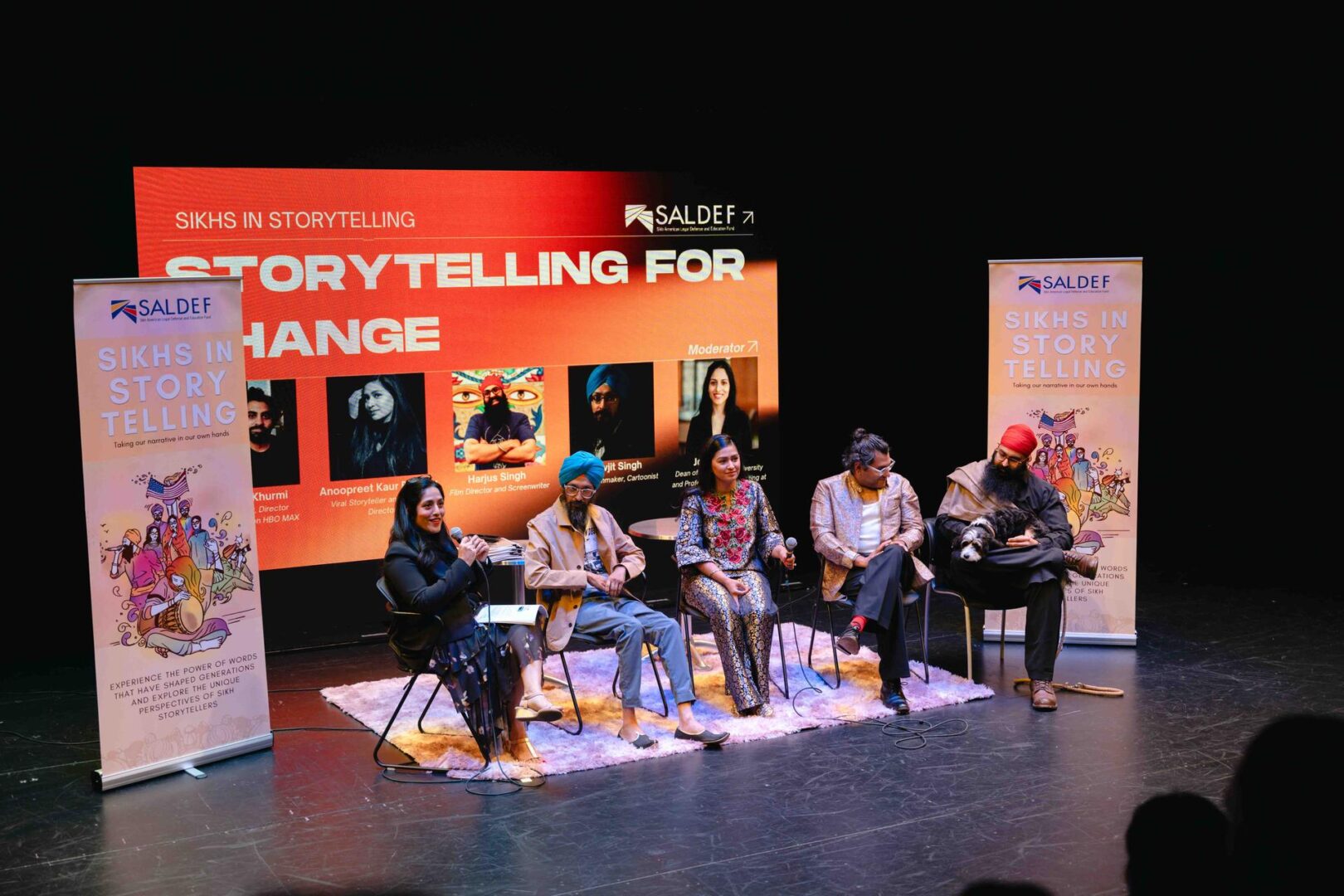
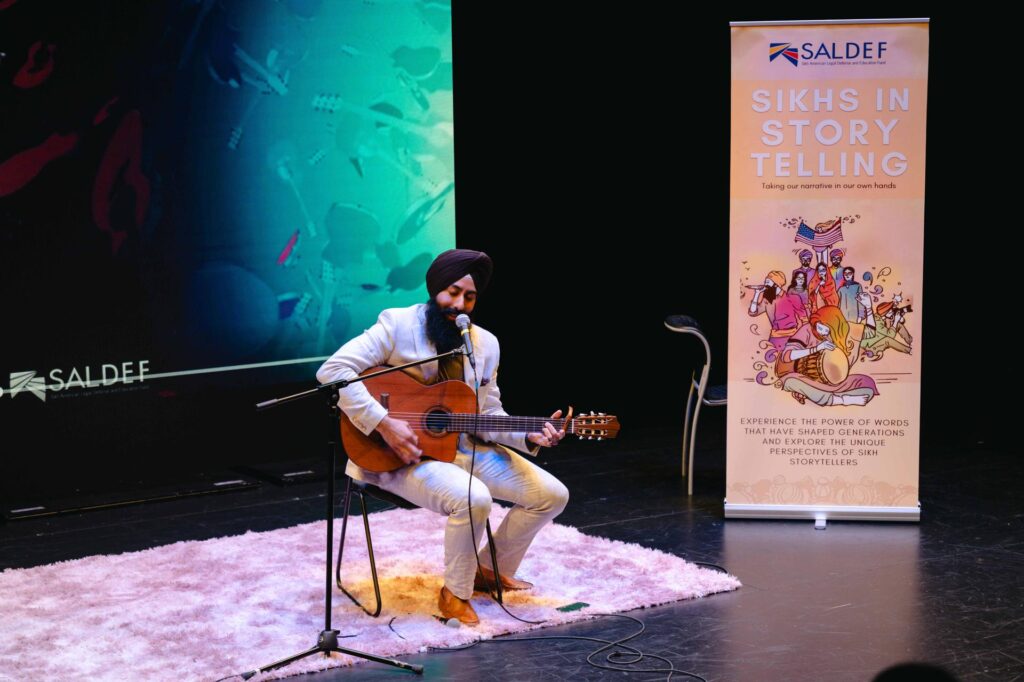
Sikhs in Storytelling – A Smash Hit!
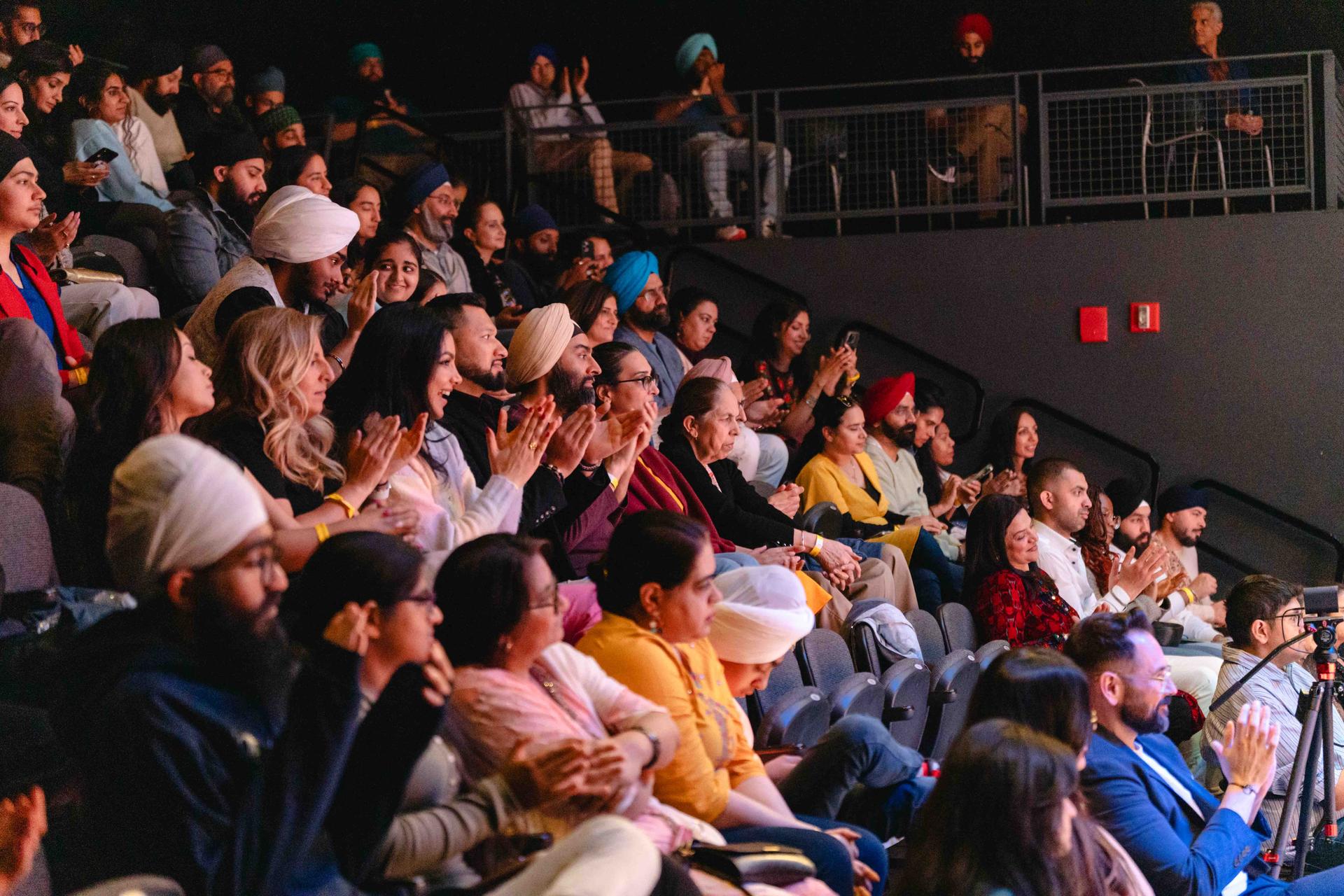
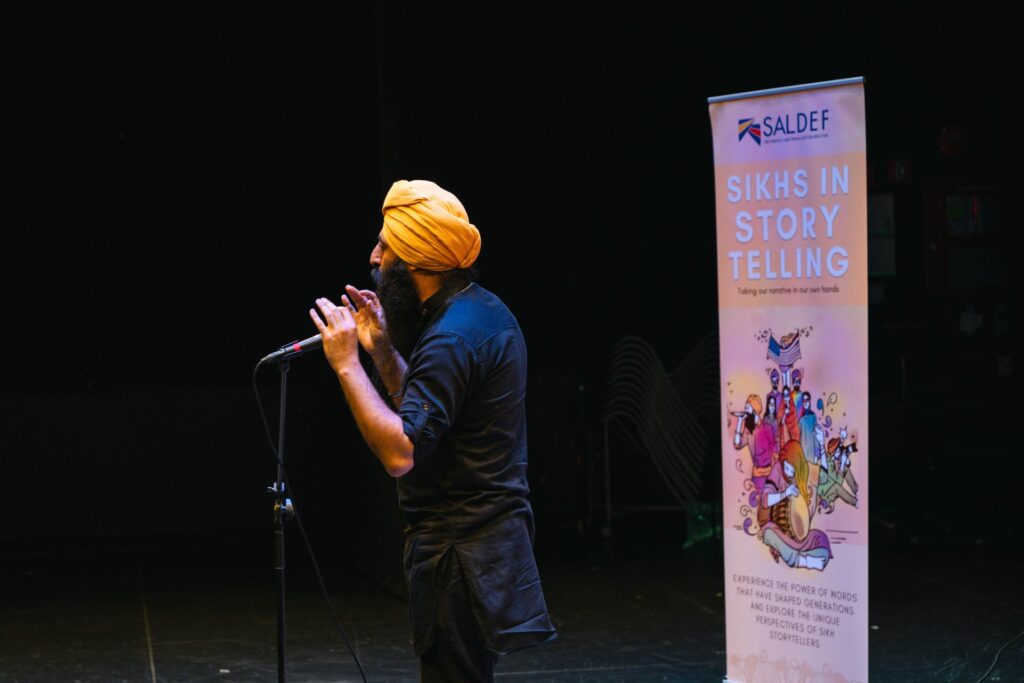
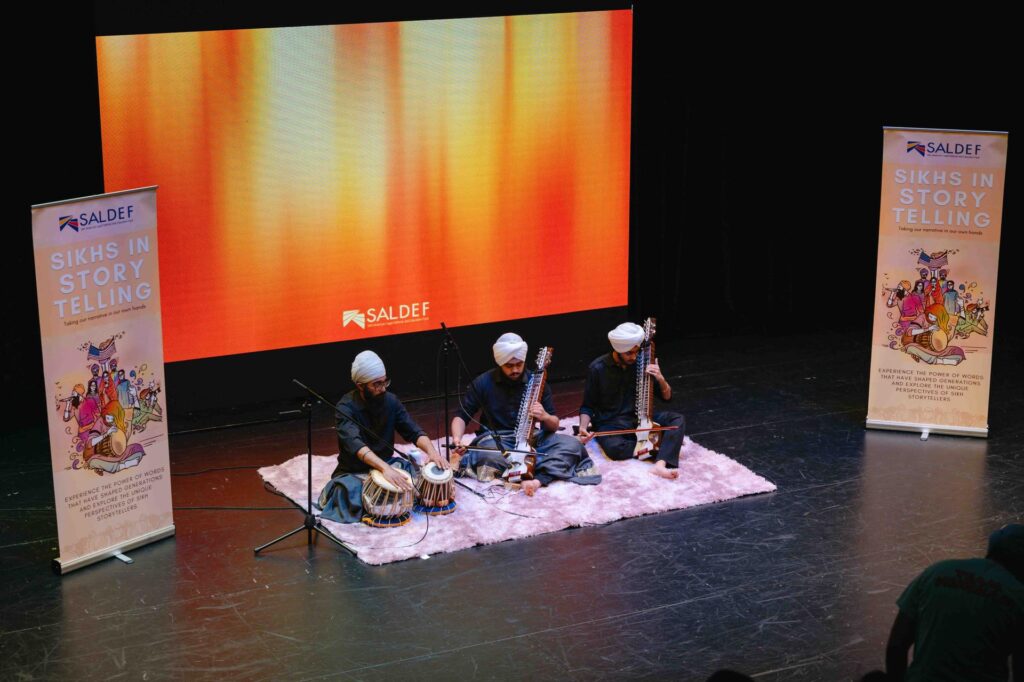
Our Sikhs in Storytelling event in New York City was an unforgettable evening with over 100 attendees in person and a whopping 500+ tuning in on the livestream!
The impact of your support was evident in the energy and enthusiasm that filled the room. Stories were shared, connections were made, and a powerful message of resilience and pride was amplified.
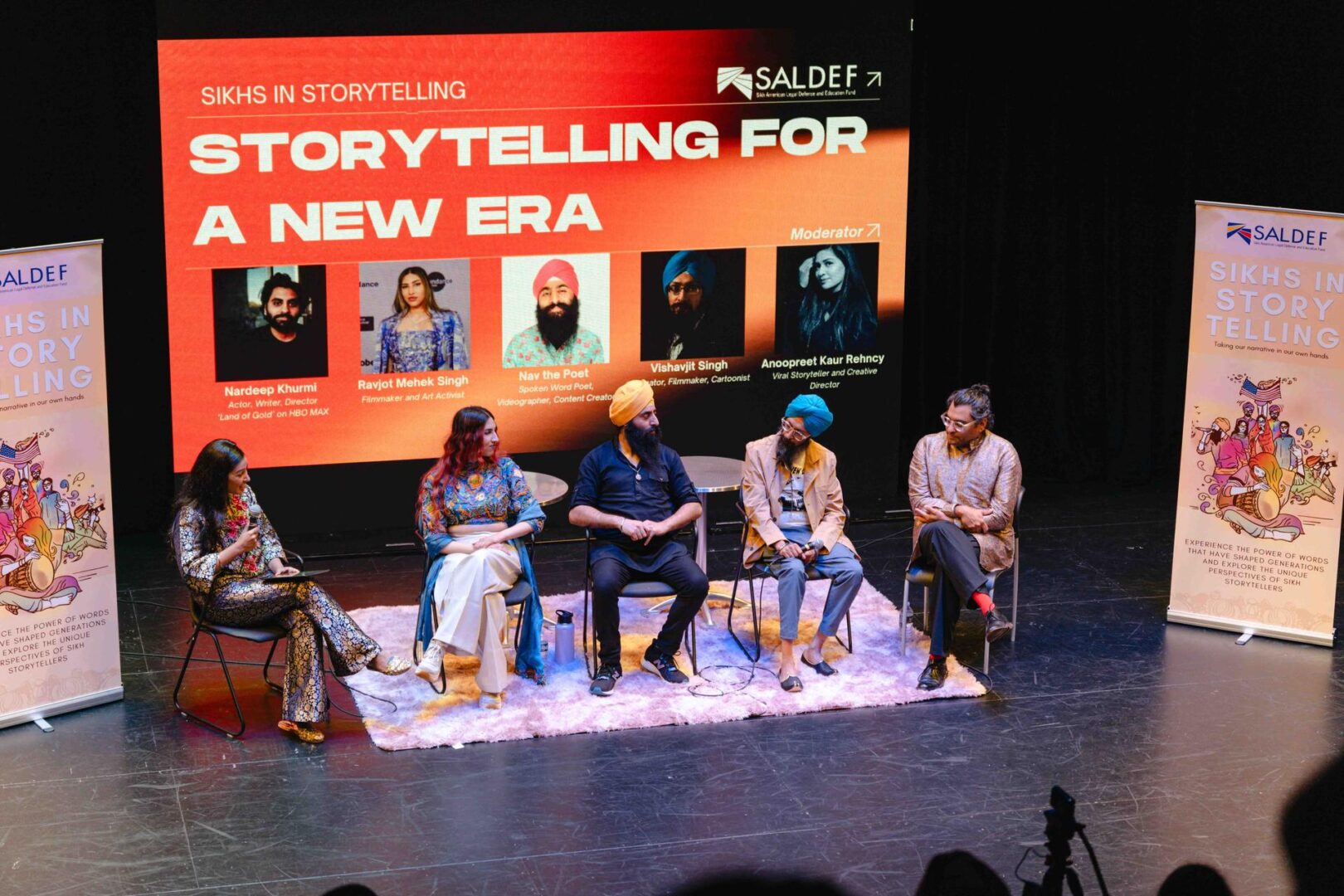
The evening unfolded as a vibrant tapestry of Sikh American experiences. A captivating panel discussion titled Storytelling for a New Era, delved into the heart of Sikh identity in the modern world.
Esteemed panelists Nardeep Khurmi, Nav the Poet, Ravjot Mehek Singh, Vishavjit Singh, and Anoopreet Kaur Rehncy shared their personal journeys and powerful voices, sparking thought-provoking discussions on representation, overcoming media stereotypes, and the vital role of storytelling in shaping a more inclusive future.
Next, the event took a powerful turn with From Margins to Mainstage: Sikh Women Reimagine Their Power, an interactive session that had the audience buzzing.
The brilliant writers behind the book Kaurs Reimagine: Meeta Kaur, Sonia Kaur, and Saranjit Banga took center stage, led by the ever-inspiring SALDEF Board Member, Juspreet Kaur.
Together, they wove a tapestry of captivating stories featuring Sikh women who shattered expectations and carved their own paths to strength and leadership. It was a session that left everyone feeling empowered and ready to embrace their own unique experiences.
Shattering the Glass Ceiling in Media and Journalism, brought together this a powerhouse group of women: Brahmjot Kaur, Harmeet Kaur, Asees K. Singh, and Sona Simran Kaur.
Their stories weren’t just about navigating a competitive field, they offered a refreshing perspective on how to tell Sikh stories in the media.
From personal anecdotes to practical advice on news cycles, this panel was a breath of fresh air, leaving the audience eager to see more diverse voices shaping the media landscape.
Weaving a fascinating thread through our Storytelling for Change panel was the unlikely historical figure, Bhagat Singh Thind.
Panelists Nardeep Khurmi, Anoopreet Kaur Rehncy, Harjus Singh, Vishavjit Singh, and Joy Kanwar, despite their diverse backgrounds and experiences, all connected to Thind’s legacy of resilience and fighting for justice.
This panel also sparked a powerful conversation about how storytelling can empower our community to advocate for a more just and equitable world, leaving a lasting impression on our engaged audience members.
Beyond Words: Performances that Stirred the Soul
From captivating musical performances to a thought-provoking spoken word session, the evening pulsed with the vibrant energy of Sikh American creativity.
Manav Singh, Unnat Singh & Dashmesh Singh’s captivating rendition of Raag Gond (the 17th Raag in the sacred Sri Guru Granth Sahib Ji) set the perfect tone for an evening filled with unforgettable stories and vibrant culture.
Gurpreet Sarin‘s stirring vocals captivated the audience, while Nav the Poet‘s spoken word piece delivered a powerful message that resonated deeply with the attendees.
These diverse performances showcased the rich tapestry of Sikh American artistry and left a lasting impression on all who witnessed them.
The success of “Sikhs in Storytelling” wouldn’t have been possible without your support, and the support of our sponsors, The Asian American Foundation and Comcast.
Your contribution allows us to continue amplifying Sikh American voices and challenging the one-dimensional narratives prevalent in society.
Thank you once again for your unwavering support. Together, we are building a brighter future for the Sikh American community.