SALDEF Expresses Support for Administration’s Regulatory Change to Support Religious Workers in the United States

FOR IMMEDIATE RELEASE
January 16, 2026
Contact: Media@saldef.org

SALDEF Expresses Support for Administration’s Regulatory Change to Support Religious Workers in the United States

Washington, D.C.The issuance of the Interim Final Rule (IFR) entitled “Improving Continuity for Religious Organizations and their Employees,” was announced by the Department of Homeland Security on January 14th, 2026. 

Previously, Sikhs on a temporary religious worker (R-1) visa were required to depart the U.S. after five years, the maximum period of stay for that visa. Then, they were able to possibly return to the country on a subsequent R-1 visa after spending at least one full year outside of the U.S. between R-1 visas. 

Now, with the issuance of this rule, there is no minimum time outside of the country before religious workers can return on a subsequent R-1 visa. R-1 religious workers are still required to depart the U.S., but there is no minimum period of time they must reside outside the U.S. before seeking readmission. In addition, this change applies to religious workers who departed the U.S. before the IFR was published, meaning that they are no longer subject to the one-year timeframe and can return as soon as their subsequent application is approved. 

The wait time for a green card for religious workers is now several decades long due to backlogs. This rule aims to provide religious workers and the communities that they serve some relief while workers await a decision on their green card applications. 

“The IFR is a step in the right direction, however, SALDEF’s ideal relief for Sikh religious workers remains the Religious Workforce Protection Act (RWPA), and we continue to urge Congress to enact this bill,” said Kiran Kaur Gill, SALDEF Executive Director. The RWPA is a bipartisan bill that, if enacted, would allow those already in the U.S. on an R-1 visa who have applied for permanent residency to remain in the country for renewable periods until they are able to receive their green card. The bill aims to ensure stability for faith communities nationwide.

FOR IMMEDIATE RELEASE
Date: Jan 7, 2025
Contact: media@saldef.org

SALDEF Condemns Fatal Shooting During ICE Operation in Minneapolis, Calls for Accountability and Transparency

Washington, D.C. – January 7, 2026 – SALDEF (Sikh American Legal Defense and Education Fund) is deeply disturbed by the fatal shooting of an unarmed woman during a U.S. Immigration and Customs Enforcement (ICE) operation in Minneapolis by a masked ICE agent. We are monitoring this situation closely as more information becomes available.

Federal law enforcement operations should protect communities, not terrorize them. While details continue to emerge, local authorities and independent video evidence raise serious concerns about the circumstances of this shooting. Minneapolis leaders, including Governor Tim Walz, Mayor Jacob Frey and City Council members, have questioned the federal narrative and demanded accountability and transparency—calls that SALDEF fully supports.

“Today’s shooting in Minnesota is a devastating reminder of the deadly consequences of aggressive immigration enforcement,” said SALDEF Executive Director Name, Kiran Kaur Gill. “No one should lose their life during a civil immigration action. We must demand accountability and transparency from those entrusted with power.”

SALDEF stands in solidarity with the Minneapolis community as they grieve this loss. We urge federal authorities to cooperate fully with independent investigations and to provide complete transparency about the actions that led to this tragedy. True public safety requires accountability, restraint, and respect for human life.

How do you explain Guru Nanak Dev Ji to a toddler growing up watching Cocomelon?

How do you pass on the Janamsakhis when your children’s world looks so different from the one you grew up in?

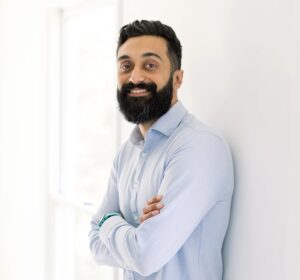
Shawn Singh Ghuman felt this too. As he prepared for fatherhood in 2023, he realized the stories he grew up loving needed a refresh for this generation of Sikh American kids.

So he created Guru Nanak Stories, a children’s book series that brings our Guru’s adventures to life through modern, beautifully illustrated picture books. Today, his books are read in homes, classrooms, and gurdwaras around the world, turning bedtime into a bridge between heritage and identity.

In our Faith in Action series, we celebrate Sikh Americans like Shawn who live their values and strengthen our community through action.


SALDEF: Can you share what inspired you to create Guru Nanak Stories and bring Janamsakhis to life for today’s children?

Shawn: During the pandemic, I saw a wave of self-published books with Sikh characters come to life, which was wonderful to see. At the same time, teachers like Nanak Naam were making Sikhi accessible in modern, thoughtful ways. Those trends felt powerful to me.

I grew up loving the Janamsakhis, and I always felt they deserved a refresh — especially for our children who are being raised in such a different cultural context than previous generations. Those three threads came together and sparked the idea for Guru Nanak Stories.

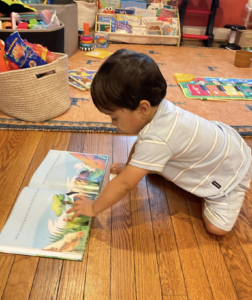
In 2023, as my wife and I were preparing for parenthood, I realized I wanted to create something that would help me explain Guru Nanak Dev Ji and Sikhi to my own children one day. That personal intention is what ultimately brought the series to life, and now I get to read these stories to my 18-month-old son!

SALDEF: Is there a reaction from a parent or child that has stayed with you or affirmed the impact of this project?

Shawn: Yes! One in particular stays with me. A family friend I had gifted the books to shared a photo of her daughter reading one because the story “made her feel better.” 

That touched me deeply because it reminded me that children often turn to stories for grounding, comfort, and meaning, and the fact that Guru Nanak Dev Ji’s message played that role was incredibly moving.

I also often hear that kids want to re-read the books over and over. Now that I’m a dad, I fully understand that. My own son wants to re-read the same few books every night.

It makes me happy knowing Guru Nanak Dev Ji is becoming part of that nightly comfort ritual for families.

SALDEF: How do you hope these stories strengthen Sikh identity, confidence, and connection in young children growing up in the diaspora?”

Shawn: As more generations are born and raised in the diaspora, our understanding of “Sikh culture,” or the shared immigration stories and community structures our parents leaned on, naturally becomes diluted over time.

But the beliefs and values of Sikhi are timeless. They apply anywhere and at any age. The challenge is that they must be taught in ways that are accessible, meaningful, and relatable to children growing up in an ever-changing world.

SALDEF: What has this journey taught you about the responsibility and power of telling Sikh stories?

Shawn: This journey has taught me that kids absorb everything — the tone, the images, the values. They understand more than we think, especially when spirituality is offered with clarity and love.

That means every detail matters.

Sikhi is not inherited; it is experienced. And for many children, these early stories become their first experience of Sikhi. This has made me more thoughtful and intentional about how I present concepts and morals in each book.

I’m grateful that families resonate with the stories and support the mission. Our history is kept alive not only through gurdwaras and classrooms, but through the stories we choose to tell at home.

SALDEF: What message would you share with Sikh parents, caregivers, and educators who want to pass Sikhi on to the next generation?

Shawn: You don’t need to be perfect. You just need to try.

Sikhi is passed through small moments like a story at bedtime or a line from Gurbani shared during a car ride. It can be as simple as explaining Seva or Vand Chakko to your little one when helping a neighbor.


Shawn’s work reminds us that preserving our faith isn’t just about what happens in the gurdwara, it’s about the stories you choose to share at home, the moments you create with your children, and the values you model every day.

At SALDEF, we’re committed to creating space for Sikh Americans like Shawn who are building bridges between our heritage and our future. Your support makes this work possible.

Learn more about Guru Nanak Stories → www.gurunanakstories.com or at Amazon

SALDEF’s Faith in Action series celebrates Sikh Americans who live their values every day and strengthen the communities around them. In this interview, we speak with Ruby Basi, a dedicated community advocate who has built a powerful online presence connecting Sikhs across North America and beyond with vital resources, trusted guidance, and a voice that speaks up for those who cannot.

SALDEF: You’ve built such a strong online presence and local reputation as someone the Sikh community can turn to for trusted guidance. What inspired you to start sharing information and resources through your social media platforms?

Ruby: My inspiration comes from a strong desire to connect and support our Sikh and South Asian communities, both here in North America and globally. I realized there was a real need for accessible, reliable information about resources, opportunities, and community stories, and I also felt the need to speak up for those who are afraid to share.

Social media gave me a platform to share that information in a way that’s immediate and engaging, and to be a voice that people of all ages—whether they speak Punjabi or English—can connect with. It’s always been about helping people feel informed, represented, and connected, whether through highlighting cultural events, important news, or resources that can make a real difference in someone’s life.

SALDEF: You often answer community questions about immigration, government forms, and other challenges new immigrants face. What patterns or needs do you see most often, and how do you decide which topics to cover?

Ruby: While I’m not an attorney or lawyer, I often hear from community members about challenges with immigration, government forms, and adjusting to life in a new country. The most common needs I see are clarity on procedures, access to reliable resources, and guidance on where to turn for help.

To support them, I share accurate, publicly available information and trusted resources, and I’m connected with attorneys and lawyers in both the U.S. and Canada who often join videos or live calls to answer questions directly. I always remind everyone to double-check their sources and consult or reschedule with their own attorney as needed—ensuring they get reliable guidance while I serve as a bridge connecting them to the help they need.

SALDEF: How does Sikhi influence the way you approach your work—both online and in person—when serving and educating the sangat?

Ruby: Sikhi is my foundation, and everything I do reflects our teachings. We are taught not to judge, to do sewa, to help those in need, and to remain humble and grounded. I was raised to never think we are better than anyone else—everyone carries the light of the Guru within them. We don’t know it all, which is why learning is a lifelong journey. Sikh values guide me every day, and I strive to live them until my last breath.

SALDEF: Social media can sometimes feel overwhelming or even discouraging. How do you maintain authenticity, compassion, and credibility while growing your platform and engaging thousands of followers?

Social media is not always easy—you see all kinds of profiles, and many have fake pictures or names—but I go back to our teachings. Sikhi reminds us to help anyone we can, and compassion and determination come from within.

Maintaining credibility while growing a platform with thousands of followers means staying true to these values: sharing accurate, verified information, connecting people with trusted resources or professionals when needed, and engaging thoughtfully with the community. For me, building trust and providing meaningful guidance is more important than chasing numbers, and that authenticity naturally helps the platform grow.

SALDEF: Many immigrants rely on social media for guidance, but misinformation is common. How do you ensure the accuracy of your content, and what advice would you give others who want to be responsible educators online?

Ruby: I cannot stress this enough—always do your own research! Too often, people share information they’ve heard from a friend of a friend, which can cause unnecessary panic. While many immigrants turn to social media for guidance, I’m very mindful that the information I share needs to be accurate and reliable. I always verify my sources, rely on publicly available official information, and connect with trusted professionals.

Often, I host one- or two-hour live sessions with legal professionals to answer questions directly. That said, I always remind everyone to double-check information and consult their own professionals—accuracy and caution are key. As an educator, please double-, triple-check anything you’re posting about. If you’re not sure, it’s better not to post on it.

SALDEF: What’s next for you? Are there new projects, collaborations, or goals you’re excited to pursue to expand your impact?

Ruby: I have several new projects lined up, including presenting a family-friendly play called MAA DI PENSION. It’s a comedy show with an educational twist, designed to bring families together and encourage our elderly community to get out, enjoy themselves, and engage socially. In addition, I have more projects in the works and will be appearing on Rukas Avenue, my new show covering headline news in Punjabi-English. I’m excited to continue creating content that entertains, educates, and connects our community.

SALDEF: What message would you like to share with Sikh Americans—especially younger generations—about using their voice, skills, and platforms in service of the community?

Ruby: To the younger generation: you all have a voice. Stand up for your rights, and if you can help someone, do it. If you’re going through something, speak up and if you see something, say something. I’m always here if you need anything, just send me a message. I try my best to respond to every follower, no matter who they are. Again, I’m a Sikh-American and we have a lot of work to do—let’s make a change!

Share Your Story: Know a Sikh American who’s making a difference through their commitment to Sikh values? We want to feature them in an upcoming Faith in Action spotlight. Click here to tell us about their story and contact information.

FOR IMMEDIATE RELEASE

November 7, 2025

Contact: media@saldef.org

Organizations Condemn Governor Newsom’s Veto of SB 509

As organizations committed to defending civil rights and democratic freedoms, we are profoundly disappointed in Governor Newsom’s veto of SB 509, a measure that would have fortified California’s ability to counter growing patterns of transnational repression (TNR) – harassment, intimidation, surveillance, or threats by foreign governments targeting individuals on U.S. soil. 

If enacted, this bill would have directed the California Office of Emergency Services to develop and regularly update a training program for law enforcement that provides them with the tools necessary to identify, prevent, and respond to the intimidation of Americans by foreign governments. California is home to vulnerable diasporic communities that face a heightened risk of TNR. By vetoing SB 509, the governor missed a critical opportunity to protect Californians from foreign interference and ensure that California stands firmly against entities that weaken democratic safeguards. The decision leaves vulnerable communities without a critical tool that could have been solidified via statute, thereby leaving bad actors to continue their threats and intimidation campaigns unchecked. 

The veto of SB 509 is a setback for the safety and security of all Californians. We stand together to reaffirm the foundational freedoms that everyone is entitled to, including the right to speak freely without fear of foreign interference. Californians deserve to have their voices protected from intimidation, and to have leadership that prioritizes protecting their civil rights. We call on the international community, particularly the United States, to take a strong stance against transnational repression, including ongoing attacks on human rights and free speech. 

Signed:

Sikh American Legal Defense and Education Fund 

Hindus for Human Rights

The Sikh Coalition 

Amnesty International USA 

South Asian Network 

Uyghur Human Rights Project 

Indian American Muslim Council 

India Civil Watch International

Human Rights in China

Hong Kongers in San Diego

Washingtonians Supporting Hong Kong (DC4HK)

ChinaAid Association

Overseas Chinese Human Rights Lawyer Alliance

Humanitarian China 

Welcome to the very first edition of Faith in Action, a new series celebrating Sikh Americans who live their values every day and strengthen the communities around them.

We begin with the story of a trailblazer who shows that there are no limits to where seva can lead. Seth H.S. Bhogal, a devoted Amritdhari Sikh, recently became the first Sikh American Chief Election Officer in Prince William County, Virginia, a role at the very heart of our democracy.

At a time when election integrity and voter access dominate the national conversation, Sikh Americans like Seth are stepping forward to ensure fairness, inclusion, and trust in the democratic process.

SALDEF: What first drew you to volunteer with SALDEF, and how has your relationship with the organization evolved over the years?

Seth: “Over the years, I have volunteered at various gurdwaras throughout the DMV and I have seen the birth and evolution of SALDEF throughout the years and support its cause. I am proud of the cause and all the help that this organization has brought.”

SALDEF: What motivated you to get involved in election oversight work, and why is this particularly important for the Sikh American community?

Seth: “I have a Sikh identity that I want to share with the world and it was important to show others that Sikhs in America are part of that political voice. I have been in America for 40 years and I have seen how the voices of Americans have evolved. Sikhs should not be afraid to show themselves proudly. As an Amritdhari Sikh, I want to show how Sikhs can overcome barriers publicly and that they can work in any field as I have done. There are no obstacles for me and should not be for other Sikhs.”

SALDEF: Can you walk us through what election oversight actually involves? What does a typical Election Day look like for you?

Seth: “Before Election Day, we go through a rigorous training a few months before learning any and all new procedures involved with elections under Virginia law which includes: classroom training and hands-on training on how to set up the scanners, printers, and booths.

As the Chief Election Officer, on Election Day, my day starts at 4am and I am responsible for the overall management of the precinct and responsible for all materials, equipment (ballots and electronic devices), and delivering all secure ballots at the end of the election day.

I also assign all Election Officers for their job duties and oversee all Election Day operations, which include: communicating with election headquarters for any updates and instructions while keeping everything confidential and respecting the election process while under oath. I have to make sure the entire area is secure leading up to and throughout the day and ensuring the media stays off premises. Polling opens at 6am and ends at 7pm. At 7pm, I take all the election ballots to headquarters under police security.”

SALDEF: What advice would you give to other Sikh Americans considering getting involved in civic engagement work?

Seth: “I feel very proud and privileged to be working in Elections because it shows how a Sikh can show up for all communities. I am also proud to be the first Sikh American volunteering as a Chief Election Officer in Prince William County, Virginia. My only advice to all other Sikh Americans who are considering getting involved in civic engagement work is you must know the law and how to follow the law according to the jurisdictions of any state you are working in. You have to have a solid knowledge of how the election process works and how to be confidential. Also, have experience with dealing with conflicts effectively and follow the three rules: Calm, Observe, Report.”

Rooted in the Sikh principles of justice, equality, and seva, Seth approaches his work with a deep sense of responsibility, ensuring that every voter is treated with dignity and every voice is heard. Through his leadership, he reminds us that faith in action is not just about service, but about upholding truth and justice in every space we enter.

Share Your Story: Know a Sikh American who’s making a difference through their commitment to Sikh values? We want to feature them in an upcoming Faith in Action spotlight. Click here to tell us about their story and contact information.

FOR IMMEDIATE RELEASE

Date: October 14, 2025

Contact: media@saldef.org

Vetoed but Not Silenced: SALDEF Statement on SB 509

Sacramento, California — SALDEF (Sikh American Legal Defense and Education Fund) expresses profound disappointment in Governor Gavin Newsom’s decision to veto SB 509, legislation that would have provided critical protections against transnational repression and enhanced law enforcement training to better serve California’s Sikh community.

While we are disheartened by this outcome, we are deeply moved by and profoundly grateful for the overwhelming community support demonstrated throughout this legislative process. Sikh Americans, civil rights advocates, and allies across California came together in an unprecedented show of solidarity: signing petitions, attending hearings, contacting their representatives, taking time away from work and family to testify, and making their voices heard in Sacramento.

Your dedication, your courage, and your unwavering commitment to this cause have been nothing short of extraordinary. This coalition understood that transnational repression is not just a Sikh issue, but a threat to all Californians and to the fundamental values of safety and freedom that define our state.

“The veto of SB 509 is a setback for the safety and security of all Californians,” said Kiran Kaur Gill, Executive Director of SALDEF. “At a time when foreign governments seek to intimidate and silence their critics on American soil, this legislation would have equipped law enforcement with the tools and training needed to protect all residents. The outpouring of support we witnessed from community members who took time away from work and family to testify, to the countless individuals who contacted their representatives demonstrates that Californians understand what’s at stake. Together, we will create the California we all deserve, one that truly protects all its people.”

SALDEF remains committed to advancing policies that protect our community from transnational repression, ensure law enforcement is equipped to recognize and respond to these threats, and safeguard the civil rights of Sikh Americans. We are grateful to Senator Caballero for her leadership on combatting this issue and for every individual and organization that stood with us in support of SB 509.

Today’s setback does not diminish our hope but instead it fuels our determination. We invite all Californians who believe in safety, justice, and the fundamental right to live without fear to join us in building a future where every person can speak freely, practice their faith openly, and thrive without intimidation.

FOR IMMEDIATE RELEASE

Monday, October 6 2025

Contact: media@saldef.org

SALDEF Denounces Recent Comments at Quantico, Virginia

Washington, D.C.On September 30th, 2025, during a speech in Quantico, Virginia, Secretary of Defense Pete Hegseth announced sweeping new directives for troops targeting the appearance of personnel, including the elimination of religious exemptions for beards. A subsequent memorandum states that facial hair waivers will not be authorized, reverting to grooming standards pre 2010. 

SALDEF strongly opposes this directive. It represents a troubling disregard for the religious rights of service members—including Sikh Americans—who have long fought for the right to serve with their articles of faith intact.

For Sikhs, maintaining unshorn hair (kesh) and wearing a turban is not a matter of personal style. It is central to our faith and identity. To dismiss these expressions as mere violations of discipline not only ignores decades of progress on religious accommodation, but insults the integrity of Sikh soldiers who serve honorably while remaining true to their beliefs. This directive signals a dangerous retreat to exclusionary policies that alienate those who have fought to serve while staying true to their faith. 

“Religious accommodations for service members, especially Sikhs who wear turbans and beards, marked a significant step towards a more equitable nation,” said Kiran Kaur Gill, Executive Director of SALDEF. “These new directives deliberately dismantle that progress. We will not stand by while this administration rolls back hard-won civil rights.”

We call on Secretary Hegseth to reverse this exclusionary directive. Serving one’s country should never require abandoning your faith. Sikh Americans have demonstrated that it is possible—and powerful—to serve with honor, courage, conviction and articles of the Sikh identity.

FOR IMMEDIATE RELEASE

September 24, 2025

Contact: media@saldef.org

SALDEF Demands Accountability for 73-Year-Old Sikh Woman Subjected to Inhumane Conditions

San Francisco, CA – SALDEF (Sikh American Legal Defense and Education Fund) condemns the inhumane treatment of Harjit Kaur, a 73-year-old Sikh woman, who endured deplorable conditions after being detained. While Ms. Kaur has now safely returned to India, the egregious mistreatment she suffered and along with the complete disregard for her human dignity throughout this process demand accountability and systemic reform.

Ms. Kaur, who lived in California for more than three decades and complied with Immigration and Customs Enforcement (ICE) requirements including biannual reporting for over 13 years without incident, was arrested by ICE on September 8 during a routine check-in in San Francisco. Despite being prepared to return to India as ordered by the courts, she was subjected to unconscionable treatment that violated basic standards of human decency.

Mr. Deepak Ahluwalia, Ms. Kaur’s legal counsel, expressed, “Ms. Harjit Kaur waited over 13 years for ICE to procure her travel documents. A 73 year-old grandmother with zero criminal history, who was neither a flight risk nor a danger to the community, should never have been detained – let alone treated the way she was while in ICE custody.”

During her detention at the Mesa Verde ICE Processing Center in Bakersfield, California, Ms. Kaur was denied vegetarian meals, was not provided a bed, and suffered severe delays in receiving necessary medications. She endured overcrowded, loud, and distressing visiting conditions. Most disturbingly, she was transferred in the middle of the night to a detention facility in Georgia without notification to her family, community, or legal counsel. This cruel practice strips individuals of their fundamental right to maintain contact with support systems and legal representation.

“When this hit us, we didn’t even know where to start. At every phase, we were kept in the dark and had no idea what was next. The inhumane treatment she faced by ICE was deeply troubling, but her strength—and the incredible support from SALDEF, Deepak Ahluwalia, the Sikh Coalition, Jakara, Congressman Garamendi, and Harpreet Sandhu—helped her through.” shared Harjit’s close family friend, Heeral Mehta.

Ms. Kaur’s case exposes systemic failures within detention centers, particularly regarding the treatment of vulnerable individuals who pose no threat to public safety. Her experience represents a broader pattern of dehumanizing practices that must be addressed through comprehensive reform and oversight. Working alongside Attorney Deepak Ahluwalia, SALDEF immediately mobilized to support Ms. Kaur by applying sustained pressure from elected officials on federal agencies and advocating for her dignified treatment.

“This case demonstrates the urgent need for accountability and humane treatment in our immigration system,” said SALDEF Executive Director Kiran Kaur Gill. “No individual should endure such degrading treatment, especially someone who has faithfully complied with ICE requirements for over a decade. While we are relieved that Ms. Kaur has safely reached India, we will continue fighting to ensure no other person faces such inhumane treatment and that those responsible are held accountable.”

SALDEF calls on Congress and immigration authorities to implement immediate reforms to prevent similar abuses. SALDEF encourages community members to stay vigilant and visit www.saldef.org/kyr for resources to protect themselves and their loved ones.

FOR IMMEDIATE RELEASE
September 19, 2025
Contact: media@saldef.org

SALDEF Endorses September 11th Congressional Resolution

Washington, D.C. – SALDEF endorses a House Resolution introduced by Representative Pramila Jayapal, which acknowledges the hate and targeting that the Sikh, Muslim, Arab, Middle Eastern, and South Asian communities faced in the aftermath of September 11, 2001. 

We are grateful that the bill acknowledges the murder of Balbir Singh Sodhi, a Sikh man who was murdered in Mesa, Arizona on September 15th, 2001. This was the first fatal act of hate violence in the post 9/11 aftermath.

The same divisive and xenophobic rhetoric that resulted in hate violence against the Sikh community continues to cause harm. Communities are often targeted with overreaching policing, surveillance, and criminalization, as outlined by the bill. 

The bill does not simply recognize the attacks against our communities, but also advocates for the creation of an independent commission to work with community-based organizations to review harmful government policies and to provide recommendations for dismantling them, as well as build out support avenues for victims of hate and State violence. 

We thank the co-leads and sponsors of the resolution: Rep. Pramila Jayapal (WA-07), Rep. Ilhan Omar (MN-05), Rep. Rashida Tlaib (MI-12), Rep. Judy Chu (CA-28), Rep. André Carson (IN-07), Rep. Jim Costa (CA-21), Rep. Hank Johnson (GA-04), and Rep. Lateefah Simon (CA-12)