Joint Statement on the Hindu American Foundation’s Remarkable Comments Regarding the Plot to Assassinate Sikhs on U.S. Soil
FOR IMMEDIATE RELEASE
Joint Statement on the Hindu American Foundation’s Remarkable Comments Regarding the Plot to Assassinate Sikhs on U.S. Soil
February 23, 2026 — On a February 20 episode of “HAF Reacts,” Hindu American Foundation’s Managing Director for Policy and Programs Samir Kalra said the following about the recent guilty plea of Nikhil Gupta and his role in a conspiracy to assassinate U.S.-based Sikhs:
“Man, if you’re gonna do a job, fucking do it right, too. I mean that’s the other thing. Why did you send such a sloppy person to do the job? And again, I’m not advocating it should have been successful, but come on, I mean, that was, like, worse than the D-team. Like when you walk into a strip club in the middle of the day, you get like the worst dancers that are there, right? You gotta go to like, prime time at night to get the best dancers, not during the daytime. And that’s like, this kind of operation! You have, like, the daytime dancers that were part of this operation. If you’re going to do it, freakin’ do it right. If you’re going to have somebody indicted, at least be successful in your operation. Shame on India or whoever was ordering this hit or whoever was involved in it for doing such a horrible, sloppy job.”
SALDEF (the Sikh American Legal Defense and Education Fund), The Sikh Coalition, and Hindus for Human Rights, offered the following joint reaction:
“It is truly remarkable to watch HAF’s leadership openly yucking it up about a foreign government’s plot to kill U.S.-based individuals. In the course of his misogynistic shock jock routine, it is pretty incredible that Kalra appears to overtly concede that India could have been involved in ‘ordering this hit’—which, again, is an attempt to murder an American on American soil.”
“As a reminder, this is an ongoing threat—not just in our eyes, but in the eyes of the United States government. A former RAW official is still wanted by the FBI for his role in coordinating this conspiracy. Other Sikh activists received ‘duty to warn notices’ that they could be targets for assassination. And other governments, most notably Canada, have both publicly expelled multiple Indian consular officials for their role in transnational repression against the Sikh diaspora, as well as accused high-level officials of being involved in these plots.”
“We strongly encourage others in the civil rights ecosystem, media, and elsewhere to review this recording. The choice to post it without apology or qualification is illustrative of HAF’s positions, values, and seriousness; it is also essential context for any of their advocacy work moving forward on laws or policies that would seek to address the very real and persistent threat of transnational repression.”
###
How do you explain Guru Nanak Dev Ji to a toddler growing up watching Cocomelon?
How do you pass on the Janamsakhis when your children’s world looks so different from the one you grew up in?
Shawn Singh Ghuman felt this too. As he prepared for fatherhood in 2023, he realized the stories he grew up loving needed a refresh for this generation of Sikh American kids.
So he created Guru Nanak Stories, a children’s book series that brings our Guru’s adventures to life through modern, beautifully illustrated picture books. Today, his books are read in homes, classrooms, and gurdwaras around the world, turning bedtime into a bridge between heritage and identity.
In our Faith in Action series, we celebrate Sikh Americans like Shawn who live their values and strengthen our community through action.
SALDEF: Can you share what inspired you to create Guru Nanak Stories and bring Janamsakhis to life for today’s children?
Shawn: During the pandemic, I saw a wave of self-published books with Sikh characters come to life, which was wonderful to see. At the same time, teachers like Nanak Naam were making Sikhi accessible in modern, thoughtful ways. Those trends felt powerful to me.
I grew up loving the Janamsakhis, and I always felt they deserved a refresh — especially for our children who are being raised in such a different cultural context than previous generations. Those three threads came together and sparked the idea for Guru Nanak Stories.
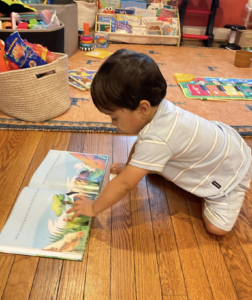
In 2023, as my wife and I were preparing for parenthood, I realized I wanted to create something that would help me explain Guru Nanak Dev Ji and Sikhi to my own children one day. That personal intention is what ultimately brought the series to life, and now I get to read these stories to my 18-month-old son!
SALDEF: Is there a reaction from a parent or child that has stayed with you or affirmed the impact of this project?
Shawn: Yes! One in particular stays with me. A family friend I had gifted the books to shared a photo of her daughter reading one because the story “made her feel better.”
That touched me deeply because it reminded me that children often turn to stories for grounding, comfort, and meaning, and the fact that Guru Nanak Dev Ji’s message played that role was incredibly moving.
I also often hear that kids want to re-read the books over and over. Now that I’m a dad, I fully understand that. My own son wants to re-read the same few books every night.
It makes me happy knowing Guru Nanak Dev Ji is becoming part of that nightly comfort ritual for families.
SALDEF: How do you hope these stories strengthen Sikh identity, confidence, and connection in young children growing up in the diaspora?”
Shawn: As more generations are born and raised in the diaspora, our understanding of “Sikh culture,” or the shared immigration stories and community structures our parents leaned on, naturally becomes diluted over time.
But the beliefs and values of Sikhi are timeless. They apply anywhere and at any age. The challenge is that they must be taught in ways that are accessible, meaningful, and relatable to children growing up in an ever-changing world.
SALDEF: What has this journey taught you about the responsibility and power of telling Sikh stories?
Shawn: This journey has taught me that kids absorb everything — the tone, the images, the values. They understand more than we think, especially when spirituality is offered with clarity and love.
That means every detail matters.
Sikhi is not inherited; it is experienced. And for many children, these early stories become their first experience of Sikhi. This has made me more thoughtful and intentional about how I present concepts and morals in each book.
I’m grateful that families resonate with the stories and support the mission. Our history is kept alive not only through gurdwaras and classrooms, but through the stories we choose to tell at home.
SALDEF: What message would you share with Sikh parents, caregivers, and educators who want to pass Sikhi on to the next generation?
Shawn: You don’t need to be perfect. You just need to try.
Sikhi is passed through small moments like a story at bedtime or a line from Gurbani shared during a car ride. It can be as simple as explaining Seva or Vand Chakko to your little one when helping a neighbor.
Shawn’s work reminds us that preserving our faith isn’t just about what happens in the gurdwara, it’s about the stories you choose to share at home, the moments you create with your children, and the values you model every day.
At SALDEF, we’re committed to creating space for Sikh Americans like Shawn who are building bridges between our heritage and our future. Your support makes this work possible.
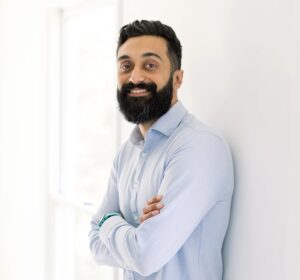
SALDEF’s Faith in Action series celebrates Sikh Americans who live their values every day and strengthen the communities around them. In this interview, we speak with Ruby Basi, a dedicated community advocate who has built a powerful online presence connecting Sikhs across North America and beyond with vital resources, trusted guidance, and a voice that speaks up for those who cannot.
SALDEF: You’ve built such a strong online presence and local reputation as someone the Sikh community can turn to for trusted guidance. What inspired you to start sharing information and resources through your social media platforms?
Ruby: My inspiration comes from a strong desire to connect and support our Sikh and South Asian communities, both here in North America and globally. I realized there was a real need for accessible, reliable information about resources, opportunities, and community stories, and I also felt the need to speak up for those who are afraid to share.
Social media gave me a platform to share that information in a way that’s immediate and engaging, and to be a voice that people of all ages—whether they speak Punjabi or English—can connect with. It’s always been about helping people feel informed, represented, and connected, whether through highlighting cultural events, important news, or resources that can make a real difference in someone’s life.
SALDEF: You often answer community questions about immigration, government forms, and other challenges new immigrants face. What patterns or needs do you see most often, and how do you decide which topics to cover?
Ruby: While I’m not an attorney or lawyer, I often hear from community members about challenges with immigration, government forms, and adjusting to life in a new country. The most common needs I see are clarity on procedures, access to reliable resources, and guidance on where to turn for help.
To support them, I share accurate, publicly available information and trusted resources, and I’m connected with attorneys and lawyers in both the U.S. and Canada who often join videos or live calls to answer questions directly. I always remind everyone to double-check their sources and consult or reschedule with their own attorney as needed—ensuring they get reliable guidance while I serve as a bridge connecting them to the help they need.
SALDEF: How does Sikhi influence the way you approach your work—both online and in person—when serving and educating the sangat?
Ruby: Sikhi is my foundation, and everything I do reflects our teachings. We are taught not to judge, to do sewa, to help those in need, and to remain humble and grounded. I was raised to never think we are better than anyone else—everyone carries the light of the Guru within them. We don’t know it all, which is why learning is a lifelong journey. Sikh values guide me every day, and I strive to live them until my last breath.
SALDEF: Social media can sometimes feel overwhelming or even discouraging. How do you maintain authenticity, compassion, and credibility while growing your platform and engaging thousands of followers?
Social media is not always easy—you see all kinds of profiles, and many have fake pictures or names—but I go back to our teachings. Sikhi reminds us to help anyone we can, and compassion and determination come from within.
Maintaining credibility while growing a platform with thousands of followers means staying true to these values: sharing accurate, verified information, connecting people with trusted resources or professionals when needed, and engaging thoughtfully with the community. For me, building trust and providing meaningful guidance is more important than chasing numbers, and that authenticity naturally helps the platform grow.
SALDEF: Many immigrants rely on social media for guidance, but misinformation is common. How do you ensure the accuracy of your content, and what advice would you give others who want to be responsible educators online?
Ruby: I cannot stress this enough—always do your own research! Too often, people share information they’ve heard from a friend of a friend, which can cause unnecessary panic. While many immigrants turn to social media for guidance, I’m very mindful that the information I share needs to be accurate and reliable. I always verify my sources, rely on publicly available official information, and connect with trusted professionals.
Often, I host one- or two-hour live sessions with legal professionals to answer questions directly. That said, I always remind everyone to double-check information and consult their own professionals—accuracy and caution are key. As an educator, please double-, triple-check anything you’re posting about. If you’re not sure, it’s better not to post on it.
SALDEF: What’s next for you? Are there new projects, collaborations, or goals you’re excited to pursue to expand your impact?
Ruby: I have several new projects lined up, including presenting a family-friendly play called MAA DI PENSION. It’s a comedy show with an educational twist, designed to bring families together and encourage our elderly community to get out, enjoy themselves, and engage socially. In addition, I have more projects in the works and will be appearing on Rukas Avenue, my new show covering headline news in Punjabi-English. I’m excited to continue creating content that entertains, educates, and connects our community.
SALDEF: What message would you like to share with Sikh Americans—especially younger generations—about using their voice, skills, and platforms in service of the community?
Ruby: To the younger generation: you all have a voice. Stand up for your rights, and if you can help someone, do it. If you’re going through something, speak up and if you see something, say something. I’m always here if you need anything, just send me a message. I try my best to respond to every follower, no matter who they are. Again, I’m a Sikh-American and we have a lot of work to do—let’s make a change!
Share Your Story: Know a Sikh American who’s making a difference through their commitment to Sikh values? We want to feature them in an upcoming Faith in Action spotlight. Click here to tell us about their story and contact information.
SALDEF invites you to Langar on the Hill on Wednesday, July 9 at 5 PM EST in Washington, DC.
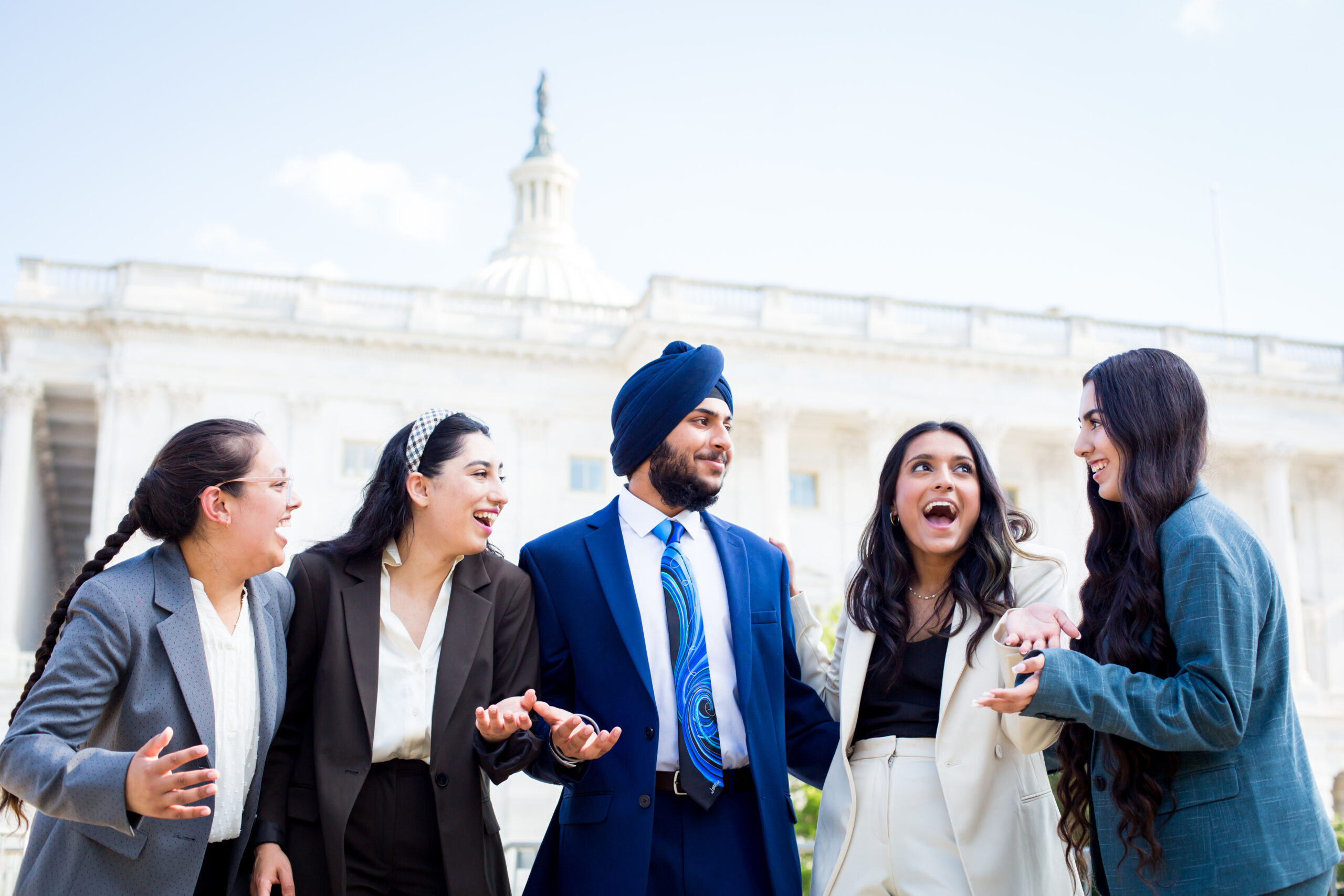
The SikhLEAD D.C. Cohort will be serving free langar on Capitol Hill to educate lawmakers about Sikhi and offer them a chance to connect directly with the Sikh American community.
All are welcome, but RSVP is required. Join us for this powerful moment of seva, education, and community—and help show that Sikhs do belong in every space where decisions are being made.
Sikhs in Storytelling: A Groundbreaking Event Celebrating Sikh Voices and Impact in Media and Arts
SALDEF (Sikh American Legal Defense and Education Fund) hosted a landmark “Sikhs in Storytelling” event, bringing together prominent Sikh creatives, journalists, and artists from across the world to celebrate their contributions and discuss the evolving landscape of representation in media. The inspiring full-day showcase featured candid conversations, powerful performances, and a strong message of community empowerment and garnered coverage in NBC Chicago, uplifting the impact to a national audience.
To experience the program, you can watch the full event on our YouTube here!
Artists & Performers:
Kaviraj Singh: Cellist / Musician
Karmick: Rock Band
DJ Miss Mala: DJ
Mona Bhalla: Renowned Global Singer
Krishma Arora: Poet & Author
Chandni Sahni: Chicago-based Painter
Panelists & Keynote Speakers:
Ranjeev Puri: Michigan State Representative & Democratic House Leader
Humble the Poet: Poet, Rapper, Author & Activist
Inkquisitive: Globally renowned Artist & Illustrator
PJ Randhawa: Investigative Reporter & Journalist, NBC Chicago
Jag Bains: Reality Television Personality & Winner of Big Brother Season 25
Jeevan Singh Neelam: Actor, CBS S.W.A.T.
M’Laah Kaur Singh: Actress, Marvel’s Avengers, Dhoom 3, and more
Harvind Kaur Singh: Producer & Journalist
Seerat Kaler: Community Leader (Sikh Religious Society)
Amrita Bamrah: Executive Director (Dasvand Network)
Sharan Kaur Singh: Interfaith Leader (Parliament of the World’s Religions)
Mohanbir S. Sawhney: Professor & Author, Northwestern University, Keynote Speaker
Following a warm welcome from Amman Seehra, SALDEF Board Chair, the program unfolded with artistic performances. Cellist Kaviraj Singh delivered a captivating performance, accompanied by artist Chandni Sahni, who brought a live painting to life, offering a dynamic snapshot of Sikh history in Chicago.
The first panel, “Kaur Voices, Bold Choices: Chicago Women in Leadership Share Their Stories,” where Seerat Kaler, Amrita Bamrah, and Sharan Kaur Singh shared insights into their journeys as Sikh women blazing trails in their communities, nationally, and globally.
A compelling keynote address, “Standing Out, Standing Up,” by Mohanbir S. Sawhney, further energized the audience, highlighting his career
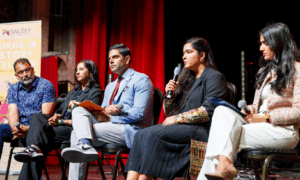
Discussions on the transformative power of narrative took center stage during the “Storytelling for Change and Advocacy” panel. Moderated by Jaslin Kaur, this segment featured activist Pardeep Kaleka, Umeed-Hope Founder Komal Kaur Chohan, Michigan Representative & Democratic House Leader Ranjeev Puri, and Apna Ghar Board Member Jessica Teji, who highlighted the critical role of storytelling in driving social change. The energy then shifted with an electrifying rock performance by Karmick Band, before transitioning into deeper conversations on media representation.
From Left to Right: Pardeep Kaleka, Komal Kaur Chohan, Ranjeev Puri, Jessica Teji, Jaslin Kaur
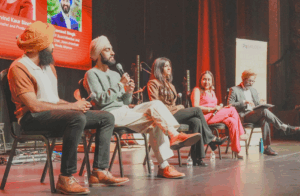
A highly anticipated panel, “From Stereotypes to Reality: Transforming Sikh Representation in Film and TV,” moderated by Kavneet Singh (SALDEF), delved into how Sikh identity serves as a powerful advantage in professional paths.
Jeevan Singh Neelam (Actor, CBS SWAT) discussed how his experiences as a visible minority from a young age fostered strong communication skills, enabling him to confidently engage with diverse audiences. He noted Hollywood’s increasing openness to new narratives as a significant opportunity for Sikhs to share their rich, untold stories, referencing his authentic portrayal in SWAT.
M’Laah Kaur Singh (Actress, Avengers) shared her personal journey of reconnecting with Sikhi, emphasizing its core values of service and community. She powerfully articulated the nuanced experience of identity: “Sikhism looks like a lot of different things. And we have a collectivist culture in India, but an individualistic culture in America. And so it’s the idea that growing up with both, I realized I could be an individual in a collective.” For her, pursuing a law degree will serve as “my turban,” symbolizing her commitment to helping others.
Harvind Kaur Singh (Emmy-nominated producer and Journalist) recounted being advised early in her career that her appearance didn’t fit television norms. Undeterred, she found her power behind the scenes, asserting that “the power that we need to have behind the camera, running the camera, and in front of the camera, I think that’s the biggest takeaway.”
Jag Bains (Winner, Big Brother) revealed the immense pressure he faced as the first Sikh on a 24/7 reality show. He made a conscious choice to play with loyalty, even if it meant risking the game, to uphold his community’s values. His faith, particularly the concept of Chardi Kala, served as his “superpower,” providing strength and gratitude, ultimately leading him to win a record-setting endurance challenge by focusing on the Sikh Gurus.
From Left to Right: Jag Bains, Jeevin Singh Neelam, M’Laah Kaur Singh, Harvind Kaur Singh, Kavneet Singh
The event featured a heartwarming Mother’s Day Tribute, celebrating the spirit of motherhood and the profound impact of parental support. This segment included a dynamic “Power Duo TedX” by a mother and daughter, culminating in a special announcement by DJ Miss Bhalla—she is set to be the official Disney World DJ for Diwali this October. She enthusiastically shared, “Not only been able to show that I’m a DJ, a female DJ, a Sikh DJ, but also that I’m able to let other women know that if you have a passion that you’re on the verge of pursuing, this is your sign to do it,” underscoring her mission to empower women entrepreneurs.
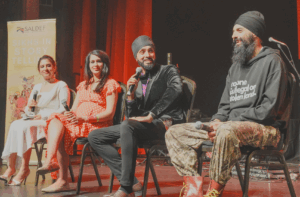
The day culminated with a powerful panel, “Past the Spotlight: The Work, the Weight & the Why,” moderated by Amrita Kular (SALDEF), which delved into the realities and profound impact of storytelling, from creative processes to navigating public perception.
Humble the Poet (Poet/Activist/Author): offered reflections on the evolution of content creation from authentic expression to a pursuit of vanity metrics. He stressed that a creative career demands immense dedication, “You gotta work harder than a lawyer, engineer combined, as there’s no set path.” He encouraged aspiring creators to “be the change you want to see” and share what they genuinely cannot “shut up about.” On dealing with online criticism, he offered a unique perspective: “Hate comments are a sign of success because it means you’re growing outside your bubble.” He urged empathy when encountering such comments, seeing them as reflections of the commenter’s own pain.
Inkquisitive (Global Artist) spoke on finding the courage to center his own experiences in his art, connecting his creative work to the Sikh fight against injustice, likening his paintbrush to a warrior’s sword. He bravely discussed the emotional challenge of creating two significant pieces: “King Without a Crown,” a controversial artwork designed to spark dialogue about Sikh history, and a deeply personal piece honoring his late mother. He advised, “be unapologetically you, be courageous with your artwork, and be strong, be kind.” Regarding online opinions, he asserted, “Art is opinionated. It always will be, no matter what… I’m not here to people, please anymore.”
PJ Randhawa (Investigative Reporter, NBC Chicago) shared her journey to investigative journalism, driven by a Sikh-inspired desire to bring justice and humanity to those facing injustice. She highlighted her impactful investigative series on uninsured school buses in Chicago, which directly led to new legislation. PJ urged the Sikh community to actively engage with media, “We want to celebrate the successes of our community as well,” and passionately emphasized the importance of self-belief for navigating challenges: “You have to be your own biggest cheerleader… have the confidence of a mediocre white man.”
From Left to Right: Amrita Kular, PJ Randhawa, Inkquisitive, Humble the Poet
The panel concluded with a powerful call for community support for Sikh artists and storytellers. Humble the Poet delivered a heartfelt plea for fundamental support: “The support I’m asking for is don’t do that to them. Don’t tell someone to shut up because you don’t know what you’re shutting down.” He highlighted that art is an essential service and artists primarily need the space and encouragement to create and thrive.
Missed it Live? Watch a Replay of the Livestream Here!
Sikh Organizations Release Joint Statement on Closure of U.S. Department of Homeland Security Watchdog Agencies
March 26, 2025 (Washington, DC) — Today, SALDEF (Sikh American Legal Defense and Education Fund) and the Sikh Coalition released the following joint statement on last week’s reports that the Department of Homeland Security is closing three key “watchdog” agencies.
“As longtime advocates for Sikh civil rights, we are disturbed that the Department of Homeland Security (DHS) has announced a ‘reduction in force’ that all but eliminates the Office for Civil Rights and Civil Liberties, the Office of the Immigration Detention Ombudsman, and the Office of the Citizenship and Immigration Services Ombudsman. While we are clear-eyed about the enforcement capabilities of these offices, we know firsthand that a legal venue for challenging abuses against migrants is important.”
“For years, our organizations have been working collaboratively with allies to stop the mistreatment of Sikhs and their articles of faith. As recently as February, in fact, individuals in DHS custody have alleged that their turbans were seized and destroyed (among other mistreatments) in the course of their detention and deportation. Each of our organizations have sought answers and accountability from the Trump Administration on this matter, and neither has received a response. The closure of these offices will only make it harder to protect Sikh detainees’ religious rights—and the human rights and basic dignity to which all detainees, regardless of their background, are entitled to under the Constitution.”
“It is additionally chilling to see these closures against the backdrop of the Trump Administration’s escalating battle with the judiciary regarding their invocation of the Alien Enemies Act and subsequent rendition, without due process, of individuals alleged to be Venezuelan gang members to third-party countries. We call on leaders within DHS, the Department of Justice, and elsewhere in the federal government to commit to respecting the religious and civil rights of all people—even in the course of immigration enforcement.”
The Sikh community has long been known for its distinct practices, rich culture and history of resilience. However, as with any minority community in the United States, stereotypes and ignorance tend to cast a shadow over what being Sikh in America truly means.
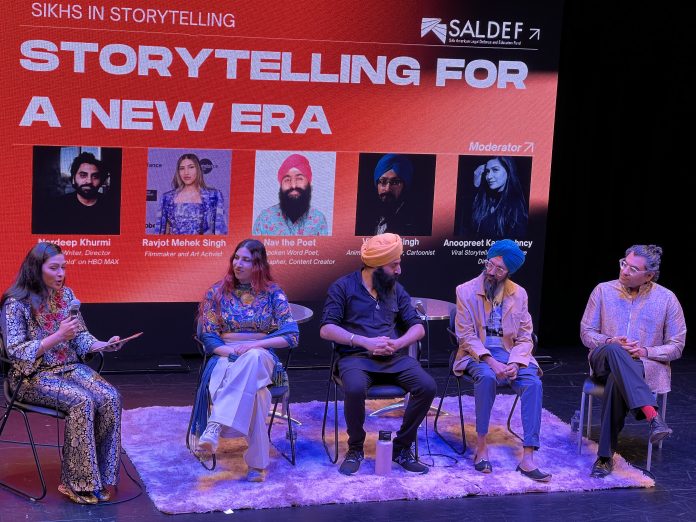
On Saturday, May 11th, the Sikh American Legal Defense and Education Fund (SALDEF) organized a community event called Sikhs in Storytelling which took place at the Five Angels Theatre in New York City. A first-of-its-kind event, Sikhs in Storytelling sought to highlight the accomplishments and stories of Sikh American community members who have made leaps and bounds in the activism, arts, and entertainment sectors.
Attendees included Nav the Poet, videographer and content creator; Nardeep Khurmi, actor, writer, and director best known for his film Land of Gold; Ravjot Mehek Singh, filmmaker and art activist; and Anoopreet Kaur Rehncy, storyteller and creative director- amongst many other notable participants.
“People always think that we, as Sikh Americans, will abide by the trope that we can only be doctors, lawyers, or engineers. No- we are so much more than that. We come from a culture and religion that is so rich in the arts. These are people who exemplify that heritage…” stated Amrita Kular, Communications Director for SALDEF.
The storytelling event began with a religious hymn invoking the blessings of the Sikh Gurus and then proceeded to move into panel events with enriching discussions. Simultaneously, artists, vendors, and members of the community mingled outside of the theater. Much of the art on display focused on bringing awareness to the essence of being Sikh and to the duality of being Sikh American. Other pieces depicted the history of the Sikh community and the horrors of the 1984 genocide perpetrated against the Sikh community in India.
“I went viral because I started making accessible content explaining Sikhi and Sikhi customs and symbols,” said Nav the Poet. “People really don’t know the basics about Sikhism- what wearing a pag [turban] means, how it is different and distinct from Hinduism, and so on.”
Other topics of discussion included the plight of Sikh Americans in the immediate aftermath of 9/11 and how many still bear the brunt of the fallout today.
“I think having an event like this is imperative…until we are depicted as real human beings who are nuanced and have depth, we only ever will be tokenized characters. I grew up in a post-9/11 America when I was the only brown person in my small town,” stated panelist Ravjot Mehek Singh.
This was the impetus for her to include Sikhi in her storytelling, Ravjot shared. It was disappointing to see that the only depiction of her people when she was growing up was of men who resembled her dad, with a turban and a beard, who were only ever depicted as savages. Ravjot knew she had to take action and change the way the media and the world saw her community.
Similarly, Vishvajit Singh, animator, filmmaker and cartoonist, recounted his own trying experience after 9/11. He was working in tech at the time and vividly recalled the sheer “heat” he felt being radiated at him from fellow Americans. He decided to work from home for two weeks and when he eventually did step out of his house, Vishvajit recalled how people would flip him off or call him names. It was this experience that informed his career decision to pivot from the engineering and tech world to a more creative media-focused career.
“My goal is not to just inform people about us but to normalize our people doing things that others would not imagine a Sikh person in a turban doing,” Vishvajit Singh said.
Exclusively covering the event was the Boston-based online TV channel Nishkam TV. Also a first of its kind, Nishkam TV is run by students from the Sikh community. It seeks to impart a range of skills to young adults such as script writing, production design, the importance of a social media presence, website management/development, and so on. Above all, it seeks to teach Sikh youth the importance of well-rounded media content told through a Sikhi lens.
Nishkam initially started out in 2016 as an annual film camp. Every year participating students would create short documentaries or films about the different teachings of Sikhism. Nishkam TV was officially launched in 2019, with the main goal of sharing information about different cultures so as to inspire interfaith dialogue.
“It teaches us that we need to take our narrative into our own hands,” a student member of the production team shared. To them, Nishkam TV was a powerful tool and opportunity to insert the Sikh community into mainstream media without giving into the same stereotype over and over. It was an opportunity to inspire a new generation of leading Sikh actors and Sikh directors.
When asked why Nishkam TV focused on students, the volunteers provided a message of hope to future generations to come.
For student team member Tanisha, the importance of informing and educating the future generation is paramount. Seeing as they will be the ones who will eventually take on leadership positions, it is up to them to improve upon what previous generations have done. The idea of Nishkam TV is to start engaging with younger generations earlier on so that they figure out a lot faster what they want to change and how. The youth are not only educated enough to know what is going on in the world but are also equipped to reach out to those younger than them. This is something older generations cannot do as well. By involving young adults as autonomous people and agents of change, there is surely hope that we are one step closer to shaping a more just and inclusive future.
To learn more about the panelists at Sikhs in Storytelling, please click here.
Click here to learn more about the critically acclaimed documentaries produced by Nishkam TV.
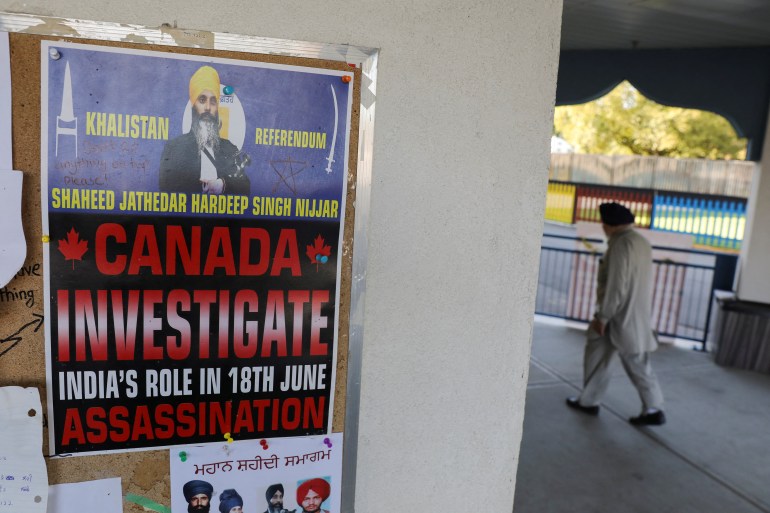
Montreal, Canada – Sikh leaders in North America have welcomed recent arrests in the killing of Canadian Sikh activist Hardeep Singh Nijjar, but allegations that the Indian government was involved continue to fuel questions and unease.
Canadian police announced late last week that three Indian nationals were arrested in Canada for their involvement in the June killing of Nijjar, a prominent Sikh community leader in the westernmost province of British Columbia.
Police added that their investigation into Nijjar’s shooting death would continue, including whether “there are any ties to the government of India”.
Moninder Singh, a spokesman for the BC Gurdwaras Council, a coalition of Sikh temples in the province, told Al Jazeera there was “some relief” that arrests were made in the case.
But Singh, who knew Nijjar personally, said the question of Indian state involvement is “looming” over the Sikh community, which numbers about 770,000 people across Canada — the largest Sikh diaspora outside India.
“The foreign interference is real. The assassination plot is real,” said Singh, adding that it is imperative to get to the bottom of what India’s role has been.
“All of that has to be exposed,” he continued. “There [are] numerous reasons why it’s very, very important for public safety in Canada, along with deterring India from carrying out this kind of operation ever again.”
Canada-India tensions
Tensions between Canada and India skyrocketed in September after Canadian Prime Minister Justin Trudeau announced that authorities were investigating “credible allegations of a potential link” between Indian government agents and Nijjar’s killing.
Nijjar was fatally shot on June 18, 2023, outside the Guru Nanak Sikh Gurdwara, a temple in Surrey, British Columbia, where he served as president.
India vehemently denied the allegations that it was involved, calling them “absurd”. It also accused Nijjar of being involved in “terrorism” — a claim rejected by his supporters.
Nijjar had been a leading advocate in what is known as the Khalistan movement, a Sikh campaign for a sovereign state in India’s Punjab region.
While largely dormant inside India itself, Sikh separatism is largely viewed as a threat by the Indian government, which has urged Western nations to crack down on Khalistan movement leaders in the diaspora.
Canada has provided shelter to “Khalistani terrorists and extremists” who “continue to threaten India’s sovereignty and territorial integrity”, India’s Ministry of External Affairs said as it rejected Trudeau’s allegations in September.
But Sikh leaders in Canada said they have faced threats for years, and they accused the Indian government of trying to silence them.
Nijjar’s killing amplified these longstanding tensions, and new reports have emerged of Indian officials’ involvement in other alleged plots to harm prominent Sikh leaders in Canada and the United States.
Reports of threats
For instance, in late November, the US Department of Justice announced charges against a 52-year-old Indian national, Nikhil Gupta, over a foiled attempt to assassinate Sikh American activist Gurpatwant Singh Pannun.
The plot to kill Pannun, another Sikh separatist leader, was organised in coordination with an Indian government employee and others, according to the Justice Department.
Last week, The Washington Post reported that US intelligence agencies determined that the operation to target Pannun was approved by the then-head of India’s foreign intelligence agency, known as the Research and Analysis Wing or RAW.
The Indian government rejected those allegations as “unwarranted” and “unsubstantiated”, according to media reports.
But rights groups have said India “needs to do a lot more than issue denials” in such cases.
“India’s alleged involvement in assassination plots in the US and Canada suggests a new and notorious leap in extrajudicial killings,” Elaine Pearson, Asia director at Human Rights Watch, said in December.
Pritpal Singh, an activist and founder of the American Sikh Caucus Committee, was among the prominent Sikh leaders who were informed of threats against them over the past year.
Agents with the US Federal Bureau of Investigation (FBI) visited Pritpal, who is based in the state of California, in June to warn him.
In a statement to Al Jazeera this week, Pritpal said he commended “the unwavering commitment of Canadian and American law enforcement agencies” in their investigations into Nijjar’s killing and the surveillance of Sikhs.
“The alleged involvement of the Indian government in these heinous acts is a blatant violation of international norms and human rights. It is wholly unacceptable for any government to engage in extrajudicial killings and suppress dissenting voices abroad,” he said.
Pritpal also demanded accountability for threats against Sikh activists. “We must insist on US justice against those involved in India’s alleged murder-for-hire scheme targeting Americans on US soil,” he said.
“It is imperative that these cases are prosecuted on American soil by the United States Department of Justice to prevent these perpetrators from self-prosecuting.”
India hits out at Canada
Still, India has continued to deny any involvement in the alleged plots, while blasting Canada over its approach to Nijjar’s killing in particular.
The Indian High Commission in Ottawa, the Canadian capital, did not respond to Al Jazeera’s requests for comment on the case.
After news broke on Friday that Canadian authorities had made arrests, the Indian external affairs minister, Subrahmanyam Jaishankar, said the Canadian government had a “political compulsion” to blame India.
Speaking to Indian news outlet The Economic Times this week, Jaishankar also accused Canada of “providing a haven to organised crime”.
“We’ve been repeatedly telling the Canadians that, if you actually allow such forces to set up shop and create networks, this is going to harm their own society. But so far, I don’t think that advice has been well heeded,” the minister said.
Canadian authorities have rejected the idea that they have allowed unlawful activity to proliferate. Experts also argue that many of the individuals India considers “terrorists” are not violating any Canadian laws.
“Canada is a rule-of-law country with a strong and independent justice system as well as a fundamental commitment to protecting all its citizens,” Trudeau said during a Sikh community event in Toronto on Saturday.
“I know that many Canadians, particularly members of the Sikh community, are feeling uneasy and perhaps even frightened right now. Well, every Canadian has the fundamental right to live safely and free from discrimination and threats of violence in Canada,” Trudeau added.
Use of ‘proxies’
Last week, the head of a Canadian public inquiry into foreign interference also released an interim report that accused Indian officials as well as their proxies in Canada of engaging in “a range of activities that seek to influence Canadian communities and politicians”.
This includes efforts to “align Canada’s position with India’s interests on key issues, particularly with respect to how the Indian government perceives Canada-based supporters of an independent Sikh homeland”, Commissioner Marie-Josee Hogue said.
The report noted that India “does not differentiate between lawful, pro-Khalistani political advocacy and the relatively small Canada-based Khalistani violent extremism”.
Therefore, “it views anyone aligned with Khalistani separatism as a seditious threat to India”.
Hogue also found that Indian officials are increasingly relying on Canadian and Canada-based proxies and their contacts to conduct foreign interference.
“This obfuscates any explicit link between India and the foreign interference activities. Proxies liaise and work with Indian intelligence officials in India and in Canada, taking both explicit and implicit direction from them,” the report said.
‘Galvanising’ Sikh communities
Ultimately, Sikh leaders have called for a full investigation into all those who may be involved in threats against members of their communities, including Indian state officials.
“I can’t speak to the motivation of the Indian state if it is proven that they are behind these heinous attacks,” said Kavneet Singh, chair of the board of the Sikh American Legal Defense and Education Fund (SALDEF), a US-based civil rights group.
“But they have had a long history of suppression of freedom of expression and targeting those who speak out in dissent.”
Kavneet told Al Jazeera that the American Sikh community is advocating at the federal and state levels “for improved legislation to better help law enforcement understand, identity and prosecute” instances of transnational repression.
He added that, despite the threats, the Sikh community’s history “has not been one of living in fear”.
Instead, “it’s one of understanding that there are potential threats, and it’s [one of] being vigilant,” Kavneet said. “In fact, I think this is actually galvanising the community and our diasporic allies.
“While there may be political differences amongst communities, ultimately we stand together when members of the community and/or our institutions are threatened by actors either foreign or domestic.”
Singh at the BC Gurdwaras Council echoed that sentiment, stressing that the Indian government is trying to “silence” Sikh voices in the diaspora who are advocating for a sovereign state.
Singh was among five Sikh leaders — including Nijjar — who were warned by the Royal Canadian Mounted Police’s national security division in 2022 about threats against their lives.
He told Al Jazeera on Tuesday that the Canadian authorities told him within the past two months that the threat against him “is still real” and he should avoid large public gatherings.
“If we speak on this issue [Khalistan] and we’re going to lead the community on this issue in the diaspora, I think those threats will always be there now. There’s no way that we can ever go back,” he said.
“When Hardeep’s assassination happened, that really set some clarity in for some of us that this is real. This is the new real for us and the new reality, that this can happen at any time.”
Hundreds of groups urge Big Tech CEOs to step up fight against AI-fueled lies
More than 200 civil advocacy groups are calling on Big Tech to bolster their fight against artificial intelligence-fueled misinformation as billions of voters head to the polls this year in elections around the globe.
The coalition of activists wrote to the CEOs of Meta, Reddit, Google and X, and 8 other tech executives Tuesday, urging them to adopt more aggressive policies that could stem the tide of dangerous political propaganda.
These extra steps are critical in 2024 given that more than 60 countries are holding national elections, the groups charged in their letter, a copy of which was obtained exclusively by The Technology 202.
“So many elections are happening around the world this year and social media platforms are one of the most essential ways that people typically connect with information,” said Nora Benavidez, senior counsel of the digital rights group Free Press. The companies need “to increase platform integrity measures for this moment.”
The organizations — which include the civil rights group Color of Change and the LGBTQ+ advocacy group GLAAD — also pushed the tech giants to beef up their policies on political ads, including prohibiting deepfakes and labeling any AI-generated content in them.
For months, advocates have been warning that the rise in audio clips and videos generated by AI is already leading to confusion in elections around the world. Politicians, for instance, have been able to dismiss potentially damning pieces of evidence — such as hotel trysts or recordings of them criticizing their opponents — as AI-generated fakes. And risks of AI could lead to real-world harm in politically volatile democracies, experts say.
Tech companies such as Meta, Google and Midjourney have insisted that they are working on systems to identify AI-generated content with a watermark. Just last week, Meta said it would expand its AI-labeling policy to apply to a wider range of video, audio and images.
But experts say tech companies are unlikely to catch all the misleading AI-generated content proliferating on their networks or fix the underlying algorithms that make some of those posts go viral in the first place.
“People … are not on high alert” when they consume social media in typical passive fashion, said Benavidez. “That’s one of the problems.”
“Social media has diminished our curiosity and increased that siloed echo chamber effect,” she added.
The groups also called on the tech companies to be more transparent about the data powering their AI models and lambasted them for weakening policies and systems meant to fight political misinformation over the last couple of years.
X, for instance, has reversed some of its rules against misinformation and allowed far-right extremists to return to the platform. Meta is offering users the option to opt out of the company’s fact-checking program, allowing debunked posts to gain more traction in news feeds. YouTube has reversed a policy banning videos falsely promoting the idea that the 2020 election was stolen from former president Donald Trump, while Meta started allowing such claims in political advertisements.
Meanwhile, mass layoffs at X, formerly Twitter, and other major tech companies have gutted teams dedicated to promoting accurate information online. And an aggressive conservative legal movement has led the federal government to stop warning tech companies about foreign disinformation campaigns on their social networks.
If tech companies don’t step up, dangerous propaganda on social media could lead to extremism or political violence, the activists argued.
“It’s not beyond the realm of impossibility that we’re going to see even more persuasive misinformation in the form of deepfakes” said Meta whistleblower Frances Haugen, whose group, Beyond the Screen, signed on to the letter. “Even if you are not willing to believe that violence can happen in the United States at scale … countries with far more fragile democracies … are just as vulnerable to all of these manipulations.”
SALDEF Releases Groundbreaking Report on Transnational Repression and Minority Censorship
A pioneering report titled Virtually Vulnerable: Exposing the Human Cost of Digital Harassment was released on February 20 by the Sikh American Legal Defense and Education Fund ( SALDEF ). This in-depth study examines the escalating problem of online harassment and censorship, specifically targeting the Sikh diaspora and allied communities like secular Hindus, Indian Muslims, and Dalits.
“’Virtually Vulnerable’ sheds crucial light on the insidious ways digital harassment is employed against minority voices, including those in the Hindu community who stand for secular and democratic values, said Sunita Viswanath, Executive Director, Hindus for Human Rights (HHR). “This report not only exposes these harmful practices but also provides vital policy recommendations. It’s essential that we come together to ensure that digital platforms are spaces of free expression and not tools of oppression.”
The report offers a detailed analysis of the sophisticated methods used to silence minority voices online. It highlights the troubling practices of Big Tech, specifically social media firms, in censoring content under the guise of preserving national integrity, often resulting in the shadow banning and deletion of community-based social media accounts.
It includes a series of policy recommendations aimed at promoting transparency, accountability, and collaboration between tech companies and democracy-oriented nonprofits. These recommendations are geared towards mitigating international censorship and supporting the rights of free speech for diasporic communities.
This report serves as a clear call to action, said Kavneet Singh, SALDEF Acting Executive Director. “We must urgently address the lack of transparency and accountability in the digital realm to safeguard the fundamental human and civil rights of all communities.”
Thenmozhi Soundararajan, Executive Director of Equality Labs, the nation’s leading Dalit civil rights organization, added, “We are currently witnessing the digitization of caste apartheid, violent disinformation campaigns, and an era of surveillance capitalism exacerbated by right-wing authoritarianism. Caste-oppressed people have a right to advocate for their communities without the fear of being attacked and targeted by foreign state actors. This report is a critical look into the correlations between Big Tech, civil rights advocacy, and repression of dissent, and anyone concerned with free and ethical digital spaces should pay attention to it.”
Some of the critical issues addressed in the report include documenting trends in misinformation and suppression of Sikh voices on significant dates and events, examining the strategic misinformation campaign against various minority groups, including Indian Muslim and progressive Hindu communities–by the Indian-American Muslim Council (IAMC) and Hindus for Human Rights (HHR), and Big Tech’s failure to protect caste equity.
The report is available for download on the SALDEF website.



 Social media gave me a platform to share that information in a way that’s immediate and engaging, and to be a voice that people of all ages—whether they speak Punjabi or English—can connect with. It’s always been about helping people feel informed, represented, and connected, whether through highlighting cultural events, important news, or resources that can make a real difference in someone’s life.