February 20, 2008 1. Vermont Prisons To Change Policy on Religious Freedom 2. SALDEF Internship Program 3. 10-year old Sikh American Discriminated Against 4. ABC Apologizes for Misrepresenting Sikhs as Muslims 5. Two California Sikh Americans arrested for possession of Kirpan 6. Sikh’s Turban Grabbed in New Jersey Restaurant 7. SALDEF Mourns Loss of Human Rights Icon 8. SALDEF Discusses Bullying and School Harassment with Sikh Children at Houston Sikh Camp 9. Prosecutors Decline to File Charges in Death of Simran Singh 10. Upcoming Events Vermont Prisons to Change Policy on Religious Freedom Last year, SALDEF was contacted by Satnam Singh, a Sikh American currently incarcerated within the Vermont Department of Corrections, regarding a potential policy change that would have restricted Mr. Singh’s right to maintain his turban. On January 10, 2008, in response to SALDEF’s inquiry, Robert Hofmann, Commissioner of the Vermont DOC formally accepted changes in policy to respect a prisoner religious rights. Among others, changes included recognizing the Khanda as a religious symbol, allowing prisoners to maintain their turbans in all areas of the institution, and an implementation of a redress process. SALDEF Internship Program The SALDEF Internship Program offers Sikh American youth rare opportunities for political advocacy and leadership development. The program educates students on issues of civil rights, public policy and the legislative process. Students will gain hands-on experience in community organizing, research, writing, legal issues effecting the community, political action, and education outreach. Current opportunities available include: Legal, Legislative, Communications and Development Fellows. Click here for more information. 10-year-old Sikh American Discriminated Against In January, a 10-year-old Sikh American was denied his right to wear a t-shirt with the phrase, “Akal Purakh Ki Fauj.” The school banned the phrase, meaning The Truth is God’s Army, by misrepresenting it’s translation to support militancy. SALDEF is working to educate the school on the meaning of the phrase and how denying the student to wear the shirt, which was obtained through a local Sikh camp, violates his Free Speech rights. ABC Apologizes for Misrepresenting Sikhs as Muslims A New Jersey affiliate of ABC News apologized to SALDEF and the Sikh American community for misrepresenting Sikhs as Muslims. In a news report on the assassination of former Pakistani Prime Minister Benazir Bhutto, Correspondent Jeff Rossen showed a Sikh American walking in the streets of New York City under the language referring to a Muslim neighborhood and concerns over the affairs in Pakistan. Within 24 hours of receiving SALDEF’s letter Jeff Rossen and ABC apologized to SALDEF and the Sikh American community and promptly removed and edited the video depicting the misrepresentation. Two California Sikhs Arrested for Possession of a Kirpan SALDEF is currently assisting two Sikh American men who were arrested and charged with violating concealed weapon laws for wearing their religiously-mandated article of faith, the kirpan. SALDEF is working closely with attorneys in both Bakersfield and Oakland to ensure the dismissal of these charges and that these Sikhs face no penalty.
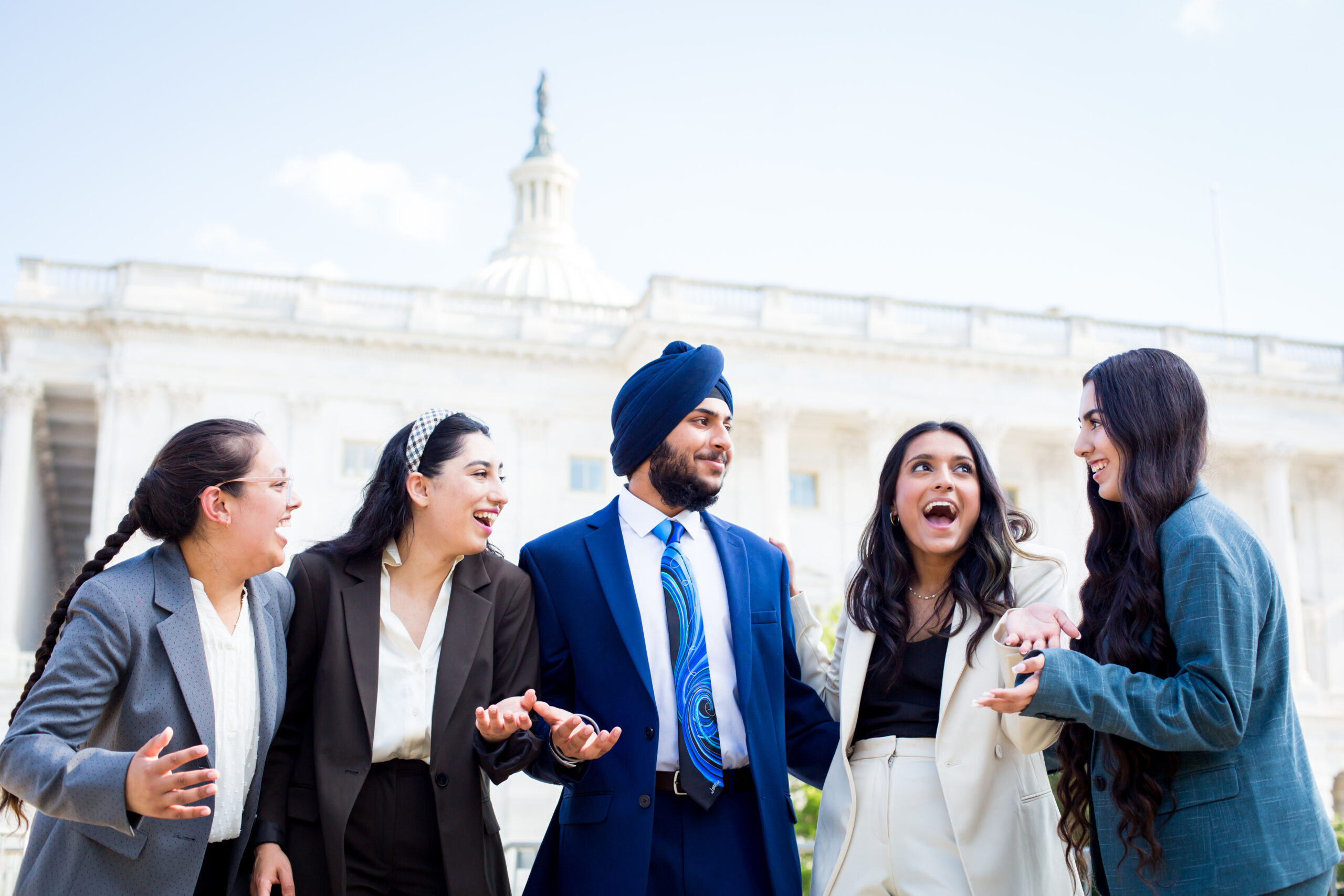
SALDEF Advocate: SALDEF Forces VT Prisons to Change Policy
New Policy Affects Tens of Thousand of Green-Card Applicants Waiting for FBI Name Checks Washington D.C; February 15, 2008 – The Sikh American Legal Defense and Education Fund (SALDEF), the nation’s oldest Sikh American civil rights and advocacy organization, welcomes the new procedure announced by the U.S. Government to expedite the permanent residency applications of thousands of immigrants in the United States. The new policy by U.S. Immigration and Custom’s Enforcement (USCIS) affects 47,000 permanent residency or green card applicants whose applications, which are otherwise completed but delayed due to FBI name checks. The new policy will give the FBI 180 days to complete the name checks. After the time threshold is passed, the new immigration documents will be provided to the applicant even if the FBI has not completed their check. However, the background checks will continue and DHS and the FBI reserve their right to revoke the legal status of someone if credible information is obtained to justify doing so. Unfortunately, this new USCIS policy does NOT apply to applications for naturalization. Since mid-2007, SALDEF has made dozens of official complaints in response to naturalization delay concerns from community members – some waiting over 4 years. In total, 44% of the 322,000 pending immigration name checks (which include naturalization and green cards) have waited over six months. In a December 2007 meeting with USCIS Director Emilio Gonzalez, SALDEF was informed that steps were being taken by the DHS and the FBI to address the thousands of applicants waiting for their naturalization due to name checks. SALDEF was told that “significant results” would be seen within six months. SALDEF feels the new USCIS policy expediting permanent residency and green card applications is an encouraging step in the right direction. We remain hopeful that the increased resources provided by the DHS and the FBI to deal with name check delays resolves this issue for hundreds of thousands of immigrants. If you or a community member you know is experiencing an immigration delay, contact SALDEF immediately at info@saldef.org or 202-393-2700. USCIS Director Emilio Gonzalez Testimony; Hearing on “Naturalization Delays: Causes, Consequences, and Solutions.” House Judiciary Committee, January 2008 E-Verify: Employment Eligibility Verification Program
Department of Justice Adds SALDEF Sikh Cultural Awareness Training to Community Relations Service (CRS) Website
SALDEF has played a leading role in improving the understanding of Sikh American religious and cultural practices among law enforcement and government agencies nationwide.
In partnership with the U.S. Department of Justice (DOJ), SALDEF developed On Common Ground: Sikh American Cultural Competency Training for Law Enforcement, a training video designed to reduce bias, prevent misunderstandings, and strengthen relationships between Sikh communities and public institutions.
Launched: January 2007
Reach: Viewed by more than 65,000 law enforcement officials in the United States
Adoption: Used by all TSA screeners at U.S. airports
Global Impact: Requested by law enforcement agencies in Ireland, the United Kingdom, Germany, Australia, India, and Brazil
Federal Recognition: Hosted by the DOJ’s Community Relations Service (CRS)
This work builds on SALDEF’s broader Educational Outreach efforts with federal agencies, including:
- DOJ Collaboration (2004): Common Sikh American Head Coverings — a poster educating local, state, and federal officials on Sikh articles of faith, including the dastaar (turban), and best practices for respectful engagement.
- DHS Collaboration (2006): Sikh Americans and the Kirpan — guidance developed with the Department of Homeland Security to promote awareness and ensure appropriate interactions between Sikh Americans and federal law enforcement.
Director of DOJ-CRS, Ondray T Harris remarked, “On Common Ground serves as a valuable tool in educating law enforcement officials, airport personnel, and various communities across the United States on the cultural and religious practices associated with Sikhism. Awareness of cultural and religious observations can help avoid misunderstanding and tension. Towards this goal, On Common Ground can assist the public in understanding the challenges and realizing the contributions of the Sikh community in the United States. Former CRS Director Sharee Freeman, the Sikh American Legal Defense and Education Fund (SALDEF), and other local, state, and federal agencies are to be commended for their extraordinary efforts in making On Common Ground possible.”
Together, these initiatives demonstrate SALDEF’s long-standing commitment to proactive education, institutional accountability, and protecting the civil rights and dignity of Sikh Americans through partnership and policy-informed outreach.
Over 60,000 law enforcement officials from across the United States have screened On Common Ground: Sikh American Cultural Awareness Training for Law Enforcement.
| Law Enforcement Trained in 2007 Federal Agencies: Local Officials in: |
In a groundbreaking partnership, the Sikh American Legal Defense and Education Fund (SALDEF) and the U.S. Department of Justice – Community Relations Service (DOJ-CRS) produced this pioneering Sikh American cultural awareness training film especially for law enforcement. You can watch the film .
Then U.S. Attorney General Alberto Gonzalez reflected, “[On Common Ground] makes clear that Sikhs are an integral part of American society. I commend CRS, and I offer my sincere appreciation to CRS and SALDEF for their perseverance and creative effort in producing this educational film.”

Since its release in 2007, the training program has become an integral part of law enforcement education throughout the United States and is used extensively by federal, state, and local law enforcement. The training video is also being used as a model for law enforcement agencies worldwide including Australia, Canada, the United Kingdom, and New Zealand.
Through your generous support, SALDEF will continue to develop innovative strategies to inform the American public about Sikhism and create a more inviting environment for our families and children. Make your contribution before the year ends to support this work done in the spirit of seva.
Year-Long Campaign Trains Entire Boston Police Force
Washington, D.C. – December 11, 2007: The Sikh American Legal Defense and Education Fund (SALDEF), the nation’s oldest and largest Sikh American civil rights organization, concluded a highly successful year-long campaign to train the entire Boston Police Department (BPD) on Sikh religious practices. The over 3,000 BPD officers join the 95,000 trained by SALDEF across the nation. 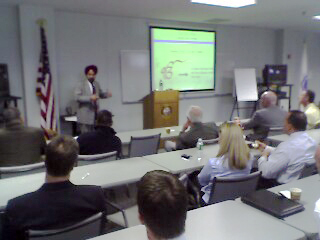 Boston Police Commissioner Ed Davis remarked: “This program has provided officers a tremendous opportunity to broaden their knowledge of the cultural and historical factors impacting the Sikh community. The city of Boston is a melting pot of diversity. Therefore, it is critical that our officers are exposed to a curriculum that includes cross-cultural awareness that strengthens community relations and prevents cultural misunderstandings.” Beginning in January 2007, SALDEF New England Director Navjeet Singh and a group of dedicated community activists and volunteers have been training law enforcement officers every week to increase cultural awareness of the Sikh American community and develop an ongoing partnership between law enforcement and the community. “It’s important that police leaders in our community are aware of and have an understanding of the diversity in the City of Boston,” said Mr. Singh. “The completion of this training is a first step in working more with our fellow Americans to ensure they understand who we are and what we believe.”
  The training is part of SALDEF’s Law Enforcement Partnership Program which has trained over 95,000 law enforcement officers over the past eight years. In 2007 alone, SALDEF training efforts have already reached over 14,000 law enforcement officers in cities across the nation including Washington, DC; Columbia, MO; Des Moines, IA; Greensboro, NC; Charlestown, WV; Portland, OR; and Pittsburgh, PA. Additionally, all 43,000 Transportation Security Officers in the United States will view On Common Ground by year’s end as part of their mandated training. SALDEF would like to thank the U.S. Department of Justice and acknowledge the Boston volunteers: Satnam Singh, Sarbjit Singh Thiara, Kanwaldeep Singh Arneja, Jaswant Singh Chani, KaviRaj Singh, and Achint Kaur, for their dedication to ensure this training endeavor was carried out to its successful conclusion. If you would like to conduct a similar training in your area, please contact SALDEF at training@saldef.org or (202) 393-2700.
Removing a Sikh’s turban in public is the same as a strip search. Not all Arabs are Muslim. A kirpan is not a concealed weapon. Those lessons and others were delivered Wednesday to about 75 Pennsylvania law enforcement officers during a four-hour seminar at the Allegheny County Police Academy. Sponsored by the U.S. Department of Justice’s Community Relations Service, the seminar was designed to teach local agencies about Arab, Muslim and Sikh cultures, officials said. “What do you think of when you hear the term ‘Arab’?” Nawar Shora, director of the American-Arab Anti-Discrimination Committee’s Law Enforcement Outreach Program, asked attendees. Initial answers were neutral: “Omar Sharif,” “nomads,” “camels.” Only after Shora urged people to include stereotypes did one man respond with “terrorists.” “These are all common answers,” Shora said. Most Americans have negative images of Arabs and Muslims because our schools, pop culture and media promote such stereotypes, he said. But, Shora said, not all Arabs are Muslim; 42 percent of Arab Americans are Catholic. Many famous Americans are of Arab descent, he said, including Ralph Nader, actress Shannon Elizabeth and pop mogul Paula Abdul. “The odds are, you’ve reacted with Arabs. You just haven’t realized it,” he said. But subtle cultural differences exist, Shora said, offering tips for police who might deal with Arabs in non-emergencies. For example, in the Arab world it’s acceptable to stand closer to another person than in the United States. An Arab who gets too close to an officer might not realize it, Shora said. “They’re not getting up in your face, they’re not going for your gun.” Rajbir Datta, a Pittsburgh native and associate director of the Sikh American Legal Defense and Education Fund, said that although Sikhs speak a different language (Punjabi), practice a different religion (Sikhism) and generally come from a different continent (India), they often are mistaken in America for Arab Muslims. Most men wearing turbans in the United States are Sikh, Datta said. If a police officer must search a turban, Datta urged them to explain why, to do so in a private setting, and to offer the Sikh something to cover his hair during the search. “Turbans are very religious, very personal,” he said. “Many men never reveal their hair in public, so making them remove it would be like a public strip search.” Datta said many Sikhs carry a kirpan, a 3- to 6-inch sheathed knife that symbolizes a Sikh’s commitment to protect the weak and promote justice. An officer who has to confiscate a kirpan should explain why and handle the knife with respect, Datta said. Pittsburgh police Detective Julie Stoops said the seminar was educational. Stoops is one of three police liaisons who works with Hispanics. She said she hopes to expand the program to include Muslims, Arabs and Sikhs. “Until today, I was completely ignorant of Sikhism,” Stoops said. “I learned a lot. This was great, one of the best training sessions I’ve taken in a long time.” www.usdoj.gov/crs Chris Togneri can be reached at ctogneri@tribweb.com or 412-380-5632. http://www.pittsburghlive.com/x/pittsburghtrib/news/cityregion/s_529578.html Pittsburgh Tribune-Review
Leading Sikh organizations continue to engage TSA Washington D.C. – September 17, 2007 : In response to the concerns of the Sikh American community and the efforts of the Sikh American Legal Defense and Education Fund (SALDEF), the Sikh Coalition, and UNITED SIKHS, Congressional leaders issued a letter to Department of Homeland Security (DHS) Secretary Michael Chertoff and Transportation Security Administration (TSA) Administrator Kip Hawley. Congressional Leaders who sent the letter include: – Congressman Michael Honda, Chair of the Congressional Asian Pacific American Caucus; – Congressman John Conyers, Chair House Judiciary Committee – Congresswoman Sheila Jackson-Lee, Chair House Subcommittee on Transportation Security and Infrastructure Protection – Congressman Tom Lantos, Chair House Foreign Relations Committee – Congressman Bobby Scott, Chair CAPAC Civil Rights Taskforce “We are concerned that the change was made without community consultation,…and that greater discretion for searching headwear without proper guidance for Transportation Security Officers (TSOs), has lead to racial profiling,” said the statement. “A mandatory turban pat-down is tantamount to racial and religious profiling and is therefore unacceptable in our democracy. It would be intolerable if the new policy had indeed been implement, whether intended or not, in this manner.” Read the full text of the letter here. The Congressmen asked Secretary Chertoff and Administrator Hawley to explain aspects of the policy and its implementation, including how and why any misunderstanding and miscommunication occurred. In addition, they requested that TSA and DHS “work with representatives of the Sikh American community to ensure that the policy reflects a respect for the religious significance of turbans within the Sikh faith, and that the screening policy protects our homeland without sacrificing our religious freedoms.” SALDEF commends Congressmen Honda, Conyers, Lantos, Scott, and Congresswoman Jackson-Lee, for responding to the concerns of the Sikh American community brought forth by SALDEF, the Sikh Coalition, and UNITED SIKHS. SALDEF looks forward to continuing discussions with TSA and DHS to finding a solution which respects national security and the religious rights of all Americans. For more information on the new policy and your rights as a passenger, please see below: – Sikh American Groups Meet with TSA about Turban Screening Policy – New Airport Security Screening Procedure Affects Sikh Turban – Airport Security and Your Rights as a Passenger – Video of SALDEF on FOX NEWS
TSA Commits to First Steps; Erroneous New Policy Remains in Effect Washington D.C. – September 12, 2007: On Monday, representatives from the Sikh American Legal Defense and Education Fund (SALDEF), the Sikh Coalition, and UNITED SIKHS, met with officials from the Transportation Security Administration (TSA) and the Department of Homeland Security (DHS) regarding the Sikh American community’s concerns about the TSA’s recently revised headwear screening procedure. While our organizations are encouraged by remedial steps proposed by the TSA, we remain concerned that the new policy that singles out head-coverings, specifically the turban and equates it to other forms of non-religious head-coverings, remains in effect. SALDEF, the Sikh Coalition, and UNITED SIKHS appreciate the steps that the TSA is taking to remedy the situation. Our organizations are committed to working with the TSA to find a solution to the Sikh American community’s concerns, while keeping all Americans safe. However, we remain concerned that: – The new TSA-issued screener guidance specifically cites the turban as an item that should be subject to secondary screening; – The new procedures grant screeners too much latitude to subject a Sikh to additional screening, a turban pat-down, or to remove the turban; and – The new policy endangers all Americans by focusing critical security resources on headwear when threat items that can be found anywhere on the body. In preparation for the meeting, the three Sikh American organizations submitted a joint memorandum to the TSA late last week. The memorandum discussed the impact of the new screening procedure, introduced on August 4, 2007, on the Sikh turban. The memorandum proposed measures to revise the procedures with the objective of eliminating its disproportionate impact on the Sikh turban. At the meeting, a high level TSA official stated: “I want to apologize for not getting information out about the [policy] change on head coverings specifically out to [the Sikh American] community before the roll out. We will get better, I promise you.” During the meeting, the TSA promised to take the following steps, in response to our concerns: – The TSA will require all officers to offer private screening to anyone undergoing secondary screening of a head covering. – The TSA will distribute a fact sheet for airline travelers to explain the new airport head-covering screening procedure. – The TSA will conduct cultural sensitivity training for all airport screeners, including in person and online training about Sikh Americans featuring the On Common Ground training video. The TSA will also redistribute the “Common Sikh American Head Coverings” posters to all airports. – The TSA will revise its public-facing website to make it easier for air travelers to file discrimination claims. – The TSA will continue to review the guidance to the Standard Operating Procedure to determine whether its current procedures are necessary to ensure the public’s safety. TSA also explained that persons who clear the “puffer machine” are not ordinarily subjected to secondary screening. Unfortunately, this technology is currently only available at select terminals at one-tenth of the nation’s airports. SALDEF, the Sikh Coalition, and UNITED SIKHS recommend that the Sikh American community take the following steps when traveling: – If requested to undergo a pat down, accept the TSA officer’s offer of a private screening area. – If available, request to go through a “puffer machine” rather than a pat down. Also in attendance at the meeting were representatives of the American-Arab Anti-Discrimination Committee, the Muslim Public Affairs Council, the Sikh Council on Religion and Education, Sikh Dharma, and the World Sikh Council.
TSA expresses desire to work with community on Turban screening policy Washington D.C. – August 30, 2007: The Sikh American Legal Defense and Education Fund (SALDEF), the nation’s oldest and largest Sikh American civil rights and advocacy organization, received a call today from Transportation Security Administration (TSA) Administrator Kip Hawley to discuss the revised screening procedures for the Nation’s airports. Administrator Hawley personally called SALDEF Chairman Manjit Singh to assure the Sikh American community that the TSA understands the importance of the Sikh turban and the magnitude of the community’s concerns over the new policy. He committed the TSA to working with the Sikh American community to finding a workable solution which balances respect for the turban and security concerns. The TSA, in a statement issued earlier this afternoon, stated: “Today TSA Administrator Kip Hawley responded to the leaders of the Sikh community. He expressed understanding about the sensitivity and importance of the Sikh head dress screening. He said TSA takes their concerns seriously and is interested in reaching a workable solution that does not compromise security. TSA will implement additional cultural awareness training for its transportation security officers and will continue dialogue with Sikhs and other groups.” The new airport security procedures implemented on August 4, 2007, allow the Transportation Security Officers (TSOs) greater “discretion” regarding passenger screening and to enforce additional screening for individuals who wear head coverings. As per the TSA, the new procedure is aimed at head coverings that can possibly hide a threatening non-metallic object. The guidance regarding the new screening procedure, provided to the 43,000 TSOs, lists the Sikh turban among others (cowboy hats and straw hats), as an example of head coverings that may potentially hide a threatening non-metallic object. “We are grateful to Administrator Hawley for reaching out to us in hopes of furthering the dialogue in working to find a solution to the concerns of the Sikh American community”, said SALDEF Chairman Manjit Singh. “We look forward to working directly with TSA to create a screening procedure that both keeps our county secure, but also ensures that civil liberties are not violated.” The Sikh turban is the only religious head covering cited in the list of example head coverings provided to the TSA airport security screeners. The new procedures explicitly exempts skull caps (religious or not) from the new screening process. Under the old procedure, travelers would only be required to undergo additional security screening if they were unable to successfully clear the metal detector or if they wore loose fitting clothing.
SALDEF meets with TSA to address community concerns and complaints Washington D.C. – August 24, 2007: On Wednesday the Sikh American Legal Defense and Education Fund (SALDEF), the nation’s oldest and largest Sikh American civil rights organization, met with the Transportation Security Administration (TSA) and other officials from the Department of Homeland Security (DHS) to discuss the impact on Sikh Americans of the recently implemented changes to security screening procedures at the Nation’s airports. The new airport security screening procedures implemented on August 4, 2007, allow the Transportation Security Officers (TSOs) greater “discretion” regarding passenger screening and to enforce additional screening for individuals who wear head coverings. As per the TSA, the new procedure is aimed at head coverings that can possibly hide a threatening non-metallic object. The guidance regarding the new screening procedure, provided to the 43,000 TSOs, lists the Sikh turban among others (cowboy hats, straw hats, etc.), as an example of head coverings that may potentially hide a threatening non-metallic object. The Sikh turban is the only religious head covering cited in the list of example head coverings provided to the TSA airport security screeners. The new procedures explicitly exempts skull caps (religious or not) from the new screening process. Under the old procedure, travelers would only be required to undergo additional security screening if they were unable to successfully clear the metal detector or if they wore loose fitting clothing. SALDEF expressed the Sikh American community’s outrage regarding the discriminatory nature of the new procedure. SALDEF further expressed its disappointment in the lack of any consultation with the Sikh American community prior to finalizing and rolling out the new screening procedures. “We are deeply troubled at the potentially marginalizing effects this policy revision has on the Sikh American community,” said Board Chairman Manjit Singh. “While the need for securing our nation’s airports is undeniably important, the new screening procedures directly “profile” the Sikh American community and other communities of faith. We are encouraged by TSA and DHS’s willingness to address the concerns faced by the Sikh American community. We look forward to a continued dialogue to adequately address and resolve the community’s concerns.” To assist the Sikh community to effectively handle the new airport security screening procedures, SALDEF has created a guide called “ How to Respond to a Request to Search Your Turban” to use during their air travel. We recommend that you download, print and carry a copy with you during your air travel.