February 2012 Advocate

  • Investigation Ongoing in Michigan Gurdwara Vandalism
  • New Information Released in the 2011 Murder of Elk Grove, CA Sikhs
  • Attention All College Students and Recent Graduates!
  • Advocating Against Racial Profiling
  • Improving Hate Crime Data Collection
  • SALDEF Presents to the Yolo County District Attorney’s Office
  • SALDEF Conducts Training for United States Park Police
  • Upcoming Events


Investigation Ongoing in Michigan Gurdwara Vandalism
Earlier this week a Gurdwara under construction in Sterling Heights, Michigan, was vandalized.  The vandalism included spray painting of vulgar language, racial epithets, what appears to be a cross, and a large drawing of a gun.  Read full story here. The FBI and Sterling Heights Police Department continue to investigate the crime. A press conference will be held at the Gurdwara site, 33340 Dequindre road, Sterling Heights, 48310, at 3pm EST, and all community members are encouraged to attend.  Click here for press conference details.

New Information Released in the 2011 Murder of Elk Grove, CA Sikhs
The Sacramento Bee reports that Elk Grove police have updated the description of the suspect vehicle in a double-homicide of two elderly Sikh men who were shot last year when they were out for their routine afternoon walk. Gurmej Atwal, 78, and Surinder Singh, 65, were shot on March 4 as they walked on East Stockton Boulevard near Geneva Pointe Drive. Surinder Singh died at the scene and Gurmej Atwal died six weeks later in a hospital.

Police officials said the suspect drove a lifted full-size pick-up truck, tan or gold in color, with a standard-size cab. They do not have details on the make or model year of the truck. SALDEF encourages the public to continue calling the department with tips or leads. “No tip is too small,” said Elk Grove Mayor Jim Cooper. “Make no mistake, this was a cowardly act.”

Attention All College Students and Recent Graduates!
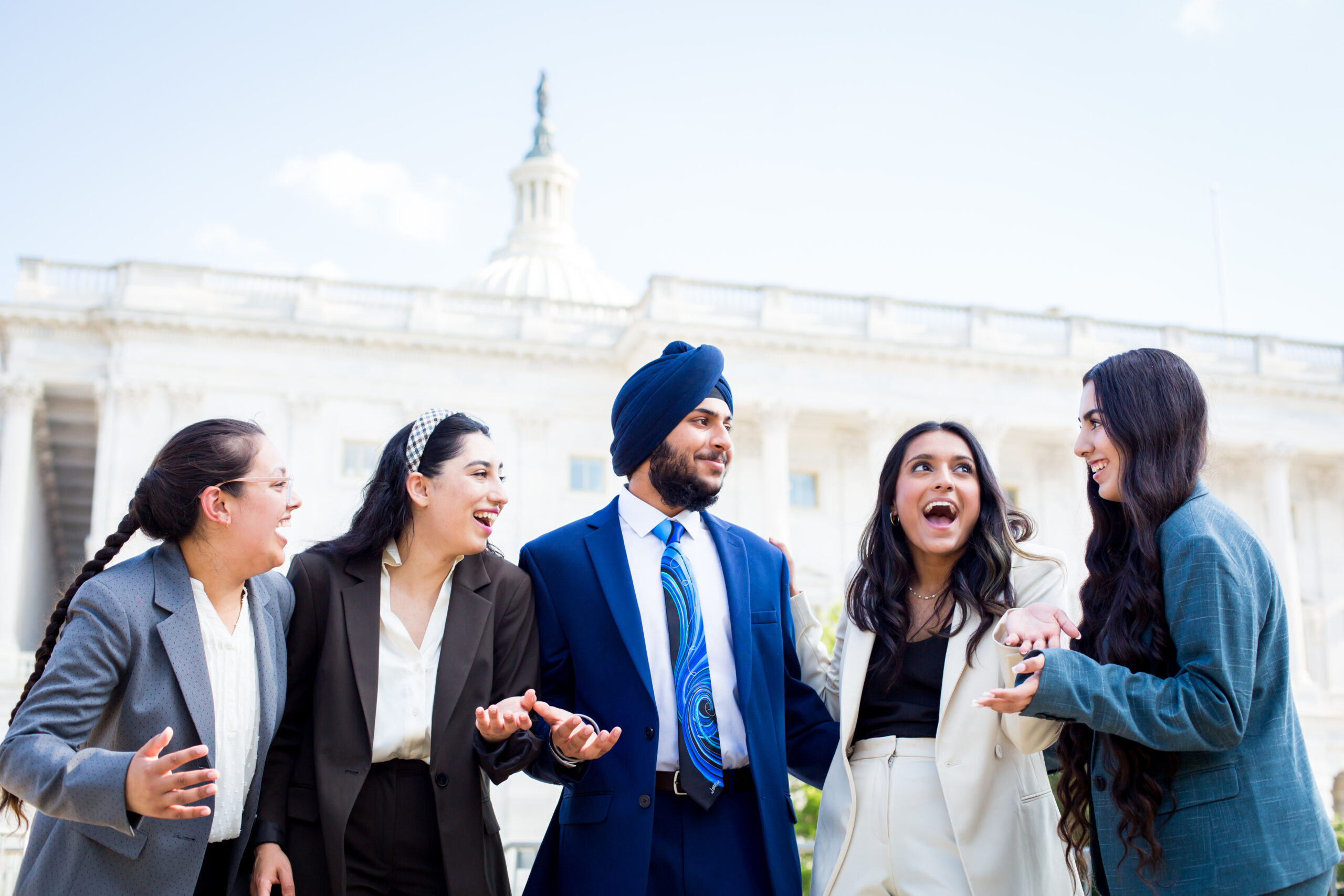
SALDEF’s SikhLEAD Internship Program partners with congressional offices to place exceptional Sikh American college students and recent graduates in internship positions on Capitol Hill. Through this program, Sikh American young leaders will have access to a competitive opportunity that will serve to further their academic and professional aspirations. To encourage application to the program, SALDEF has announced a $1,500 stipend for successful completion of the program.

Make this a summer you won’t forget and gain valuable experience to build your future!? Application deadline for summer 2012 is February 26th at 11:59PM EST. ?Early applications will be given preference. !

Advocating Against Racial Profiling
SALDEF continued its efforts of supporting the End Racial Profiling Act of 2011 (ERPA) by visiting the offices of Senator Sherrod Brown (D-OH), Lindsey Graham (R-SC) and Jeff Merkley (D-OR).  Joined by partners from the American Civil Liberties Union (ACLU), Council on American-Islamic Relations (CAIR) and the Brennan Center, SALDEF urged the senators to support this important piece of legislation which aims to eliminate racial and religious profiling that has singled out various minority communities, including Sikh Americans.  Contact your Congressmen and ask them for their support! Contact your Senators here and your Representatives here.

Improving Hate Crime Data Collection
On January 17, 2012, SALDEF gathered with other civil rights organizations for a Hate Crime Coalition meeting. The group discussed its strategies to improve hate crime data collection. Under the Hate Crime Statistics Act of 1990 (HCSA), the FBI is required to release an annual report and the 2010 HCSA report was released last November. An analysis performed by the Anti-Defamation League”s (ADL) however, showed that 80 cities with populations over 100,000 either neglected to participate in the 2010 HCSA report or reported to the FBI that they had zero (0) hate crimes. SALDEF will be reaching out to state and government officials such as governors, mayors, and police chiefs in these cities to ask and offer assistance in an effort implement better reporting at the state and local level.

SALDEF Conducts Sikh Awareness Presentation for Yolo County District Attorney’s Office
On January 5, SALDEF Board Member Kavneet Singh, presented to over 25 members of the staff of the Yolo County District Attorney’s Office about cultural awareness of the Sikh community. The DA’s Office forged a close relationship with Sikh community leaders during the successful prosecution of the hate crime assault and battery case in which Harbhajan Singh was beaten while being called racial epithets. Under the auspicies of SALDEF’s Law Enforcement Partnership Program, District Attorney Jeff Reisig asked Singh to speak with his deputies about the Sikh culture to increase insight and raise sensitivity among his staff. Mr. Singh covered the importance of the Sikh articles of faith, the types of crimes that Sikh Americans are vulnerable to, and tactics to increase engagement with the local Sikh American community.

SALDEF Conducts Sikh Awareness Presentation for US Park Police
On January 23, 2012, SALDEF conducted a training for the United States Park Police of the National Park Service in Washington DC. The U.S. Park Police provides law enforcement services to designated areas within our national parks and is one of the oldest law enforcement agencies in the country.  More than 50 members of the service were in attendance and received the training.  SALDEF has been invited to do a similar training for the Park Police later this month.

Upcoming Events
– Feb. 17 – Sikh Awareness Presentation for School and Staff, Chicago, IL
– Feb. 21 – United States Park Police Training, Washington DC
– Feb. 26 – Deadline for Congressional Internship Program Applications
– March 18 – Know Your Rights Forum, Riverside, CA
– March 23 and 24 – Presentation at Days of Diversity, Castro Valley, CA
– April 1 – Know Your Rights Forum, Seattle, WA

February 7, 2012—Late yesterday, the Sikh American Legal Defense and Education Fund (SALDEF) called on local and federal authorities to initiate a hate crime investigation into the vandalism and defacing with graffiti of a gurdwara (Sikh congregational place of worship) in Sterling Heights, MI. According to reports directly from the gurdwara management committee, the vandalism happened between the evening of Feb 5th and the morning of February 6, 2012.  The graffiti included vulgar language, racial epithets, the use of what appears to be a cross, a large drawing of a gun, and references to the attacks of September 11th. The new site of the gurdwara has been under construction and is due for completion this summer, leaving it uninhabited when the crime took place.  The construction has been ongoing, and recently the exterior had been painted, with the graffiti now taking up a large area on the building’s front wall. No witnesses have come forward yet, but anyone with information regarding this situation should please contact the Sterling Heights Police Department directly. “Attacks and vandalism against any of the nation’s houses of worship must be condemned by all Americans. This type of crime strikes at the very foundation of religious tolerance, the foundation this country was built upon,” said SALDEF Associate Executive Director Jasjit Singh. “We call upon local and federal law enforcement agencies to rightfully classify this incident as a hate crime and bring the perpetrators to justice to show that hate and violence are not tolerated in our society.” SALDEF has been in contact with the Sterling Heights Police Department, Department of Justice, and the U.S. Attorney’s Office to urge their action on this matter and to offer our support in the investigation. SALDEF urges all Sikh Americans to immediately report any incidents of harassment, bullying or assault to SALDEF and your local authorities. If you or someone you know has been a victim of any racially motivated crime, please contact SALDEF directly at 202.403.0246 or via our Report an Incident Form.

December 6, 2011: Earlier today, the Sikh American Legal Defense and Education Fund (SALDEF) called on local authorities to initiate a hate crime investigation into the stabbing of a Sikh man at the Fresno Yosemite International Airport on the evening of Sunday, December 4, 2011. READ MORE: Sikh Man Stabbed Waiting for Plane in Fresno (Fresno Bee) WATCH: Stabbing at Fresno Yosemite International Airport (ABC-30) According to the Fresno Police Department, a 56-year old Sikh man from India was stabbed near the security area at Fresno Yosemite International Airport while waiting to board his plane. The Sikh traveler suffered a minor cut to his upper torso, and was treated at the airport prior to resuming his journey back to India. The assailant, identified as 26-year old Mitchell Dufur, reportedly approached the Sikh traveler and stabbed him with a pocket knife, without provocation or exchanging any words. Dufur is now in custody, and being held under suspicion of felony assault with a deadly weapon, after he initially attempted to flee from the airport before being apprehended by the local authorities. READ MORE: Police ID Man who Stabbed Sikh with Turban in Attack at CA Airport (Washington Post) According to Fresno Police officials, they are working to determine why the victim was stabbed, but haven’t determined whether the act was in fact a hate crime, as Dufur has refused to talk with the police about the motive for this attack. SALDEF has been in contact with the Fresno Police Department to gather more details and information about this horrible incident and have offered our services to assist in the investigation in any way possible. SALDEF urges all Sikh Americans to immediately report any incidents of harassment, bullying or assault to SALDEF and your local authorities. If you or someone you know has been a victim of any racially motivated crime, please contact SALDEF directly at 202.403.0246 or via our Report an Incident Form.

  • SALDEF Responds to India Abroad Commentary
  • White House Initiative on Asian Americans and Pacific Islanders Bullying Summit
  • Share Your Stories – Racial Profiling And School Bullying
  • Newly Released FBI Hate Crimes Statistics
  • Scholarship Announced–Deadline Approaching
  • SikhLEAD Congressional Internship Program–Summer 2012
  • Know Your Rights Forums to be hosted throughout California
  • Upcoming Events
  • SALDEF Responds to India Abroad Letter to the Editor On October 14, 2011 India Abroad published a highly offensive commentary in the Letter to the Editor section of the paper. The author of a piece called “Beyond Bias” stated that “Sikhs living in western countries who are not baptized would do well to consider discarding the[ir]uncut hair and turbans so that they will not look like Osama and so suffer.”  Read the full article here. SALDEF immediately contacted India Abroad to question the editor’s discretion in publishing the comments.  Additionally, SALDEF responded to the comments in the November 11 edition of the publication.  Click here to read the full letter. White House Initiative on Asian Americans and Pacific Islanders Bullying Summit On October 29, 2011, SALDEF attended the White House Initiative on Asian Americans and Pacific Islanders Bullying Summit in New York City. Newly released statistics indicate that Asian Americans reported the highest rate of bullying in classrooms, nearly 20% higher than any other racial or ethnic group, further stressing the importance of this issue within the Sikh American community. Senior members for the Obama administration, public health professionals, community advocates, students and parents attended the summit and discussed the effects of bullying, needed response, and prevention. Share Your Stories – Racial Profiling and School Bullying Have you or someone you know ever been a victim of school bullying or racial profiling?  If so, please share your story with us.  SALDEF is currently advocating for both the End Racial Profiling Act (ERPA) and the Safe Schools Improvement Act (SSIA).  If passed, ERPA will better protect the community from racial profiling and SSIA will help ensure Sikh American children are protected from bullying in Schools. It is important to express to lawmakers how important these issues are to the Sikh American Community and we need your help. SHARE your story about racial profiling. SHARE your story about school bullying. TAKE ACTION: Urge Your Senator to Support ERPA FBI LogoNewly Released FBI Hate Crimes Statistics The FBI recently released their annual Hate Crimes Statistics for 2010. The publication details reported hate crimes by states, cities, towns, and colleges and universities. Of note, the statistics illustrate a jump in crimes motivated by anti-Islamic bias.  This of course, affects Sikh Americans because of misconceptions about our identity.  Currently, the FBI does not collect data on the number of Anti-Sikh hate-crimes.  SALDEF is actively working with the FBI to create a separate category which accurately reflects crimes committed against Sikh Americans. You can access the complete report of the FBI’s annual Hate Crimes Statistics for 2010 here. Scholarship for Northern California Students –Deadline Approaching The Indus Valley American Chamber of Commerce is proud to announce the second year of the IVACC Scholarship Program.  Scholarships are being awarded to college students who are residents of Northern California and who have shown a commitment to the South Asian community and culture. The IVACC Scholarship Committee is now accepting applications with a deadline of November 22, 2011.  SALDEF encourages all interested members to apply today.  For more information, click here. SikhLEAD LogoSikhLEAD Congressional Internship Program–Summer 2012 As part of the SikhLEAD youth development initiative, SALDEF has partnered with congressional offices to offer Sikh American students internships on Capitol Hill. Applications will be available by mid December and close in mid February for Summer 2012 internship in Washington, DC. To learn more about the internship program visit www.sikhlead.org and subscribe to the SikhLEAD mailing list.Know Your Rights Forums to be Hosted Throughout California As a part of SALDEF’s ongoing efforts to empower the community and strengthen partnerships with government, we are pleased to announce a series of  Know Your Rights (KYR) Forums for the Sikh American communities of Northern and Southern California in the months of December and January.  For additional information, or if you would like to organize a Know Your Rights Forum for your local community, please contact Birpal Kaur via email at info@saldef.org. Upcoming Events:

    By Jose G. Santos, CNN View the video here. Fairfax Station, Virginia (CNN)– Ten years ago, Balbir Singh Sodhi was gunned down, apparently because he looked Muslim or Arab. He was neither. Sodhi was a Sikh. Members of the religious tradition say he was the first person to be murdered in retaliation for the 9/11 attacks. That claim has been backed up by the Justice Department. “The first person killed in post-9/11 violence, Balbir Singh Sodhi, was a Sikh, shot while pumping gas at his gas station in Arizona four days after 9/11,” said Assistant Attorney General Thomas E. Perez in congressional testimony earlier this year. Sodhi’s killer, 45-year-old aircraft mechanic Frank Roque, gunned down the bearded, turban-wearing Indian immigrant outside the gas station Sodhi owned in Mesa, Arizona. Roque drove up to the station, fired a handgun  at Sodhi five times, then fled. Roque would go on to shoot at a Lebanese-American gas station clerk and fire into the home of an Afghan-American family later that same day. In 2003, Roque was sentenced to death for Sodhi’s murder. On appeal, his sentence was reduced to life in prison. Blending in, standing out Ten years after the September 11 attacks, which provoked a wave of organizing among Sikhs worried about being mistakenly targeted in retaliatory attacks, adherents of the religion remain both visible and enigmatic. “Most of the challenges we face can be traced to people not knowing who we are,” said Jasjit Singh, assistant executive director at the Sikh American Legal Defense and Education Fund. “I don’t feel there is a specifically anti-Sikh bias, because people don’t know what Sikhs are.” Singh’s group estimates that there are about 500,000 Sikhs in the United States, nearly all of Indian origin. Sikh women are less identifiable than men, identifiable by their beards and turbans. Many American Sikh women dress like other Westerners or wear the salwar kameez, a traditional north Indian garment of a long shirt and loose-fitting pants.

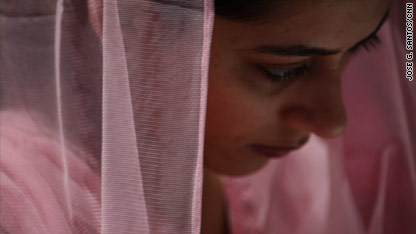
    A woman prays during a Sikh service.

    Sikhism emerged more than 500 years ago in Punjab, in what is now India. Adherents of the monotheistic faith believe in “devotion, remembrance of God at all times, truthful living, equality between all human beings, social justice, while emphatically denouncing superstitions and blind rituals,” according to the website of the Sikh Coalition, a U.S.-based group. “The ultimate goal in Sikhism is to merge into the divine love we know is God,” said Navdeep Singh, a policy adviser to the Sikh American Legal Defense and Education Fund. “We believe in the cycle of reincarnation,” he said. “That you will be judged by your deeds, and come back, and each time you come back you move one step closer to the divine.” There are 25 million Sikhs around the world, according to the Sikh Coalition, which was formed after the September 11 attacks.

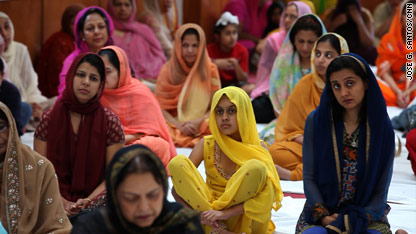
    Congregants meet inside a Sikh temple in Virginia.
    Inside the temple A Sikh temple is called a gurdwara, which means door to the guru, or teacher. Gurdwara refers to both a place and a practice, encompassing temple, teachings and ceremony. Gurdwaras around the world variously incorporate clinics, schools, guest quarters and community centers, which Sikhs say is a sign of the religion’s values of service and equality. “Sikhism was founded in an area and in a time in which inequality was rampant,” said Navdeep Singh. “If you were a woman, you were less than a man. If you were poor you were less than a rich person. Based on what caste you were, that defined your entire life. Sikhism was a rejection of those ideas.” At the gurdwara known as the Sikh Foundation of Virginia,  the muffled trills of a harmonium blended with birdsong on a recent Sunday morning.

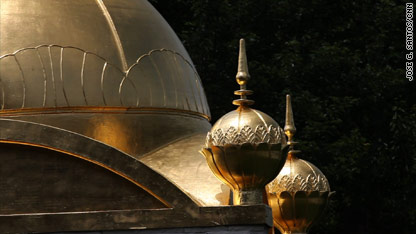
    The golden dome of the Sikh Foundation of Virginia.
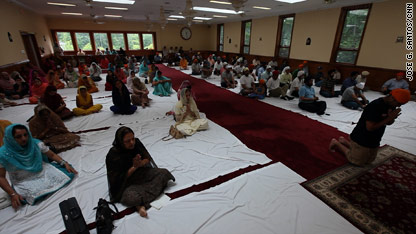
    The temple’s  golden dome shimmers among the rustling dark green woods like a crown atop a velvet cushion. As worshipers enter, shoeless and with heads covered, they approach the Guru Granth Sahib, a book elaborately enthroned beneath a canopy at the head of the building’s main hall. Obeisance is made, and a gift, usually of money, is placed on the dais. Music, song, prayer, readings from the Guru Granth Sahib and sermons comprise most of the ceremony. Everyone sits on the floor, men on one side, women on the other, children wherever suits them.

    Congregants meet for prayer and study in Virginia.
    “The beginning of our Guru Granth Sahib, and Sikh philosophy is really encapsulated in the first phrase: ‘Ik Onkar,’ which means ‘there is one God,’ ” said Navdeep Singh. More than a book of scripture, the Guru Granth Sahib is considered to be a living teacher, or guru.

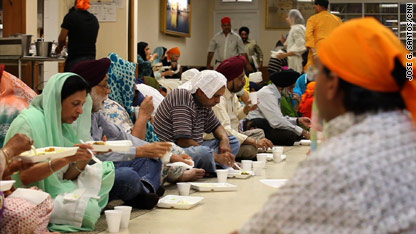
    After the service congregants share a communal meal.
    After the worship service, called Diwan, comes Langar, a simple meal eaten while sitting on the floor, which Sikhs say reinforces the ethic of egalitarianism. “Langar is based on this idea of equality, and making sure that no one goes away hungry,” said Navdeep Singh. “Because as Sikhs, we’re kind of like Italians. We view everyone as one family. And if you’re part of that family, you can’t go away hungry. You have to have a meal together.” SOURCE: http://religion.blogs.cnn.com/2011/09/15/10-years-after-sikh-murder-over-911-community-continues-to-blend-in-and-stand-out/

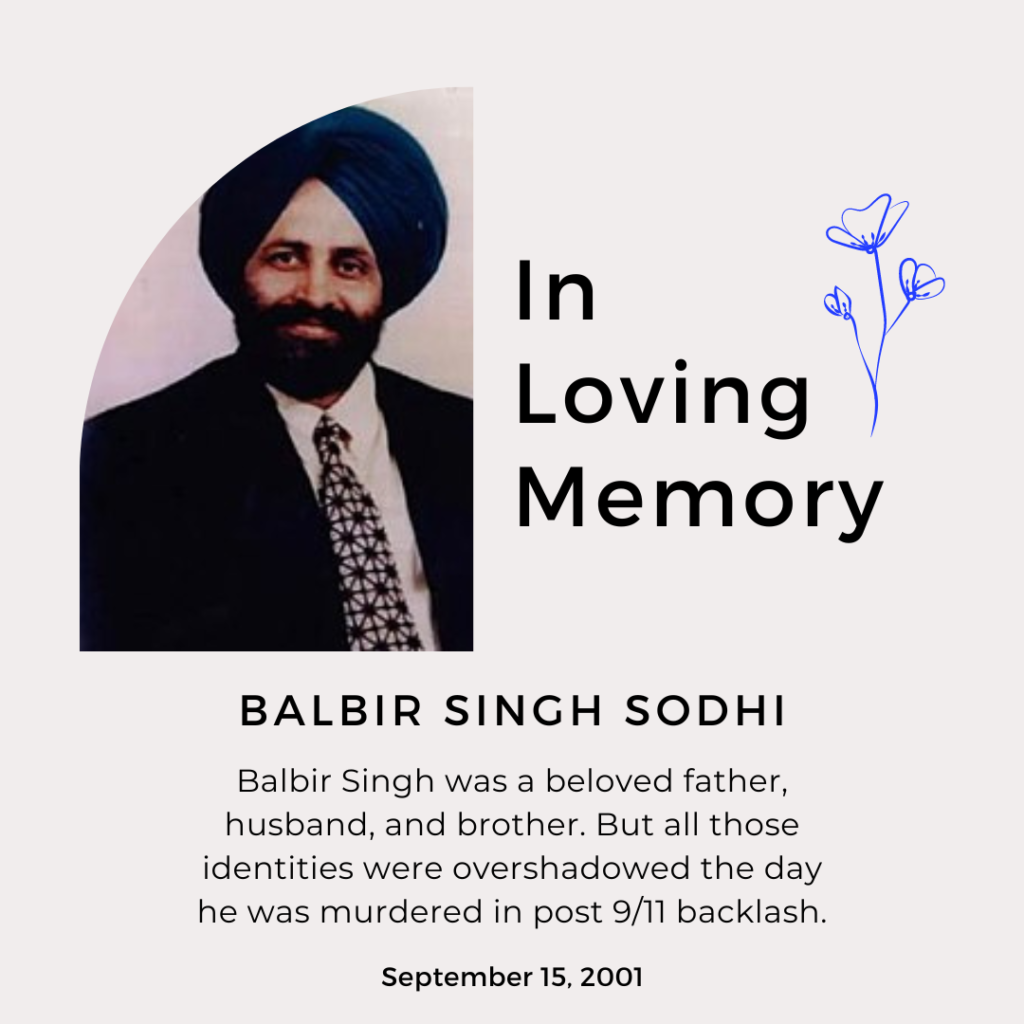
    Remembering Balbir Singh Sodhi

    The Story of Balbir Singh Sodhi: The First 9/11 ‘Backlash’ Fatality

    Balbir Singh Sodhi was shot and killed on Saturday, September 15, 2001 in Arizona by Frank Roque.  Mr. Roque wanted to “kill a Muslim” in retaliation for the attacks on September 11. It was the first fatal act of hate violence resulting from 9/11.  Mr. Roque was convicted of first degree murder and sentenced to life in prison for the hate crime. Just a few months before the tenth anniversary of his death and the attack on America, the Arizona legislature decided to remove Mr. Sodhi’s name from the state 9/11 memorial because he was not deemed “a victim of 9/11″.  After advocacy by community groups, Governor Jan Brewer would veto the bill and continue to honor the memory of Mr. Sodhi.

    The events of September 11, 2001, affected each and every American in pointed and distinct ways. Many thousands perished during the attack, others lost loved ones. Many reacted with fervent patriotism for their country in order to overcome the devastation in progressive and constructive ways, while others lashed out with fear and hate towards the unknown and who they perceived to be ‘the enemy’. Despite the myriad of reactions to that day, it is clear that the tragedy and loss of 9/11 did not end on that fateful Tuesday. The aftermath is still very real for the families of those that were lost in the attacks, for the families of those that were attacked in the backlash, and those that still fear for their safety in America.

    Mr. Sodhi was a 49 year old Sikh American man, who owned a Chevron gas station in Mesa, Arizona. He was shot while arranging American flags in front of his gas station. His assailant, Frank Roque, wanted to ‘kill a Muslim’ in retaliation for the terrorist attacks. He selected Mr. Sodhi simply because he had a beard and wore a turban in accordance with his Sikh faith. Mr. Roque shot at Mr. Sodhi three times, then shot at another service station owned by a Lebanese American, and finally shot at a home of a family of Afghan descent. Fortunately, no one else was injured.

    Balbir Singh Sodhi was the oldest of five brothers. Mr. Sodhi immigrated to the United States from India in 1988  to realize the American dream. He joined his brother Harjit Sodhi in Los Angeles, CA, where he worked at a 7-Eleven for several years until he moved to Walnut Creek, CA to become a cab driver. He had moved to Mesa a year prior to his death, bought a house, and the gas station across the street.   “He worked 12, 14 hours a day,” said his brother Harjit, “and he saved his pennies.” He regularly sent money to his family still in India. Jagjit Sodhi, his older brother, stated, “We depended on the money he sent us from time to time.” After hearing about his younger brother’s tragic death, he was shocked: “He could never have any enemy. He is innocent.” Mr. Sodhi was a husband and a father of two daughters. Mr. Sodhi was “known by friends and neighbors as a quiet, gentle man….Children have told reporters how Balbir Singh would let them buy candy from his store, even if they didn’t have enough money. The homeless shed tears as they recounted tales of his generosity to them.”  Many Arizona state representatives and citizens of all backgrounds rallied around the Sodhi family and the Sikh American community in support, with over 3,000 people attending Mr. Sodhi’s memorial service.

    The day after the attack, Arizona Attorney General Janet Napolitano held the first of many press conferences.  She said, “we will not tolerate acts of bigotry against our fellow Arizonans.”  “No individual should have to be afraid of their safety because of the color of their skin, the way they dress or the religion they choose to practice.” She encouraged the state to honor his memory.   In 2006, the Arizona legislature unveiled a memorial to the victims of 9/11 which included the name of Balbir Singh Sodhi. Mesa’s Mayor, Keno Hawker, firmly stood against such hate-motivated attack, saying “senseless acts of violence will do nothing to help our nation heal or bring peace to the victims of the horrific tragedy that occurred this week…now is the time for all Mesa resident to display solidarity by taking a clear stand against violence. We are all Americans. We are all grieving. Let us unite in peace and determination that violence will never be the answer.”  At the memorial service, Maricopa County Attorney, Rick Romley, stated: “On September 11, America was attacked from abroad. However, with the murder of Mr. Sodhi, we have now been attacked from within.”

    Frank Roque boasted during his arrest: “I’m a patriot.” “I stand for America all the way.” “Two years later, he learned the American way included a fair trial by jury. On September 30, 2003, an Arizona jury found Frank Roque guilty of first-degree murder for his hate crime murder of Mr. Sodhi, along with five other charges, including attempted murder and reckless endangerment related to drive-by shootings at other individuals he perceived to be Middle Eastern that same day in 2001. On October 9, 2003, Frank Roque was sentenced to the death penalty. The sentence was later commuted to life in prison.

    In 2011, the state of Arizona proposed a bill to remove Balbir Singh Sodhi’s name from the state’s 9/11 Memorial. The bill’s original sponsor, Rep. John Kavanaugh (R), claimed that Sodhi was “not a victim of 9/11.” Adding insult to injury, along with stripping the late Mr. Sodhi’s name from the memorial, the legislation even enumerated that the removed plaque to be sold to a scrap metal dealer. Ten years after 9/11, Rep. Kavanaugh stated, “It’s part of a myth that, following 9/11, Americans went into a xenophobic rage against foreigners. That’s not true. America’s reaction towards foreigners was commendable.” Following a wave of local and national outcry, Governor Jan Brewer vetoed the bill on April 29, 2011.  The bill, which passed both Houses on party lines, would have automatically gone into effect on May 2, 2011.

    SALDEF Commends Sodhi Family, Local Community, and Arizona Governor

    May 2, 2011: During a meeting with the family of Balbir Singh Sodhi, Arizona Governor Jan Brewer vetoed HB 2230 on Friday, April 29, 2011. The family, who had requested the meeting with the Governor, is overjoyed that the plaque listing the name of Mr. Sodhi will not be removed from the state’s 9/11 memorial. The memorial commemorates Mr. Sodhi’s death on September 15, 2001 as the first individual to be murdered as a result of post-9/11 backlash. On September 15, 2001, Balbir Singh Sodhi, a Sikh American, was murdered outside of his Chevron gas station in Mesa, Arizona by a man who wanted to ‘kill a Muslim’ in retaliation for the terrorist attacks. He selected Mr. Sodhi simply because he had a beard and wore a turban in accordance with his Sikh faith. Governor Brewer expressed her deep condolences for the family’s loss and concern over the problematic bill. The Sodhi family and members of the Arizona Sikh American community also met with Representative John Kavanaugh, the bill’s sponsor, on Tuesday, April 26, 2011, during which he apologized for his poorly conceived bill. “This is why we love this country. The leadership is responsive. When we met with the Governor today and Representative Kavanaugh Tuesday they each honored my brother, our family, and our Sikh community with caring concern. We humbly requested that they help us so that our brother’s part in the local and national 9/11 history would not be denied. Our brother represents all 9/11 backlash victims,” stated Harjit Singh Sodhi. SALDEF commends Rana Singh Sodhi, as well as the entire Sodhi family, and representatives of the Arizona Sikh American community, including Dr. Jaswant Sachdev and Gururoop Kaur Khalsa, for directly engaging with Rep. Kavanaugh and Gov. Brewer to ensure the bill would be vetoed. Furthermore, the composure and poise consistently demonstrated by the Sodhi family despite their loss should serve as an exemplar for the entire Sikh American community. SALDEF thanks Governor Brewer for her prompt response in vetoing the bill and our local community partners, especially the Anti-Defamation League of Arizona for its involvement since the outset of this issue. SALDEF thanks the community for its immediate response to our Action Alert; the Governor’s office received over 7,500 letters in less than three days asking that she veto HB 2230. This success would not be possible without your support! To read Governor Brewer’s letter explaining why she vetoed the bill, click here.

    Arizona Law Would Remove Sikh American Hate Crime Victim’s Name from 9/11 Memorial (Washington DC, April 28, 2011) – Along with thousands of other Americans of diverse ethnic and religious backgrounds, the Sikh American Legal Defense and Education Fund (SALDEF) is demanding that Arizona Governor Jan Brewer veto HB 2230, an Arizona bill that would remove the memorial of a 9/11 hate crime murder victim from the state’s 9/11 memorial and subsequently sell the memorial plaque as ‘scrap metal’. Since Tuesday alone, over 4500 letters from around the country have been sent directly to Governor Brewer demanding that she veto HB 2230. SALDEF is encouraging Americans to continue to contact Governor Brewer and urge her to veto before the bill would automatically become law in the state of Arizona on Monday, May 2.

    #END#

    On September 15, 2001, Balbir Singh Sodhi, a Sikh American gas station owner, was the first hate-crime related murder fatality in the wave of post-9/11 backlash. He was murdered outside of his Chevron gas station in Mesa, Arizona by a man who wanted to ‘kill a Muslim’ in retaliation for the terrorist attacks. He selected Mr. Sodhi simply because he had a beard and wore a turban in accordance with his Sikh faith. The Arizona law (HB 2230) would remove Mr. Sodhi’s name from the 9/11 memorial, because the bill’s sponsor, Republican representative John Kavanaugh ridiculously claimed that Mr. Sodhi “was not a 9/11 victim” based on a simple Google search. According to SALDEF associate executive director Jasjit Singh: “Hundreds of thousands of Sikh-Americans are puzzled and outraged at the disrespect shown by the Arizona state legislature towards Balbir Singh Sodhi’s memory, family, and the Sikh American community in general. This effort by Arizona Republicans to deny that Mr. Sodhi’s hate-crime murder as a consequence of 9/11 is completely unfounded, unacceptable, and offensive. We kindly implore Governor Jan Brewer to take action against letting Arizona rewrite history and trivialize the first documented hate crime murder in the wake of 9/11.” SALDEF is encouraging Americans to continue to voice their outrage before the Monday, May 2 deadline, when the bill would become law in Arizona.

    Arizona Bill Automatically Becomes Law if Not Vetoed by Monday, May 2 April 28, 2011: The Sikh American Legal Defense and Education Fund (SALDEF) and thousands of Americans from all backgrounds are demanding that Arizona Governor Jan Brewer veto HB 2230, a bill that removes the memorial of Balbir Singh Sodhi, a Sikh American who was the first post-9/11 fatality caused by hate violence on September 15, 2001. The bill proposes the removal of Mr. Sodhi’s name from the state’s 9/11 memorial and subsequently selling the memorial plaque as scrap metal. Over 4700 letters have been sent in the past two days to Governor Brewer demanding that she veto the bill. SALDEF encourages Americans to continue to voice their outrage to Governor Brewer and demand that she veto HB 2230 by the Monday deadline, at which point the bill becomes law. TAKE ACTION: Sign the petition urging Gov. Brewer to veto the bill The bill’s sponsor, Republican Representative John Kavanaugh, outrageously claimed that Mr. Sodhi “was not a 9/11 victim” after conducting a cursory Internet search. In fact, Mr. Kavanaugh believes the tragic hate crime was unconnected to 9/11. The bill has passed both houses in the Arizona legislature on party-line votes and is now on the desk of Governor Brewer, who has until Monday to veto the bill before it automatically becomes law. The efforts of the Arizona legislature come as a blow to the entire Sikh American community, which has endured a decade of hate crimes. Whereas Arizona rallied behind the Sodhi family and Sikh American community in the wake of Mr. Sodhi’s tragic murder, the state is now seeking to erase him from its history. In addition to signing the petition, contact Governor Brewer asking that she veto HB 2230:

    • Call: 602.542.4331, then dial option 4
    • Facebook: facebook.com/govjanbrewer
    • Twitter: @govbrewer

    Take action now and forward this to your family and friends.

    UPDATE 5/2/11: Arizona Governor Brewer vetos bill.  Read more here. April 26, 2011: Arizona Governor Jan Brewer is deciding on signing a bill to remove Balbir Singh Sodhi’s name from the state’s 9/11 memorial and sell his memorial plaque as scrap metal. TAKE ACTION: Sign the petition urging Gov. Brewer to veto the bill Arizona Representative John Kavanagh introduced the bill because Sodhi “was not a 9/11 victim.” In fact, Mr. Kavanagh believes the tragic hate crime was unconnected to 9/11. SALDEF is outraged at the disrespect the Arizona state legislature has shown Mr. Sodhi’s memory, family, and the Sikh American community. The efforts by Mr. Kavanaugh and his colleagues to deny the fact that Mr. Sodhi’s murder was a consequence of 9/11 is completely unfounded, unacceptable, and shows a complete failure in leadership. READ MORE: Mesa man pushes to keep brother’s name on Sept. 11 memorial (Arizona Republic) On September 15, 2001, Balbir Singh Sodhi, a Sikh American gas station owner, was the first hate-crime related murder fatality in the wave of post-9/11 backlash. He was murdered outside of his Chevron gas station in Mesa, Arizona by a man who wanted to ‘kill a Muslim’ in retaliation for the terrorist attacks. He selected Mr. Sodhi simply because he had a beard and wore a turban in accordance with his Sikh faith. SALDEF implores the Sikh American community to take action against letting Arizona rewrite history and trivialize the first hate crime in the wake of 9/11. Sign the petition urging Gov. Brewer to veto this insensitive and offensive bill. As we approach the ten year anniversary of Mr. Sodhi’s death, do not allow the voice of victims of hate to be silenced. Take action now and forward this to your family and friends. Share this on Facebook.