 In April, Arizona’s Governor signed SB 1070, a controversial law aimed at stopping illegal immigration. A coalition of civil rights organizations filed suit challenging the law. The case, Friendly House v. Whiting, argues that the law is unconstitutional. Yesterday, the case was presented in federal court in Arizona. The argument advanced by the plaintiffs, the people bringing the suit, is that the law violates the U.S. Constitution, the Arizona Constitution, and the U.S. Code. SALDEF joined thirty-seven other organizations in filing an amicus brief with the District Court, urging the Court to prevent the law from going into effect on July 29, as planned, until the lawsuit has ended and the courts have determined if the law is constitutional. An amicus brief is chance for people who are not parties to a case (not the people suing or being sued) to submit their expert opinion to the Court. These opinions are designed to help give the court a better sense of the legal and policy implications of the law. So what does this mean and why are we interested in a bill that is aimed at regulating immigration into a US-Mexico border state? A few reasons. Under the proposed law, law enforcement is allowed to request proof of citizenship or immigration status from anyone whose legal status they have ‘reasonable suspicion’ about. This seemingly simple task has extreme implications. The phrase ‘reasonable suspicion’ without guidelines or definitions is recipe for assumption of guilt, until proven innocent. The United States is a country that prides itself on the inherent nature of law and justice within the concept of ‘innocent until proven guilty’; the implementation of this law goes against this very belief. The brief SALDEF joined focuses on the impact that the law will likely have on minority communities—that it will result in discrimination and will have a negative impact on safety. First, the law “will subject United States citizens and legal residents who are racial and/or ethnic minorities, and particularly those who may be perceived to be foreign, to the stress and humiliation of detention and interrogation, and to the constant fear of the possibility of such treatment.” Second, the law “will chill the willingness of many United States citizens and legal residents to report and cooperate in the investigation of crimes, including hate crimes.” Finally, the law, while ostensibly written in a neutral fashion, improperly targets and subjects members of minority communities to extra scrutiny. This takes us into the core of the issues that many civil rights organizations are fighting, with one tactic of the battle being the amicus brief. Under this law, people who look “foreign” are more likely to be stopped for minor infractions – having a broken taillight, jaywalking or having an overgrown lawn – and then asked for their papers if police believe, just by looking at them, that they could be in the country unlawfully. That means that U.S. citizens and non-citizens alike will be required to carry papers on them at all times. And how exactly is it that a law enforcement officer can ‘tell’ just by looking at someone that they are or are not an illegal immigrant? Does the standard of review start at how you dress? How you talk, your accent or lack-of? The clothes you are wearing? Being Sikh Americans, some of us may know this treatment or mentality very well. Being judged based on what you look like, sound like, or pray like is un-American and unacceptable. By requiring law enforcement officials to question every individual they stop about their citizen or immigration status, the law is inviting things like race, gender, ethnicity, and language as ‘structures’ to rely upon. This law actually invites racial profiling at two junctures. First, law enforcement might find a reason to stop people on a very minor infraction based on the way they look, and then demand their papers. Or they can stop them for an unbiased reason and then, based on appearance and nothing else, demand their papers. Furthermore, imagine living in a society that operates as a police-state; community safety is no longer the primary goal. It actually makes us less safe because community members will be reluctant to report crimes, violence, or disturbances for fear that a family member (for example) might be detained or deported because law enforcement was called. This means domestic violence situations are MORE likely to go unreported, as are thefts, robberies, and assaults. These crimes affect all residents, legal or not. Furthermore, it is important to realize that this is not a single-minority race issue, it includes everyone. Even though the majority of the immigrant population in Arizona is from Hispanic or Latin backgrounds, all other minorities that look ‘reasonably suspicious’ will be affected. Several civil rights organizations have filed lawsuits, in addition to the one that SALDEF has signed on to, contesting the constitutionality of this law, in concept, practice and deliverance. To read a more detailed opinion, Kevin Johnson, Dean of the UC Davis School of Law, has a great summary of the case and the arguments at his blog.
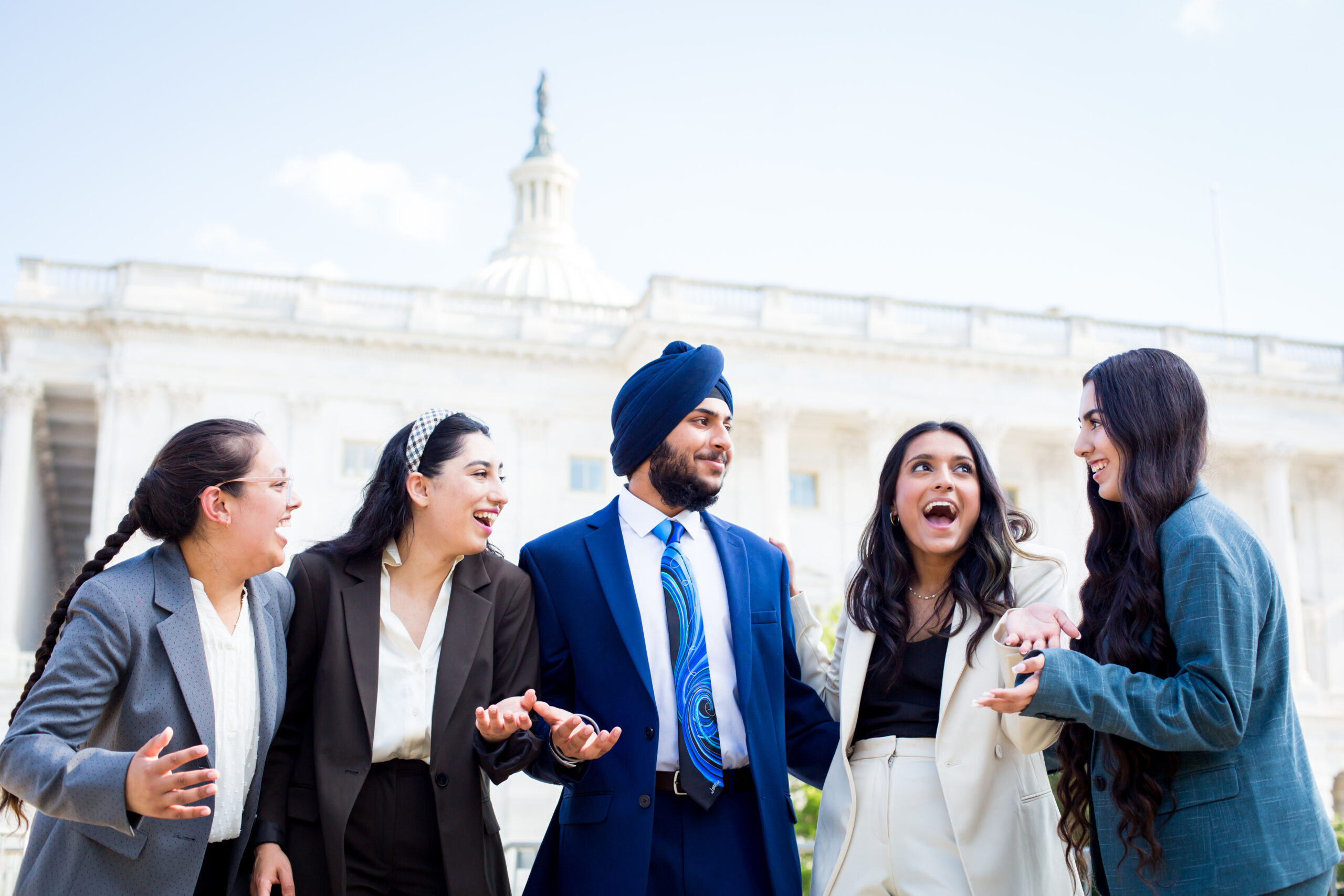
Arizona’s Immigration Law: Why Should We Care?
A Muslim woman recently lost her case where she was made to remove her hijab in Michigan state courtroom. In 2008, SALDEF and the ACLU of Texas settled a case where a Sikh man was asked to remove his turban. As a result, Dallas County changed their dress code to allow for religious headgear. Now why did the religious community see victory in Texas and not in Michigan? According to the federal court ruling the difference between the two cases was pretty simple. In Michigan, she did not say it was a religious article and removed it without hesitation. In Texas, the Sikh man told the judge his turban was a religious article and refused to remove it. The lesson: Whenever you are told to remove your turban, make sure you clearly let the person know it is religious article that you cannot remove. Don’t immediately agree to remove it.
An Indianapolis man who practices the Sikh faith was denied a job because of his religious practice s — a violation of federal civil rights laws — according to a federal lawsuit filed today by Public Justice and its co-counsel Kim Jeselskis. The complaint alleges that Air Serv Corporation, which provides services at airports around the country, denied employment to Inderjit Singh because he wears a turban and beard, as required by his Sikh religion. Singh, a U.S. citizen, applied for a job with Air Serv as a shuttlebus driver at the Indianapolis International Airport and passed a drug test and background check, but the company refused to hire him even after Singh explained that his turban and beard are required by his religion. “I just want to work and earn a living, but Air Serv refused to give me a chance even after they understood that a turban and beard are an integral part of my faith,” said Inderjit Singh. “I don’t want this to happen to anyone else, and I don’t want my son to face discrimination in the future because of his own turban and beard.” Sikhism is a monotheistic religion with origins in South Asia that teaches honesty, compassion, humility, universal equality, and respect for all religions. Sikhs maintain uncut hair throughout their lives, and the turban is a mandated article of their religious faith. Although Sikhism is often confused with Islam, and Sikhs have been subjected to increased discrimination and violence since September 11, Sikhism and Islam are entirely unrelated religions. Approximately 700,000 Sikhs live in the United States. “An investigation by the federal Equal Employment Opportunity Commission has already determined that there is a reason to believe that Air Serv violated the law,” according to Victoria Ni, a Public Justice Staff Attorney representing Singh. “The company should make this right.” Public Justice’s lawsuit, filed in the United States District Court for the Southern District of Indiana, alleges that Air Serv violated the law when it failed to make accommodations to its grooming policy to allow Singh to work for the company with a turban and beard.” The company had a duty to make reasonable accommodations for Mr. Singh’s sincerely held religious beliefs,” explained Kim Jeselskis of Indianapolis, who also represents Singh. “Federal law is clear about this, and our client deserved better.” Air Serv is based in Atlanta, Georgia, but has offices at airports throughout the U.S. and the U.K. The company’s website says that it has 8,000 employees and provides services to the word’s leading airlines. Kavneet Singh, a board member and Managing Director of the Sikh American Legal Defense and Education Fund, the nation’s oldest Sikh American civil rights and advocacy group, said his fellow adherents face ignorance and intolerance daily, especially since the attacks of Sept. 11, 2001,which unleashed a torrent of discrimination. The Leadership Conference on Civil Rights reported a seven-fold increase in hate crimes against Sikhs, Muslims and Arabs in 2001. “Air Serv is sending the worst possible message and there’s no justification for it,” said Kavneet Singh, who is not related to the plaintiff. “It is un-American for a company to force someone to choose between supporting their family and practicing their faith. We applaud Mr. Inderjit Singh for his courage in ensuring that his rights are protected.” In accordance with Sikhism, Singh, 51, has not cut his hair since birth, has covered his hair since he was a young boy and has worn a turban since he was 14 years old. Although he earned a college degree in his native India, Singh could not find white-collar work when he moved to the U.S. in 1997. He worked as a gas station attendant, toll collector and parking lot cashier in Virginia, where he, his wife, two children and elderly parents lived before moving to Indianapolis about three years ago. Singh applied for the shuttle driver’s job with Air Serv in late 2007. At that time, the position paid $9.90 an hour. “My father is a hardworking American citizen who just wants to support his family,” said T.J. Singh,Inderjit Singh’s son and a student at Ball State University in Muncie, Ind. “Nothing about my dad’s beard and turban would have interfered with being a shuttle bus driver.” To read the complaint filed today, click here
August 26, 2009 (Washington, DC) – Today, the Sikh American Legal Defense and Education Fund (SALDEF)—the oldest Sikh American civil rights and advocacy organization in the United States—urged Michigan Governor Jennifer Granholm to condemn a new rule authorizing Michigan judges to force witnesses to remove religious headcoverings in court. (more…)
A bill passed by the Oregon Legislature that broadens religious freedom in the workplace has prompted protests by some faith leaders because it exempts schools. The bill requires employers to allow workers to wear certain clothing, grow beards and take certain days off to observe their religious practices. But it specifically carves out school districts in Oregon, one of two states that expressly forbid teachers from wearing religious clothing. The exemption drew the ire of some groups, especially Sikhs, whose members wear turbans and other distinctive clothes — and have been barred from teaching in Oregon as a result. The new law “fails in its essence if it doesn’t honestly and comprehensively provide religious freedom for all Oregonians,” said Rajdeep Singh Jolly, law director of the Sikh American Legal Defense and Education Fund in Washington, D.C. “It smacks of irony,” Jolly said of the bill, which was hailed by legislative leaders as improving the climate for diverse religions in Oregon. “It takes two steps forward and 10 steps back.” The bill, titled the Oregon Workplace Religious Freedom Act, grants workers wide religious leeway as long as the activity, clothing or other practices don’t cause an undue hardship on the employer. Religious organizations typically applaud such measures. But the school exemption has highlighted what some think is a glaring hole in Oregon’s efforts to expand religious freedoms. “It seems like it would apply to a Muslim woman wearing a hijab or a Jew wearing a yarmulke,” said Richard Foltin, director of national and legislative affairs for the American Jewish Committee in Washington, D.C. “We’re especially concerned about that.” Oregon has had a law on the books for decades that states, “No teacher in any public school shall wear any religious dress while engaged in the performance of duties as a teacher.” Pennsylvania has a similar law. Oregon’s law was tested in the 1980s, when a Sikh teacher was suspended from her job as a Eugene special-education teacher for wearing a white turban and white clothes to class. The case went to the Oregon Supreme Court, which upheld the suspension. The U.S. Supreme Court declined to hear the case. “The underlying policy reflects the unique position that teachers occupy,” said Jake Weigler, spokesman for the state Department of Education. “In this case, the concern that a public school teacher would be imparting religious values to their students outweighs that teacher’s right to free expression.” Sikhs tend to stand out in such cases because the religion requires members to wear turbans, said Hari Nam Singh Khalsa, a Portland attorney who said a judge once told him to remove his “hat” or leave the courtroom. After a discussion in the judge’s chamber, the matter never came up again. Khalsa said he understands that schools present a tricky problem because of the clash between freedom of expression and church-state separation. But, he said, “It’s hard for me to imagine that just because somebody is wearing something that is required by their religion that this is in any way suggestive to students of an endorsement of the religion.” Jolly, the Sikh legal fund representative, has written a letter to Gov. Ted Kulongoski urging a veto of the bill. A spokeswoman for Kulongoski said the governor expects to sign the bill because vetoing it would not change Oregon’s law prohibiting teachers from wearing religious garb. Yet even the bill’s strongest champion, House Speaker Dave Hunt, D-Gladstone, admits it falls short. He said he offered a similar bill in 2007 that would have allowed teachers to wear religious clothing, but it didn’t pass. “I think all Oregon workers should have the right to freely exercise their religion and do their job,” Hunt said. But the bill didn’t have the votes to pass without the exclusion for teachers, he said. “It was one of those legislative compromises you do.” — Harry Esteve; harryesteve@news.oregonian.com http://www.oregonlive.com/politics/index.ssf/2009/07/school_exemption_in_religious.html Daily Oregonian
June 10, 2009 (Washington, DC) – Yesterday, the Sikh American Legal Defense and Education Fund (SALDEF) called upon Maryland Attorney General Douglas F. Gansler to modify a legal opinion that endangers the religious freedom of observant Sikh Americans and members of other religious groups. The legal opinion in question—94 OAG 81—was issued on May 27, 2009 in response to a law enforcement officer’s inquiry about the right of individuals to remain “veiled or masked” for religious reasons upon entering a courthouse. Notwithstanding the narrow focus of the officer’s inquiry, 94 OAG 81 makes conspicuous reference to religious “headgear” in its title; is laced with overbroad references to “head” coverings; and can be misinterpreted to mean that deputy sheriffs can require individuals entering a courthouse to remove religious headgear for security purposes. In a letter to Mr. Gansler, SALDEF expressed concern that 94 OAG 81 would create needless confusion among security officers at courthouses throughout Maryland and potential legal liability for the State of Maryland. For these reasons, SALDEF has urged the Maryland Attorney General to modify the opinion and collaborate with SALDEF on Sikh American cultural awareness trainings for security officers through SALDEF’s Law Enforcement Partnership Program. LEARN MORE Read more about SALDEF’s work on religious accommodation issues at courthouses: Dallas County Agrees to Adopt SALDEF Guidelines in Settlement of Lawsuit (Link no longer available) Georgia Court Apologizes to Sikh American Denied Entry Into Court House Due to His Turban (Link no longer available) Georgia Court Apologizes for Denying Sikh American Man Entrance to Court (Link no longer available) SALDEF is grateful to volunteer attorney Dawinder Singh Sidhu for bringing this matter to its attention. If you or your children ever experience discrimination, threats, or violence because of your Sikh identity, please contact SALDEF by email at legal@saldef.org or by phone at (202) 393-2700 Ext 131.
By BRIAN STANLEY bstanley@scn1.com JOLIET — The trial of a Sikh who claims he was beaten by a Joliet police officer during an arrest two years ago began Monday. Kuldip Nag, 51, is facing charges of aggravated battery to a police officer and obstructing a police officer in a bench trial before Judge Edward Burmila. On March 30, 2007, Joliet officer Ben Grant was sent to 3574 Buck Ave. to place a tow notice sticker on a derelict van parked on Nag’s driveway. Police said Nag became upset and pushed Grant. The Sikh American Legal Defense and Education Fund (SALDEF) alleged the officer used his baton to strike Nag’s head while he yelled racist comments and threats. An internal investigation later cleared Grant, who was the first witness to testify Monday. “I walked up to the van and saw the registration sticker was expired and the license plate did not match (police records),” he told Assistant Will County State’s Attorney Sara Shutts. Grant said he explained why he was there when Vera Nag came out of the house and again when her husband came out a short time later. “He appeared to be angry and said I didn’t have the right to be on his property,” he said. Grant testified when he walked back to the van after getting a sticker from his squad car, Nag pushed his arm away. “I went to get his hand behind his back and told him he was under arrest. He was pulling his arm in the opposite direction,” Grant said. Grant said Nag resisted when he tried to both push him to the ground and swing his knee into Nag’s leg as they struggled onto the front lawn. Grant sprayed Nag with pepper spray and attempted another takedown maneuver. Once the combatants were on the ground, Grant used his baton to strike Nag’s right bicep two times, he said. “I still couldn’t get his arms (pinned), so I stayed on top of him until he was tired and put him in handcuffs,” Grant said. SALDEF contends Grant was yelling “You (expletive) Arab! You (expletive) immigrant. Go back to your (expletive) country before I kill you.” Shutts played a recording from the dispatch center that seems to corroborate Grant’s testimony. He was using his radio to call for backup during the struggle. Nag’s attorney Eric Mitchell did not refer to SALDEF’s allegations during his cross-examination. In his opening statement, Mitchell said Nag wasn’t resisting arrest but was trying to cover his head as Grant struck him with the baton. “He suffered serious head injuries and spent three days in the hospital … (Nag) was keeping his arms up out of necessity,” Mitchell said. Suspects condition Officer Amy Chochola brought Nag to the police station for booking. She testified the suspect walked to the squad car and into the holding area of the station without difficulty, but he complained during the ride that he couldn’t sit comfortably and didn’t understand why he had been arrested. Nag also reportedly refused to allow Chochola to wash the remaining pepper spray from his face. “He said he was ‘schizophrenic and afraid of water,'” she said. Nag became ill while he sat in the booking area and was later taken to Silver Cross Hospital. Mitchell noted Chochola’s police report does not mention Nag seemed agitated during the ride in her squad car. Neighbors testify The other two witnesses who testified Monday were Matt Jurewicz and Terry Ogenae, who both reside on Buck Avenue. Jurewicz said he was driving past when he saw Nag struggling with a police officer. “The officer was trying to take him down to the ground with (his) hands and Mr. Nag was trying to get up and move away,” he said. Ongenae said he’d been in his garage when he heard “hollering” and looked over his fence to see a police officer helping a handcuffed Nag to his feet. Neither man was cross-examined. The trial will continue Thursday.
| By SUNITA SOHRABJI | |
Three prominent South Asian organizations have made policy recommendations on civil rights and immigration to members of President-elect Barack Obama’s transition team. The organizations include South Asian Americans Leading Together, which made policy recommendations on behalf of its national coalition of 35 organizations; the Sikh American Legal Defense and Education Fund; and the Discrimination and National Security Initiative, which examines the treatment of minority communities in the U.S., particularly Muslim Americans post-9/11. “We wanted to make sure our community had a seat at the table,” Deepa Iyer, executive director of SAALT, told India-West. SAALT, along with several national Asian American organizations, was invited to a series of meetings with Obama’s transition team, to discuss civil rights and immigration issues. SAALT then initiated a meeting with members of the civil rights transition team to put forth some recommendations. “All the meetings we went to were very productive,” said Iyer, adding, “The team was very open to hearing about the issues and the openness of the dialogue was very positive.” The administration might immediately put through some fixes, including regulatory changes and a rollback of some of the federal policies of the past eight years, independent of the congressional process, said Iyer, adding that there was a good chance some fixes might be implemented within the first 100 days of the new administration. SAALT will meet again with the new administration in February. Among SAALT’s recommendations were the vigorous enforcement of hate crime and discrimination laws, including workplace and school discrimination, and the disaggregation of data related to such incidents; a ban on racial profiling; and a rollback of some post-9/11 national security initiatives. The incoming administration’s Web site, at www.change.gov, pledges to address both racial profiling and hate crimes. SAALT also addressed immigration reform, recommending pathways to legalization and citizenship for undocumented immigrants, and expanding the H-1B and H-2B employment visa programs. SAALT also asked the administration to roll back policies targeting Muslims and Arab Americans in the wake of the Sept. 11 attacks on the World Trade Center in New York. Civil rights attorney Dawinder “Dave” Sidhu, founder of the DNSI, also expressed hopefulness on the new administration’s interest in civil rights issues. “We’re very optimistic that the Obama administration will act consistently with the broad constitutional themes outlined in our recommendations,” he told India-West. The DNSI’s recommendations included issuing directives to security and intelligence forces to prohibit racial or religious profiling in national security decisions; greater federal protection against hate crimes; and examining policy on the treatment of Muslim detainees post 9/11. DNSI, along with the Sikh Coalition, recently wrote an amicus brief to the Supreme Court to support the case of Javaid Iqbal, a Pakistani native, who along with 1,000 New York-area Muslims, was jailed without charges, and held at a special facility for more than two years, following the Sept. 11, 2001 terrorist attacks. Iqbal — who is suing former Attorney General John Ashcroft and FBI Director Robert Mueller III — has alleged that he was subjected to daily torture at the Federal Bureau of Prison’s most restrictive type of facility. The DNSI has also recommended establishing a Muslim “brain trust” to determine how the Muslim world is impacted by American action. “One of the disappointing aspects of the present administration is that it has not fully appreciated the manner in which its words and actions were received in the Muslim world,” said Sidhu, adding that the U.S.’s international conduct may be perceived as “emasculating Muslim sovereignty,” thereby generating anti-American sentiment. The DNSI has proposed a “brain trust” within the State Department or a policy working group that is aware of Islamic history, culture and religious beliefs. SALDEF’s recommendations included a review of policy related to turbans and beards in U.S. military forces. Sikh Americans have effectively been excluded from the U.S. armed forces, because turbans and beards were prohibited in the military since 1981. “Military involvement exudes patriotism, and a love of the country,” Rajbir Singh Datta, executive director of SALDEF, told India-West. “Military involvement says ‘we are Americans, we are patriotic, we are just like you.’” The organization plans to make this issue its top priority with the incoming administration, said Datta, adding that there is a lot of support in Congress for a revision of policy. Datta also stated his optimism for the new administration, especially the choice of Eric Holder, who will be the nation’s first African-American attorney general, when confirmed. Holder has a long record on civil rights issues, said Datta. SALDEF also proposed that the new administration increase staff at the Equal Employment Opportunity Commission, which hears cases related to workplace discrimination, and has increased its caseload by 68 percent over the past decade. It also made recommendations regarding the Transportation Security Administration, including collecting racial and ethnic data of passengers who are singled out for secondary screenings at airports. Sikh American organizations contend that turbaned and bearded passengers are almost always targeted for secondary screenings. In related news, SAALT is hosting a special inaugural weekend reception Jan. 18, 7 p.m. at K&L Gates in Washington D.C. More information about the event is available at SAALT’s Web site and on its Facebook page. The Indian American Leadership Initiative is also hosting an inauguration cocktail reception Jan. 19 at the EyeBar; information about the event is on IALI’s Facebook page. [http://www.indiawest.com/readmore.aspx?id=773&sid=1] India West
Sheriff-Elect Adrian Garcia commits to a detailed investigation of police misconduct and cultural awareness training for all the deputies Houston, Texas: December 22, 2008 – On Sunday, December 14 2008 at the request of SALDEF Regional Director and long-time friend, Bobby Singh, Harris County Texas Sheriff-elect Adrian Garcia met with the Sikh American community at the Sikh Center of Houston, in the aftermath of a recent incident where a Sikh family was allegedly harassed by Harris County officers after calling in a burglary. Presentation of Posters The meeting allowed the Sikh American community to voice their concerns directly to the Sheriff-elect and was also an opportunity for the community to hear from local officials at a time when concerns and fear of the local police are high. At the meeting, Sheriff-elect Garcia remarked that the behavior of the Sheriff Deputies in this incident would not be tolerated under his administration, which takes effect on January 2, 2009. At the meeting, the Sheriff-elect was presented with framed copies of SALDEF’s Sikh Americans and the Kirpan, and Common Sikh American Head Covering posters by the congregation, to be displayed in his office as a reminder of the diversity within his community. Adrian Garcia During his comments to the over 200 Sikhs, in attendance Sheriff-elect Garcia committed to instituting “high quality diversity training” for all of his officers – the third largest police force in the United States. “These meetings are part of SALDEF’s continued efforts to provide long-term and meaningful engagement with government officials in cities across the nation,” said SALDEF Regional Director Bobby Singh. “Both the community and government, must take concrete steps to understand one another, and make sure that incidents like this do not happen again. These meetings are just the beginning of a long-term partnership that SALDEF and the Sikh American community will have with the local officials to ensure open communication and to prevent misunderstandings in the future.” Judge Ed Emmett Through SALDEF’s Law Enforcement Partnership Program, SALDEF previously provided law enforcement training to the City of Houston police department. In the new year, SALDEF plans to work with the Harris County Sheriff’s Office to provide a year-long training program to educate the entire force about Sikhs and Sikh Americans. BACKGROUND Earlier this month, in the course of investigating the burglary of a Sikh American home, Harris County police officials made suggestive remarks to the family about Muslims, terrorism and the Mumbai terrorist attacks. When one the officers noticed a family member wearing a kirpan, they pointed a taser gun at her head, and handcuffed multiple family members, including a sixty-year-old grandmother. The only reason for this action was the Sikh family practicing their faith freely in their home. To read media reports about this incident, click below: * Sikh family accuses deputies of abuse, taunts – Houston Chronicle 12/5/08 * Sheriff-elect reaches out to Harris County Sikhs – Houston Chronicle 12/14/08 * Garcia, Sikhs to meet – Houston Chronicle 12/12/08 * Interview with Tagore Family – Sach Productions 11/27/08
Dallas County agrees to adopt SALDEF guidelines in settlement of lawsuit filed on behalf of Sikh American man Washington, DC – September 18, 2008: Yesterday, the Sikh American Legal Defense and Education Fund (SALDEF), the nation’s oldest and largest Sikh American civil rights and advocacy organization, announced a legal resolution between Mr. Amardeep Singh and Dallas County, Texas. In response to a lawsuit that the American Civil Liberties Union of Texas, at the behest of SALDEF, filed on behalf of Mr. Amardeep Singh, the Dallas County Commissioner’s Court voted yesterday to approve a new policy relating to security screening of visitors to all courtrooms in Dallas County. The new policy, which was based on a model screening policy developed by SALDEF, greatly enhances the ability of people of faith to enter courtrooms across Dallas County. The new policy is based on recommendations that SALDEF successfully had implemented in Georgia in 2007, and has also been provided to the Transportation Security Agency and other national security leaders. The policy gives Sikhs, Muslims, and Jews the right to maintain their religious head coverings without fear of being forced to remove it before entering a courtroom. “This is a tremendous victory for Amardeep, the Sikh American community, and all people of faith across this country”, said SALDEF National Director Rajbir Singh Datta. “We commend Dallas County for revising their policy to make sure that they protect the religious freedoms of all visitors to Dallas County courts.” The policy respects diversity and forces security personnel to treat all individuals “with proper consideration and respect” and also allows individuals who wear religious head coverings or other religious garments, to walk through metal detectors without removing the particular item of clothing. If the metal detector alarms, the policy requires use of a hand held metal detector and only allows for private, respectful searches of the religious clothing after all other non-intrusive means are exhausted. The lawsuit against Dallas County was filed in response to a June 2006 incident when Amardeep Singh appeared in Judge Albert Cercone’s court to contest a minor a traffic citation. Mr. Singh was denied entrance into the court due to his turban. Unfortunately, Judge Cercone threatened that if Mr. Singh did not leave the courtroom and stayed with his “hat” on, he would be arrested. SALDEF thanks the hard work and support of the American Civil Liberties Union of Texas and Attorney Jerry Murad for his representation of Mr. Amardeep Singh. We urge all Sikh Americans to report any incidents of harassment, bullying, discrimination or assault to SALDEF and your local authorities immediately. If you or someone you know has been a victim of any racially motivated crime, please contact SALDEF directly toll free at 877-917-4547 or via email at info@saldef.org