SMART Collaborating with Local, State, and Federal Authorities to Address Death Threats Received by Maryland Sikh Family Washington, DC—Responding to a pair of death threats received by a Sikh family in the Washington, DC metropolitan area three weeks ago, the Sikh Mediawatch and Resource Task Force (SMART), a national civil rights organization, is organizing a community forum to discuss this and issues related to hate crimes with law enforcement officials. SMART is encouraging the DC-area Sikh community to attend the event this Wednesday, August 27 at 7 pm in Rockville, MD (details below). The pair of death threats stated, in part, that the family is believed to be “closely affiliated with the Taliban…[and] plan to kill you and your family members.” Since receiving the threats, SMART has been coordinating with the family and law enforcement authorities, including the FBI, to ensure investigation of these threats as bias-motivated incidents. The community forum, “Combating Hate Crimes,” is being organized in collaboration with local, state, and federal law enforcement officials and community groups to present information about how to effectively deal with such hate-motivated incidents. The event will serve a mutually educational purpose for community members and law enforcement, and will not be a forum where the affected family’s identity is revealed. Confirmed participants include representatives from the Department of Justice, DC Bias Crimes Task Force, Montgomery County Police Department, and representatives from the Sikh, Arab, Muslim, Jewish and other communities. If you live in the DC metropolitan area, please share information about this event with your family and friends. Additionally, please request your local gurdwara to make an announcement about the event and distribute copies of the event flyer (available online, see URL below) at the gurdwara.
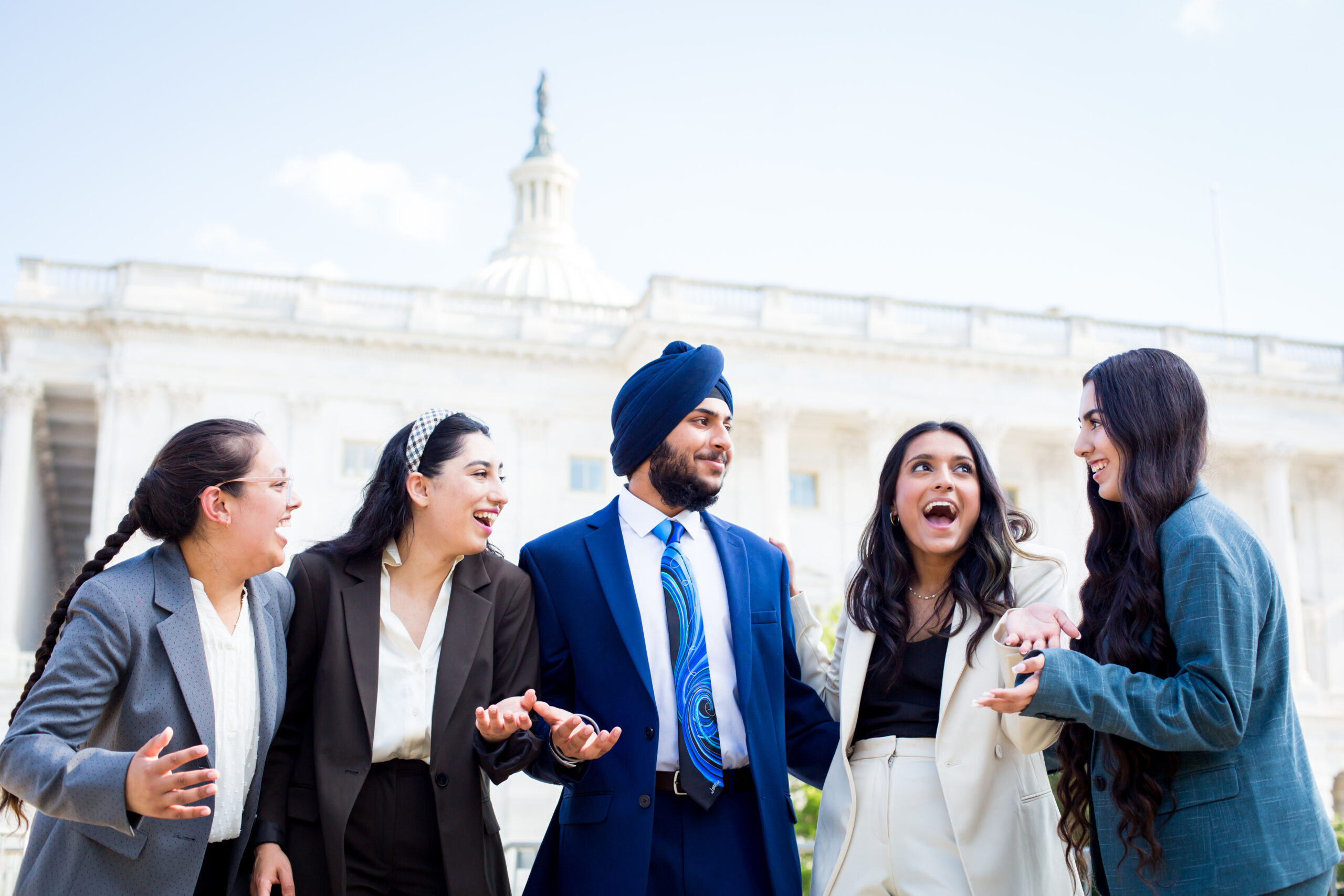
DC Sikh Community Encouraged to Attend Community Forum with Law Enforcement
WASHINGTON, DC – The Sikh Mediawatch and Resource Task Force (SMART), a national Sikh civil rights organization, is encouraging Gurdwaras across the United States to sign a joint letter on behalf of the religious community to Congress in support of hate crimes prevention legislation. SMART is enlisting the Sikh American community’s support to send the message that hate crimes should be investigated and prosecuted to the fullest extent of the law. The nation’s religious community is being brought together by various interfaith organizations to gather signatures of America’s religious leaders in support of passage of S.966, the Local Law Enforcement Enhancement Act (LLEEA), and its House companion bill, the Hate Crimes Prevention Act. Current law permits federal prosecution of a crime as a hate crime only if the act was motivated by bias based on race, religion, national origin, or ethnicity, and the assailant intended to prevent the victim from exercising a federally protected right. If this legislation is enacted, it would expand federal jurisdiction to include a broader set of bias categories. Second, the legislation would increase funds and support from federal law enforcement in the prosecution and investigation of hate crimes. Such action would enhance vigilance and effectiveness in the response to hate crimes. SMART requests Gurdwara leaders to sign the enclosed letter urging passage of this important legislation, and to help gather as many signatures as possible from other Gurdwaras. Signatories to the letter (attached below) should provide the following information: – Name – Gurdwara – City, State – Telephone Please give a copy of this advisory to your local gurdwara management and encourage them to sign-on. ### SAMPLE LETTER ### Dear Senator/Representative, We the undersigned religious leaders, from the Sikh faith tradition in XX state write you to urge swift passage of the Local Law Enforcement Enhancement Act of 2003(S.966), without any weakening to the amendments. In the troubling times after September 11th, the Sikh American community in particular has faced a twofold threat. Just as any American post-September 11th, Sikh Americans have had to live with the anxiety and apprehension of future terrorist attacks. However, in addition, Sikh Americans are living everyday with the fear of hate crimes being committed against members and institutions of their own community. The first fatality in the September 11th backlash was, in fact, a Sikh American gas station operator in Mesa, AZ. Thus, we must make it clear that neither hate nor violence is a traditional American value; both are antithetical to democracy and true spirituality. Though legislation cannot remove hate from the hearts and minds of individuals, hate crime prevention legislation can help to create a society that is unbending in its intolerance of hate-motivated violence. As you know, current law permits federal prosecution of a hate crime only if the crime was motivated by bias based on race, religion, national origin, or ethnicity, and the assailant intended to prevent the victim from exercising a “federally protected right.” The LLEEA would expand federal jurisdiction to include a broader set of bias categories. The law would also empower federal prosecutors to act in concert with local police and provide funding to these officials to assist with investigations. A broader federal law will also help make up for the inadequacy and absence of inclusive hate crime laws in many states and municipalities. To those who would oppose this hate crime legislation in the name of religion, we state categorically: everyone in this society should enjoy the strongest possible guarantee of freedom from attacks motivated by bigotry. Bigotry cloaked in religion is neither a moral right nor a religious value. The sacred Xures of many different religious traditions speak with dramatic unanimity on the subject of intolerance. If we aspire to be true to the prophetic core of our religions, we cannot condemn hate and then sit idly by while it destroys our communities. We believe that religion and government must work together to create a society in which diverse people are safe as well as free. We urge you to support the enactment of the Local Law Enforcement Enhancement Act. Sincerely,
SMART Following Up with Local, Federal Law Enforcement in NYC Washington, DC – The Sikh Mediawatch and Resource Task Force (SMART), a national civil rights organization, is encouraging the Sikh American community to attend a vigil promoting unity and peace in Queens, New York on Tue. August 19. The vigil is in response to the recent attack on a Sikh family in Queens, New York. SMART has learned that the August 3 hate crime in Queens, NY is being actively investigated by the NYPD. SMART has been consulting with the FBI and the NYPD Bias Crimes Unit to ensure that both federal and local authorities are diligently moving forward in the investigation. Communities in New York City are responding actively by supporting the Sikh family and condemning the incident. Local community organizations, led by New Immigrant Community Empowerment (NICE), have come together in organizing the “Vigil Against Violence.” The vigil, supported by several local and national organizations including SMART, will be held in Jackson Heights, Queens, NY on Tuesday, August 19. Details about the event, scheduled as a march, are follows: Date: Tuesday, August 19, 2003 Time: 6:30 P.M. sharp Assemble at: P.S. 69, in Jackson Heights, Queens, NY at 77-02 37th Avenue March to: Frank D. O’Connor Playground on Broadway, between 78 and 79 St SMART encourages the Sikh community in New York City to distribute information about the vigil to their family and friends, and attend the vigil in l
SMART Encourages Sikh Community to Attend Public Forum Washington, DC — On Wednesday, June 4th, a day before the House Judiciary Committee is scheduled to conduct an oversight hearing on the USA PATRIOT Act, SMART will join a diverse coalition of organizations at a public forum to examine the growing trend of law enforcement to selectively target certain immigrant communities under the guise of national security. SMART encourages the Sikh community, particularly those targeted unjustly by law enforcement since 9/11, to attend the hearing at the Senate tomorrow. The forum entitled: Justice For All: Selective Enforcement in Post-911 America, will examine the post-9/11 impact on the lives of those in the Arab, Muslim, East African, Sikh and Latino communities. A panel will include representatives from national organizations, individuals from the affected communities, along with members of Congress, including Senators Edward Kennedy (D-MA) and Patty Murray (D-WA). The forum is endorsed by over 100 national and local organizations including SMART. The details for the event are as follows: WHAT: A nationwide public forum on selective enforcement post-9/11 WHO: Community Members, Civil Rights Advocates, Senators WHEN: June 4, 2003, 10 AM – 12 PM WHERE: 902 Hart Senate Building, Washington, DC
Washington, DC – Leaders of national Sikh, Arab and Muslim organizations met with FBI Director Robert Mueller II on Wednesday, May 28 to discuss further partnerships with the community and the possible development of an advisory committee that would coordinate efforts at state and national levels. Last week’s meeting, a follow-up to the February 28, 2003 meeting, took place a week after a Sikh American truck driver was shot twice in a hate crime in Phoenix, AZ. “While we appreciate Director Mueller’s initiative to meet with us,“ said Manjit Singh, Chair of the Sikh Mediawatch and Resource Task Force (SMART) Board of Directors, “we want to ensure that preventative measures to reduce hate crimes take place hand-in-hand with investigation and prosecution, especially in light of the Phoenix incident last week.” Singh, who represented SMART, the oldest national Sikh American civil rights and advocacy organization, voiced the Sikh community’s concerns since the Phoenix incident on May 19, 2003. Following the shooting of Avtar Singh Chiera, the 52-year-old Sikh American who was shot after parking his 18-wheeler, SMART conducted training at the Phoenix Police Department headquarters for law enforcement officials and community leaders. SMART is encouraged that the FBI has responded positively to its suggestion of conducting similar religious awareness and protocol workshops at its training academy and at field offices across the country. Since September 2001, SMART has been reporting hate crimes and working closely with the FBI’s Washington, DC office and their various field offices. Following a meeting last February, the FBI issued a media release saying, “The FBI’s aggressive response to hate crimes has sent a clear message that vigilante attacks will not be tolerated. (Since the Sept. 11, 2001, terror attacks), the FBI has initiated 414 hate crime investigations involving Muslim, Sikh and Arab-American victims, with 17 persons being charged federally thus far. Additionally, some 129 persons have been charged with state and local crimes in connection with those investigations.” This meeting was the fourth in a series between the director and the leaders of national Muslim, Sikh and Arab-American organizations, though not all of them have been publicized. Others attending the meeting were representatives of the American-Arab Anti-Discrimination Committee, the Arab American Institute, the Islamic Institute, the American Muslim Council, and the Muslim Public Affairs Council.
Phoenix Police Establishes Reward Fund; Sikh Community Urged to Support Reward, Family Funds Phoenix, AZ – Responding to requests from local and federal authorities, the Sikh Mediawatch and Resource Task Force (SMART), a national Sikh advocacy group, conducted awareness training for law enforcement officials last week, following the shooting of Avtar Singh Chiera on May 19. Last Friday, May 23, approximately 35 individuals gathered at the Phoenix Police Department headquarters to attend SMART’s awareness training, entitled Sikhism 101: An Introduction to Sikh Beliefs, History, and Culture. Attendees included representatives from the police department, state attorney general’s office, the U.S. Department of Justice Community Relations Service (CRS), and members of the local Sikh community. The training was also attended by representatives from local chapters of the Anti-Defamation League (ADL) and the National Conference on Community and Justice (NCCJ). SMART would like to thank the Community Relations bureau of the Phoenix Police Department for arranging the training session on short notice and the Phoenix-area Sikh community for supporting the Chiera family following this unfortunate incident. The individuals responsible for the apparently hate-motivated attack against Mr. Chiera are still at-large. Two funds have been established following the shooting. The Chiera family is facing financial hardship as a result of this crime. Mr. Chiera has no health insurance and will be unable to work for a while. The community can contribute to the Chiera family fund by sending donations directly to the following address: FUND FOR AVTAR SINGH, A SIKH HATE CRIME Bank of America Mail Code AZ3-125-01-01 3246 East Bell Road, Phoenix, AZ 85032 A second fund has also been established by the Phoenix Police Department through the Silent Witness Reward program, aimed at encouraging witnesses to come forth anonymously with information that may lead to an eventual arrest and conviction of the shooting suspects. Contributions to the Silent Witness Reward fund can be made through an online donation to SMART, or by sending donations directly to the following address: SIKH COMMUNITY AID FUND Memo: Avtar Singh Reward Program 2313 N. Richland Street Phoenix, Arizona 85006 Since learning about the shooting from a regional SMART representative early on the morning of May 20, SMART immediately informed local, state and federal authorities to ensure a thorough investigation. SMART representatives spoke individually with the following folks to ensure a coordinated effort: the FBI Squad Leader; Phoenix Police Department Detectives; United States Assistant Attorney General, Arizona; and Director of the United States Department of Justice, Community Relations Service. Recent news reports indicate hate crimes against those perceived to be Muslim or Arab in the United States have been on the rise since the beginning of the war in Iraq. Therefore, SMART encourages Sikh Americans to do outreach, increase civic participation and become active in their communities.
These days, when Mehar Mehal ties his turban to go out of the house, his thoughts are of a former Bay Area taxi driver, Balbir Singh Sodhi . . . and a new movie, “DisFunktional Family.” “I think when you tie a turban as a Sikh, at the back of your mind you are thinking you’ve got to be careful,” said Mehal, a Santa Clara engineer. “You could get hurt, you could get killed.” Balbir Singh Sodhi, if you can’t quite place him, is the gas station owner who was shot to death in Arizona shortly after Sept. 11, 2001, allegedly by a man proclaiming his patriotism. Sodhi was wearing a turban that the suspect associated with terrorists. “DisFunktional Family” is a concert movie starring the comedian Eddie Griffin, an “equal-opportunity comic who gets laughs at everyone’s expense,” according to the movie studio, Miramax. Where the two intersect, Sikhs like Mehal believe, is a scene in the film and its trailer, in which Griffin points to a turbaned elderly Sikh man walking on the street and shouts, “Bin Laden, I knew you was around here!” It’s just one of many gags in the movie that features Griffin’s take on life and celebrity, interspersed with interviews with his family. Griffin goes after his mother, too. Palpable worry But no one’s going to go after Mrs. Griffin because of this movie. Mehal, in contrast, warns his 67-year-old turbaned father to be careful on his daily walks. That’s why since February, when the trailers first surfaced in movie theaters, Sikh organizations such as the Sikh Mediawatch and Resource Task Force have tried to work with Miramax to see the movie first and temper such scenes. Not censor, says Preetmohan Singh, director of the Washington, D.C., office of Sikh Mediawatch. They know about the Constitution and freedom of expression, Singh said. “But corporations need to demonstrate corporate and moral responsibility.” Singh, a San Jose native, has a healthy respect for the First Amendment. After all, he won a San Jose Mercury News scholarship and was a standout in a South Bay journalism program called Mosaic. At age 24, he is hip, urban and squarely in the demographic that would see the movie. He’s not exactly a humorless activist. Miramax wouldn’t screen the movie for Sikh Mediawatch before the April 4 release and wouldn’t meet to discuss it, Singh said. He notes that studios have shown restraint when it suits them, delaying some films that might be perceived as too close to real events, and therefore insensitive. We can all use a good laugh in these times, Singh says. But since the Sept. 11 attacks, and again since the Iraq war began, Sikhs have been in the awkward position of having to tell the public what Sikhs are. Or, rather, what Sikhs are not. They are not Arab. They are not Muslim. (Not that anyone should be attacked because they are.) But if you see men wearing turbans in North America, they are probably Sikhs, because the turban is an emblem of their religion. Harpreet Singh of the Sikh Coalition said that a few days after the war began, a man with a big American flag on his truck spat repeatedly on Singh’s car while they were in bumper-to-bumper traffic between New York and Washington. “It hurt, because . . . I lost friends and people I knew in 9/11,” said Singh, 28. Worse, it made him feel very vulnerable on that highway. Who’s reasonable? But Miramax doesn’t get it. “Reasonable people,” Miramax’s official response to the group said, would not associate Sikhs with Osama bin Ladin, and besides, plenty of people of other faiths wear turbans. “Family,” fortunately, seems to be fading on its own, failing to crack the Top 10 in ticket sales its first week. Still, Sikhs want Miramax to remove the scene from distribution on post-theater versions on DVD or VHS. “This is not over,” promises Preetmohan Singh. “And it is not because we’re mad.” It’s because they’re scared.
Possible backlash against those perceived to be Muslim, Arab or Middle-Eastern Washington, DC, — Following President Bush’s remarks to the nation last night about the developments in Iraq, Sikh Mediawatch and Resource Task Force (SMART) is cautioning the Sikh American community to take extra safety measures to safeguard themselves, their property and their local Gurdwara from possible backlash if war breaks out in the Middle East. Recent news reports (F.B.I. Warns of Possible Hate Crimes in United States, NYT 3/13/03) indicate hate crimes against those perceived to be Muslim, Arab or Middle-Eastern in the United States have been on the rise. SMART would like to emphasize that this advisory is issued purely as a precautionary measure. A hate crime is targeted criminal activity, motivated by prejudice based on perceived immutable personal characteristics of the victims. Hostile or hateful speech and actions motivated by prejudice are termed hate or bias incidents. These motivations may include race, religion, ethnicity or national origin, gender, age, disability or sexual orientation. Hate incidents become crimes only when they directly incite perpetrators to commit violence against persons or property, or if they place a potential victim in reasonable fear of physical injury. If you or anyone you know, becomes the victim of a hate incident, please report it immediately at http://www.sikhmediawatch.org/incident/incidentreport.htm. SMART has relationships with law enforcement agencies across the nation and will ensure that the appropriate agency is notified of the incident. You can also contact SMART toll free at 877-91-SIKHS (1-877-917-4547). To help the community better respond to an incident, SMART has developed KNOW WHAT TO DO, a handy pocket guide that details the steps that should be taken in the event of a hate crime, discrimination in the workplace, police profiling, and states your rights as an airline passenger. SMART URGES EVERYONE TO EXERCISE COMMON SENSE AND RELY ON THEIR OWN BEST JUDGMENT, BUT OFFERS THE FOLLOWING SUGGESTIONS: (Link no longer available).
WASHINGTON, DC – FBI Director Robert Mueller met with leaders of national Sikh, Arab and Muslim organizations on Friday, Feb. 28 to discuss the rise in hate crimes and racial profiling of these communities in the wake of the September 11, 2001 terrorist attacks. The meeting was the latest in a series of meetings organized by the FBI with leaders of organizations who have been responding to post-September 11 bias incidents.
The Sikh Mediawatch and Resource Task Force (SMART), the oldest national Sikh American civil rights and advocacy organization, addressed the possible increase in hate crimes in the next few months due to the looming war with Iraq and the need for the Bureau to aggressively investigate all reported bias incidents.
“Protecting the civil rights of all Americans remains a top priority for the FBI,” said Mueller. “I”m vitally concerned that the rights of Muslim, Sikh and Arab Americans be protected. The FBI stands prepared to take strong and immediate action against hate crimes in the event of any anti-Arab American backlash to world events.”
The FBI said its response to hate crimes has sent a clear message that hate crimes will not be tolerated. To date, the FBI reportedly has initiated 414 hate crime investigations involving Muslim, Sikh, and Arab-American victims, with 17 persons being charged federally thus far. Additionally, some 129 persons have been charged with state and local crimes in connection with these investigations.
The director also stressed the importance of strengthening relationships and improving cultural sensitivity. “We can”t do it without you,” Director Mueller said.
SMART encouraged the FBI to conduct religious and cultural awareness workshops at its training academy and at field offices across the country. Since the September 11, 2001 terrorist attacks SMART has conducted such trainings for numerous local, state, and federal law enforcement agencies. SMART also asked the FBI director to establish a relationship with the Sikh community to ensure that hate crimes are accurately reported nationwide.
Others attending the meeting were representatives of the American-Arab Anti-Discrimination Committee, the Arab American Institute, the Islamic Institute, the American Muslim Council, and the Muslim Public Affairs Council.
Washington, DC — On February 12, 2003, SMART issued a press release on the 1985 Air India bombing case, which contained some factual errors. The following is an excerpt from the agreed statement of facts submitted in the British Columbia Supreme Court when Inderjit Singh Reyat pleaded guilty Feb. 10 to 329 counts of manslaughter in the 1985 bombing of Air India Flight 182: “In May and June 1985, in the province of British Columbia, Mr. Reyat acquired various materials for the purpose of aiding others in the making of the explosive devices. Although Mr. Reyat acquired materials for this purpose, he did not make or arm an explosive device, nor did he place an explosive device on an airplane, nor does he know who did or did not do so. At no time did Mr. Reyat intend by his actions to cause death to any person or believe that such consequences were likely to occur.” Our press release incorrectly stated that Mr. Inderjit Singh Reyat “admitted he assisted others in plotting the bombing of an Air India Boeing 747 over the Atlantic Ocean in June 1985.” We apologize to Mr. Reyat, his family, and to the Sikh community for this error. Our intention was to represent Sikh values to the broader public and convey to them that violence directed against innocent civilians are never permissible under our value system. We have since retracted the press release.