Washington, D.C., February 2, 2007 — On January 25 2007, Mr. Sanjum Paul Singh Samagh, a first year medical school student at the University of California – Irvine Medical School (UCI SOM), was denied entrance to the Pierce Street Annex in Costa Mesa, California, because his religiously mandated head-covering, called a dastaar (or turban), violated the business’s “no hat’s” policy. Mr. Samagh entered the Pierce Street Annex to join his medical school classmates in celebrating another classmate’s birthday. When trying to gain entrance to the establishment, the security guard noted that Mr. Samagh was wearing a religious head covering, and that it would not be a problem, but advised that he speak to the owner. The owner, Mr. Douglas Adsit, then informed Mr. Samagh that the Pierce Street Annex does not allow entry to anyone wearing “headgear” and denied him entry. After hearing the stance of Mr. Adsit, the group of 20 students whom Mr. Asagh was supposed to meet, left the establishment and moved the celebration to another location. In a show of solidarity, the UCI SOM first and second year students have formally implemented a boycott against any medical school functions being held at the Pierce Street Annex until this issue is resolved to the satisfaction of Mr. Samagh. In response to this incident, the Sikh American Legal Defense and Education Fund (SALDEF) noted in a January 27, 2007 letter to Mr. Adsit, “The Sikh turban is a fundamental and integral part of a Sikh’s identity. It is not a hat or cap that can be removed and put on casually. The turban is a religious article of faith which has been protected by the First Amendment to the United States Constitution as well as Federal and State courts across the country.” “Business’ whose “no hats” policies do not allow for religious accommodation are in violation of the Freedom of Expression doctrine in the United States Constitution,” stated SALDEF Western Regional Director Kavneet Singh. “Such acts are blatantly discriminatory by nature and seek to denigrate not only the 500,000 Sikh Americans but also our brothers and sisters in other faith communities who wear religious head-coverings as part of their beliefs.”
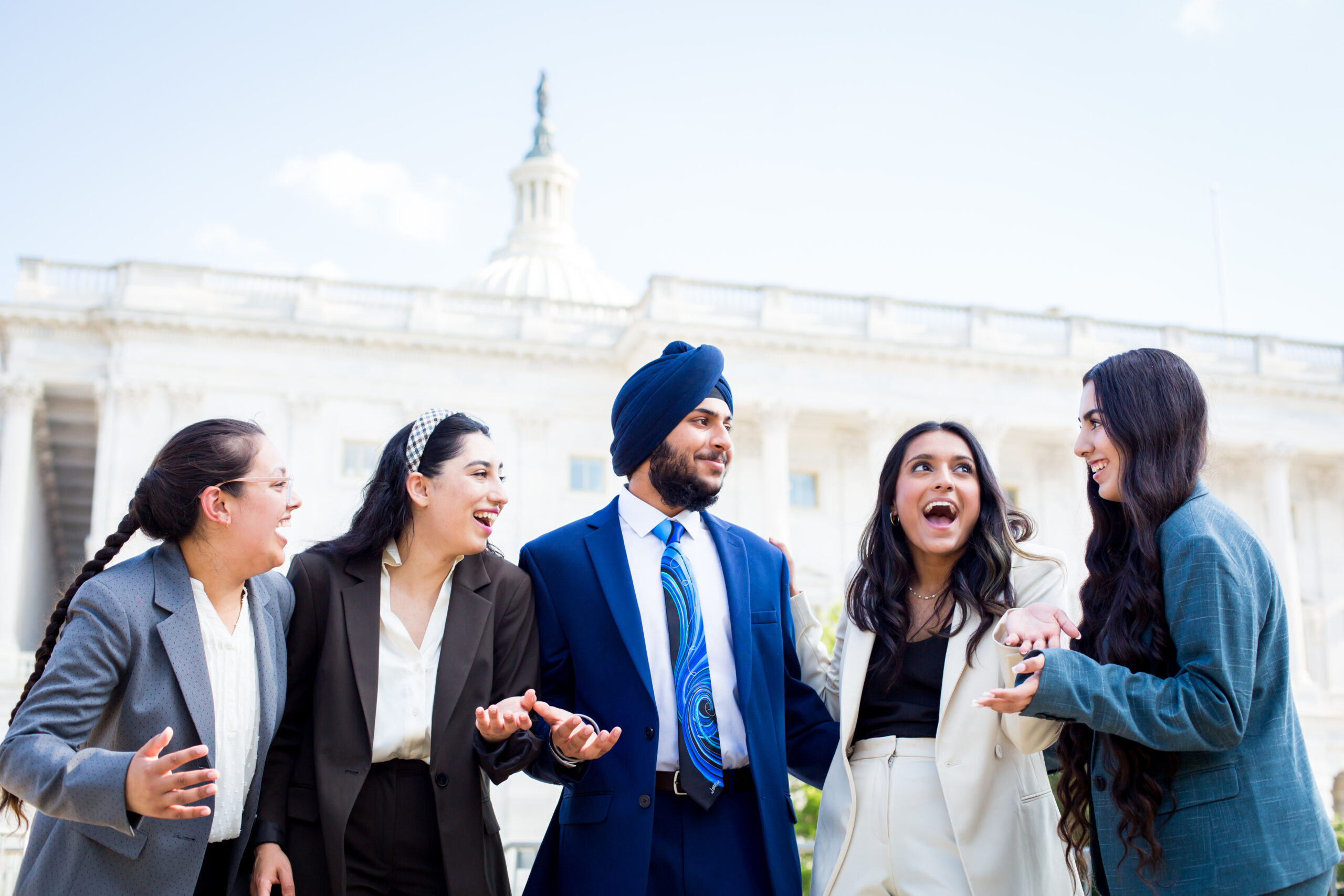
Costa Mesa Restaurant Denies Entry to Sikh American Man Due to his Religious Affiliation
English and Spanish Calendars produced to inform neighbors, co-workers, classmates about Sikh Americans Washington D.C., January 31, 2007 – As 2007 begins the Sikh American Legal Defense and Education Fund (SALDEF) has again begun distribution and taking orders for their highly popular Pocket Calendars. The Pocket Calendar is a great resource and tool to increase awareness about Sikhs and Sikhism in your local community. 
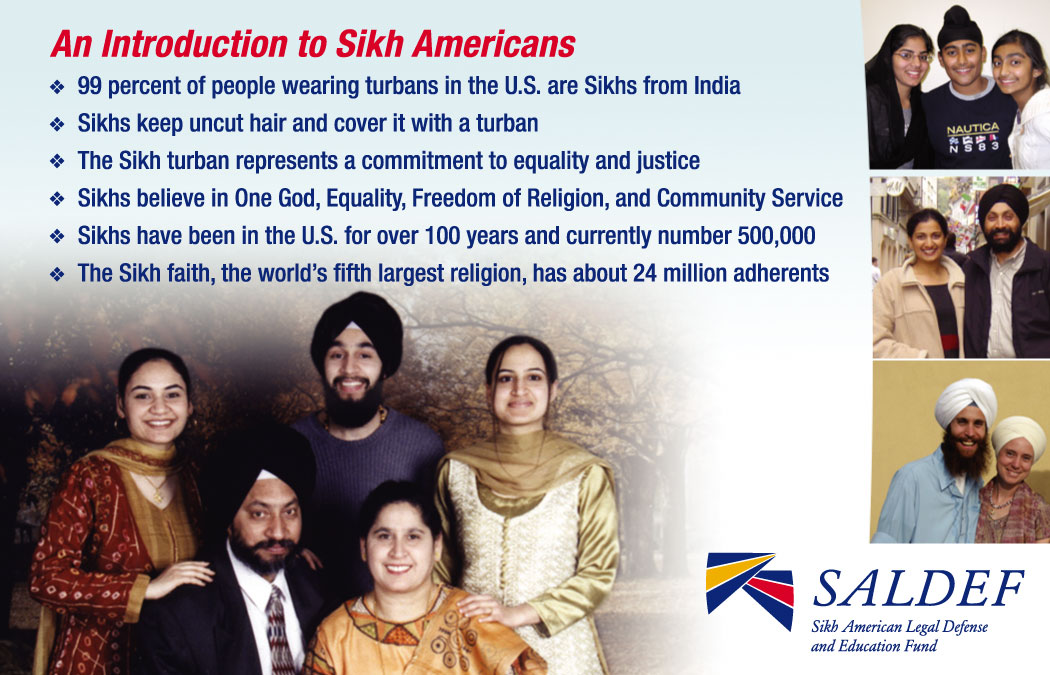 The 2007 calendars, which are professionally designed and printed, have full-color images of Sikh Americans, along with examples of core Sikh values and facts about Sikhs in the United States. On the back, the calendars have a 2007 calendar year in a small, handy, easy to use design. The calendars are available in packages of 100 for $10 plus shipping and handling fees. Additionally, building upon the success of last year, SALDEF has again produced a Spanish language version of its 2007 Calendars, for distribution as well. These calendars are great for distribution by community members at their workplace, business, community meetings, senior citizen centers, convenience stores, gas stations, through cab drivers and at other appropriate locations. This is SALDEF’s fourth year of producing the Pocket Calendars. We admire the commitment of the Sikh American community to take the initiative in informing their friends, co-workers, business patrons and acquaintances about their culture and faith. To order the calendars and other SALDEF publications, please click here or contact us at pubs@ saldef.org To view a larger image of the English Calendar, please click here To view a larger image of the Spanish Calendar, please click here

SALDEF works with Pearson VUE Testing to revise accommodation policy to include religious apparel Washington D.C. – January 23, 2007: The Sikh American Legal Defense and Education Fund (SALDEF), the nations oldest Sikh American civil rights and advocacy organization, received a formal letter of apology from Pearson VUE Vice President Anthony Zara in response to an incident of mistreatment of Ms. Jagjit Kaur Khalsa, as she sought to sit for a standardized test at one of Pearson’s facilities. On October 13, 2006, Ms. Khalsa went to a Pearson VUE testing facility in Austin, TX to complete her Oriental Medicine Licensure exam. Upon arriving at the testing facility, Ms. Khalsa was denied entrance into the exam room by a security guard due to her religiously mandated turban. The security guard told Ms. Khalsa that the removal of her “hat” was for her own protection and concerned her career. Ms. Khalsa told the guard that she was not wearing a “hat,” but rather a mandated religious article of faith, a dastaar (turban) and that she could not remove it. SALDEF letter to Pearson VUE’s general counsel informed them of the discriminatory action of the security guard and recommended necessary steps to remedy this situation quickly to Ms. Khalsa’s satisfaction. In a letter to Ms. Khalsa, Pearson VUE Vice President Anthony Zara noted, “We thank you and your attorney for bringing the matter of October 13, 2006 outlined in your letter to our attention. We take matters such as this very seriously and we regret that you felt humiliated during this incident.” Additionally, SALDEF received a separate letter from Mr. Zara indicating Pearson’s formal policy changes allowing for exceptions for religious head coverings specifically mentioning Sikh turbans. In his response, Mr. Zara wrote, “In response to your letter, Pearson VUE has updated its policy on religious and cultural apparel. Please note that under the revised policy no candidate will be asked to remove any item of religious apparel for inspection.” “Your support means a lot to me as for years people have on occasion made uneducated comments about turbans that I have usually just brushed off.” said Ms. Khalsa. “I am so reassured and grateful that your organization is here to help for the sake of many others as well offering support and education! Thank you for helping to get them to change their policy! I could not do that on my own.” SALDEF thanks Pearson VUE for their immediate attention to resolving this matter so that individuals of faith have the ability to use their facilities without having to remove their religious head covering. Additionally, SALDEF commends the courage of Ms. Jagjit Kaur Khalsa for reporting this incident to SALDEF and making sure that her rights as a Sikh American are not marginalized. Unfortunately these incidents have occurred on a frequent basis with many other testing and employment facilities across the country. If you or anyone you know has been the victim of workplace or employment discrimination, please contact SALDEF immediately at 202-393-2700 or info@saldef.org.
Training video to increase awareness among law enforcement officers about Sikh American cultural practices Washington DC, January 19, 2007 – This past Wednesday, January 17, 2006, the Community Relations Service (CRS) of the Department of Justice in partnership with the Sikh American Legal Defense and Education Fund (SALDEF), the largest and oldest Sikh American civil rights and advocacy organization, released a first of its kind police roll call training video titled, On Common Ground – Sikh American Cultural Awareness for Law Enforcement. The ground breaking 17-minute training video was developed by SALDEF for the Community Relations Service and released at an event attended by over 150 members of federal, state and local law enforcement agencies as well as prominent members of the civil rights and Sikh American community. Since the terrorist attacks of 9/11, there has been a sharp increase in the number of hate incidents and hate crimes against Sikh Americans of South Asian decent. These attacks have been primarily due to the lack of awareness and the common misconception that Sikh Americans are either from the Middle East, Arab or Muslim. Speaking in absentia, United States Attorney General Alberto Gonzalez noted, “The film is designed to educate law enforcement working in non-emergency circumstances about cultural norms of Sikh Americans. It makes clear that Sikhs are an integral part of American society. I commend CRS, and I offer my sincere appreciation to CRS and SALDEF for their perseverance and creative effort in producing this educational film.” The training video will be distributed to federal, state and local law enforcement officials across the country. The educational film includes detailed information about the cultural practices and articles of the Sikh faith which are commonly unfamiliar to law enforcement. The protocols for the respectful handling of the articles of faith recommended in the training video are designed with officer safety in mind and are to be followed only in a non-emergency, non-crisis situation. “This video is a product of continued successful collaboration between SALDEF and the Community Relations Service and the pioneering vision of Director Sharee Freeman,” said SALDEF President Mirin Kaur Phool. “Director Freeman has worked tirelessly after September 11, 2001 to ensure that the American public is aware of the Sikh American community.” Additionally, at the event, Director Freeman also announced her plans to step down as the Director of U.S. Department of Justice Community Relations Service. During her five year tenure, CRS has been a leader in the government’s effort to build and sustain community partnerships within racial and ethnic communities across the nation. On behalf of SALDEF and the entire Sikh American community we thank Director Freeman for her esteemed public service and dedication to supporting the voice of minority groups across the United States. SALDEF would like to especially recognize Sandeep Singh of Marketwise Communications, the director and production manager of this ground breaking educational film. His involvement and unflinching dedication were instrumental in the production of this high quality educational film. SALDEF also extends thanks to all the volunteers and the staff of CRS for their assistance with the organizing of this event. Over the past several years, SALDEF has successfully collaborated with government agencies to produce material that informs law enforcement about Sikh American culture and articles of faith with the objective of ensuring a positive interaction between Sikh Americans and law enforcement personnel including most notably:
- In December 2004, SALDEF collaborated with the U.S. Department of Justice to publish a poster entitled, Common Sikh American Head Coverings. The purpose of the poster is to provide law enforcement with basic information about the various types of head coverings worn by Sikh men and women.
- In November 2006, SALDEF partnered with the U.S. Department of Homeland Security to release a poster entitled, Sikh Americans and the Kirpan. The poster seeks to create awareness about the Kirpan (religious sword) and recommends protocols on its appropriate handling.
The video will be available for viewing and download in Mid-February. Please visit www.saldef.org for information on the video and its distribution.
SALDEF and local parents work to successfully resolve incident; local and state soccer association stresses importance of accommodation to all game referees Washington, D.C., December 26, 2006 – This past November, the Sikh American Legal Defense and Education Fund (SALDEF) received a formal letter of regret from the Lehigh Valley Youth Soccer League (LVYSL) for denying Harshaan Singh Athwal the right to play soccer while wearing his patka (Sikh religious head-covering). The first incident occurred on November 4, 2006 when Harshaan Athwal was denied from playing in a youth soccer match because the referee felt his patka was a safety risk for players of the opposing team. Additionally, on November 11th, Harshaan was again denied from playing in a match by a different referee, who cited that the jura, his knotted hair on top of his head, could physically harm another player. Following these incidents, SALDEF was approached by Harshaan’s mother, Jaswant Kaur Athwal on November 13, 2006, regarding this biased and unfair treatment of her son. SALDEF immediately drafted a response to the LVYSL on November 14th noting, “Like other devout Sikhs, Harshaan wraps his uncut hair and covers it with a patka. Harshaan’s hair and patka have deep religious meaning to him, reflecting his personal relationship with and devotion to God. A turban is not an “optional” clothing item to put on and remove at will, like a baseball cap.” “I was worried that Harshaan wouldn’t be allowed to play soccer anymore due to his patka”, said Mrs. Athwal. “I contacted SALDEF immediately to make sure that he would be allowed to play the game he loves and be with his teammates. SALDEF responded quickly to my email, and followed up with the league President to make sure Harshaan would be allowed back on the field.” Additionally, in light of the incidents, the LVYSL held a meeting on November 14th to discuss the incidents at length. Many local residents came out to support Harshaan including local parents, fellow players and members of the team’s coaching staff. In response to SALDEF’s letter, LVYSL President Bernie Bennett sent a letter on November 17th stating, “It is the league’s fondest wish that every youth be allowed to participate in the beautiful game, regardless of race, religion, gender nationality, economic status, athletic ability, or any other classification.” Finally, on November 20, 2006 the State of Pennsylvania Referee Association issued clarifying guidelines relating to religious head coverings. Reiterating the need for religious exemptions they wrote that the, “Secretary General of the United States Soccer Federation has given permission to those bound by religious law to wear such head coverings, usually a turban or yarmulke.” “I would like this to set a precedent, so no other child or mother has to go through this ordeal,” stated Mrs. Athwal. “I am deeply grateful to your organization, for all your help in this matter. I commend you highly for your great work.” “We would like to thank the Athwal family for their courage in bringing this issue to SALDEF’s attention”, said SALDEF Managing Director Kavneet Singh. “It is of paramount importance that Sikh Americans feel free to practice their faith freely and without fear. We would also like to thank the parents, players and coaching staff who came out in support of Harshaan’s right to play the game of soccer as well as Mr. Bennett, the President of the LVYSL for promptly responding to this incident and resolving it in a quick and progressive manner.” SALDEF encourages all Sikh Americans to demand equal and fair treatment in all situations. If you, your child or anyone you know has been affected by discrimination in your local area, please contact SALDEF immediately at 202-393-2700 or info@saldef.org.
Waheguru Ji Ka Khalsa, Waheguru Ji Ki Fateh! The Sikh American Legal Defense and Education Fund (SALDEF) is proud to continue working in the true spirit of seva for the Sikh American community. Your immediate and generous year-end donation can play a vital role in helping SALDEF continue its pioneering work on behalf of the Sikh American community. Support SALDEF now by:
- Click here to make a one time or recurring monthly donation.
- Click here to join SALDEF as an individual or organization member.
As the oldest Sikh American civil rights and advocacy organization in the country, SALDEF has for the past decade instituted and developed key initiatives and programs to both protect and empower Sikh American sangats across the country, and also to educate our fellow Americans about Sikhs and Sikhism. With your support, we will continue to serve for a DECADE longer. By supporting SALDEF now, you support SALDEF’s vision of an integrated, empowered and engaged Sikh American community for our children to be safe and secure in the future. Our most recent efforts on behalf of Sikh Americans include:
- Last month, SALDEF unveiled the Kirpan Poster, produced in collaboration with the the Department of Homeland Security, explaining the Sikh Kirpan. This poster entitled Sikh Americans and the Kirpan, will be used to inform thousands of federal law enforcement officers and security screeners about the religious significance of the Kirpan to Sikhs.
- On December 1st, SALDEF secured a formal apology from a Virginia restaurant that denied a turbaned Sikh American man entrance to their establishment due to his religious mandated dastaar (turban). Not only did the restaurant apologize, but they amended their “no hat’s” policy to allow for exemptions for religious head coverings and took appropriate steps to ensure employees are informed and well versed with the revised policy.
- SALDEF protected the Constitutional rights of Mr. Tarun Singh Kataria when he was denied entrance into a Georgia Courthouse due to his religiously mandated dastaar (turban). SALDEF obtained a formal apology and a written change to the court’s policy from the presiding Judge of the court.
- SALDEF secured an apology from the National Parks Service and trained over 120 security supervisors and screeners in response to inappropriate actions against a group of Sikh American tourists by the security staff at the Statue of Liberty .
True to our decade-long history, SALDEF will continue to build on these and past successes. SALDEF carries on its mission with a small full-time staff, dedicated volunteers and the financial support of members and donors like you throughout the nation. We are an organization of Sikh Americans serving Sikh Americans. Please click here to help develop these programs by making a year-end, tax-deductible gift to SALDEF. We need your continued support to expand these programs. Your generous contribution you will further enable SALDEF in:
- Defending more Sikh Americans from unlawful discrimination and harassment
- Educating more non-Sikhs about the beliefs of Sikhs
- Protecting more of our Sikh American youth from bullying and harassment
- Helping to expand empowerment initiatives like our Know Your Rights Forums, and the voter outreach efforts.
Click here to support SALDEF using our easy and convenient online system. While the Sikh American community has reached many milestones within the past 10 years, there are still many more to attain and more work to be done. Together, we can continue our pioneering efforts and strengthen the position of Sikh Americans all across this country. We hope you will take the time to make as generous a year-end gift as you can. Together we can ensure that the voice of Sikh Americans continues to be heard and our freedom and liberties are never taken away from us. Waheguru Ji Ka Khalsa, Waheguru Ji Ki Fateh!
Owner pledges to ensure all staff are made aware of religious exemption to ‘no-hats’ rule On December 1, the Sikh American Legal Defense and Education Fund (SALDEF) received a formal apology from the Richbrau Brewing Co. restaurant in Richmond, VA for denying Mr. Hansdip Singh Bindra entry to the restaurant with his turban. On November 24, 2006, Mr. Bindra, a member of the Sikh faith, sought entry to the popular restaurant in Richmond with members of his extended family. Mr. Bindra was denied entry due to the restaurant’s “no hats” policy. Mr. Bindra attempted to explain that he was not wearing a “hat,” but rather a turban, a mandated religious article of faith for Sikhs. “There were all sorts of people there, and yet I was being singled out solely because of the way I looked”, said Bindra. “I wear a turban everyday as a Sikh, it’s who I am.” In the apology letter addressed to Mr. Bindra, Michael Byrne, Director of Operations at the Richbrau restaurant noted: “It is with this letter that I would like to extend to you an apology for our doorman enforcing the “no headgear policy” literally.” Mr. Byrne continued, “I have contacted the Richmond media and reaffirmed our policy of the traditional headgear policy exception to our staff. I trust you will feel welcome on your next visit to Richbrau Brewing Co.” After being contacted by Mr. Bindra late on November 25, 2006, SALDEF immediately wrote a letter to Mr. Byrne explaining that, “[a] policy allowing for religious accommodation would not permit patrons to circumvent the policy by claiming religious significance for baseball caps, bandanas and other such articles of clothing. A Sikh turban, a Jewish Yarmulke, and a Muslim hijab are all federally protected religious articles of faith and, as such, are allowed to be worn by individuals in all circumstances.” “I knew I could count on SALDEF’s staff to ensure the ‘no-hats’ policy was corrected to provide an exception for the Sikh turban,” said Bindra. “I am proud to have worked with such a great organization, and am satisfied with the formal written apology.” SALDEF thanks Hansdip Singh Bindra for his courage in aggressively addressing this discriminatory incident by contacting SALDEF. SALDEF would also like to applaud Mr. Michael Byrnes for amending Richbrau’s “no hat’s” policy to allow for exemptions for religious head coverings and taking appropriate steps to ensure employees are informed and well versed with the correct application of the policy.. “The successful resolution of this issue demonstrates that we can leverage our years of experience of protecting the civil rights of Sikh Americans and our expertise in using the media to achieve our desired outcome,” said SALDEF Managing Director Kavneet Singh. “There continues to be a problem of under-reporting of civil rights violations in the Sikh American community, and we encourage Sikh Americans to inform law enforcement and SALDEF about all of these incidents to ensure they are properly recorded and handled.” Media coverage about this case can be viewed at: Richmond Brewpub shuts out turban wearer, Richmond Times (Link no longer available) NBC 12 news report and interview (Link no longer available) To read about a prior unfortunate incident of harassment that Mr. Bindra endured, please visit: Delta Airlines Reaches Agreement with Sikh American Alleging Harassment, Profiling (Link no longer available) First civil rights lawsuit by American Sikh against airline since 9/11 If you or anyone you know has been affected by discrimination in your local area, please contact SALDEF immediately at 202-393-2700 or info@saldef.org.
| BY PAIGE MUDD TIMES-DISPATCH STAFF WRITER | Nov 26, 2006 |
Sikh businessman turned away from restaurant in dispute over head covering A Sikh software executive visiting family in the Richmond area was denied entry Friday night to a popular Shockoe Slip restaurant because he refused to remove his turban. Hansdip Singh Bindra, 37, was shocked when management at Richbrau Brewing Co. told him he had to remove his “hat.” “It was incredibly embarrassing. It’s not a hat. When I wear a turban, it’s a part of my body. It’s a gift from God,” said Bindra, who lives in Long Valley, N.J. “It’s like asking a Jewish person to take off his yarmulke.” Richbrau owner Mike Byrne said yesterday that the restaurant’s policy forbids head coverings. “We have a policy where no bandanas or headgear is allowed, and we enforce it,” he said. “I think the issue is he’s quite clear on what our policy is. It’s not a discrimination policy. It’s simply no headgear.” Bindra was out with his two male cousins who live in Chester and a male friend, all of whom are Sikh but do not wear turbans. The turban is a religious symbol for many Sikh men, who cover their long hair in public. Sikh men also wear beards. Bindra, who was born in India but is a permanent U.S. resident, said he was allowed into every other downtown Richmond bar he went to Friday night — Tiki Bob’s Cantina and Have a Nice Day Café in Shockoe Bottom and The Tobacco Company in Shockoe Slip. He has never visited the Richmond area before. He never goes out in public without his turban. Byrne said the no-headgear policy is meant to keep Richbrau safe. “We don’t tell you how to groom. We’re not trying to make a social statement,” he said. “Most of our policies are regulated toward having a safe environment and having people feel safe. Certainly, religion or race has nothing to do with policy.” Restaurant owners are allowed to set a dress code, but federal law prohibits them from discriminating on the basis of race or ethnicity. Bindra is executive vice president of Innov8 Computer Solutions, a New Jersey-based company that specializes in business software and consulting. He graduated from Lafayette College in Easton, Pa., and earned a master’s degree in information systems from Seton Hall University in South Orange, N.J. Yesterday, he contacted the Sikh American Legal Defense and Education Fund, based in Washington, about the incident. Manjit Singh, who founded the group 10 years ago, said this is the first recent incident of alleged discrimination reported in Virginia. The organization investigates about 50 complaints nationwide each year. “It’s unfortunate that in this day and age, discrimination still occurs,” he said. “Wearing a turban is not like wearing a baseball cap. It’s a mandatory part of the Sikh faith.” The Sikh religion has 24 million followers worldwide, with half a million Sikh men, women and children in the United States. The largest populations are concentrated in New York, New Jersey and the area around San Francisco Bay. The religion originated in modern India, Singh said, adding that most people in the United States who wear turbans are Sikh. He added that people of the Sikh faith are often confused with Muslims. In 2003, Bindra made headlines when he sued Delta Air Lines. He claimed a flight attendant mistakenly referred to him as a Middle Eastern Muslim when she saw his turban, and she flagged him as a potential security risk on a 2002 flight from Cincinnati to Dayton, Ohio. He settled his case in 2004 for an undisclosed amount of money. Richmond’s Sikh population is growing, Singh said, with two gurdwaras Sikh places of worship — in the Richmond area. The Washington area has about 12,000 Sikhs. Singh said his group will investigate Bindra’s complaint and possibly ask Richbrau to explain and change its headwear policy, as well as offer Bindra an apology. The group is currently investigating a recent incident in San Francisco in which two Sikh men were reportedly denied entry to a bar because they wouldn’t take off their turbans. “This is 2006, for God’s sake,” Bindra said. “The other pubs in Richmond were OK with me. This was one bad apple. We’re all Americans. We might look different, but we’re all Americans. I’m proud of who I am.” Contact staff writer Paige Mudd at pmudd@timesdispatch.com or (804) 649-6671. Richmond Times Dispatch
More than two dozen followers have been arrested for carrying article of faith By Matthew Artz, STAFF WRITER, The Argus For observant Sikhs, car keys and loose change aren’t the only things to worry about when walking through metal detectors. Their religion requires that they wear a small sword, called a Kirpan, usually slung above their left hip in a cloth casing. The article of faith has been the source of hostile encounters with screeners at airports, courthouses and federal buildings, where several Sikhs have been arrested for carrying a concealed weapon. To help avoid such encounters, the U.S. Department of Homeland Security this week released a poster explaining the Kirpan and giving security screeners tips on diplomatically searching for and confiscating the sword. The posters will be circulated at airports, border crossings and federal buildings across the country and should arrive in the Bay Area within the next few weeks, said Rajbir Datta, associate director of the Sikh American Legal Defense and Education Fund in Washington, D.C. Since Sept. 11, 2001, the Sikh organization, which worked on the poster with federal officials, has dealt with about 30 instances of Sikhs’ being arrested for carrying a Kirpan. All of the cases have been dismissed, Datta said. “We want law enforcement to understand the significance of the Kirpan, so they don’t view it as a weapon.” Difficulties usually arise, Datta said, when Sikhs forget to either pack the religious sword in their luggage before going through airport security or leave it in their car when traveling to buildings with metal detectors. The poster, which will be placed inside security offices, directs screeners to ask Sikhs if they are carrying a Kirpan and then request to inspect it. “If the Kirpan must be confiscated, explain the reason and handle the Kirpan with respect and care,” the poster says. What happens next to the sword depends on the checkpoint, Datta said. For visits at prisons and several historic sites such as the Statue of Liberty, Sikhs can leave the Kirpan with security guards. At airports, the Kirpans must be stowed in luggage that is not carried into the cabin. At federal courthouses, they must be taken outside the building. About 15 percent of Sikhs wear Kirpans. The swords typically have a 3- to 6-inch curved blade with ornate designs attached to a metal or wooden handle. Wearing the sword, which hangs from a shoulder strap or a neck chain for smaller blades, is an article of faith for observant Sikhs. The Kirpan is rooted in the persecution Sikhs faced in South Asia and symbolizes the adherent’s duty to uphold justice, Datta said. Sarabjit Cheema, vice president of the Sikh temple in Fremont, said no one from the temple has been arrested for wearing the Kirpan, but that many members have had uncomfortable moments at security checkpoints. “They look at you with a strange kind of look,” she said of the screeners. Before Sept. 11, Cheema said, metal detectors at airports didn’t always detect her Kirpan, allowing her to wear it on planes. These days, she grudgingly packs the sword in her luggage when flying and leaves it in her car when heading to a courthouse. “I don’t feel good about having to remove it,” she said. “Hopefully one day people will be able to recognize its importance to us.” [QL] Staff writer Matthew Artz covers Union City for the Argus. He can be reached at (510) 353-7003 or martz@angnewspapers.com.
 Washington, D.C. November 21, 2006– Yesterday, the Sikh American Legal Defense and Education Fund (SALDEF) released a poster explaining the Sikh Kirpan, produced in collaboration with the U.S. Department of Homeland Security (DHS). The poster, entitled Sikh Americans and the Kirpan, provides a brief introduction to the Kirpan, a Sikh article of faith, and security recommendations for law enforcement officials when they come in contact with a Kirpan. The Kirpan poster was formally unveiled in a joint SALDEF – DHS roll out event yesterday at the National Gurdwara in Washington, D.C. The Kirpan, a religious sword, which serves as a constant reminder to a Sikh’s duty to uphold justice, has often caused law enforcement officials across the country much confusion. This poster, a product of extensive collaboration between DHS and SALDEF, will be used to inform thousands of federal law enforcement officers and security screeners about the religious significance of the Kirpan to Sikhs. Speaking during the event, Daniel Sutherland, Officer for Civil Rights and Civil Liberties at DHS commended SALDEF for its efforts in producing the poster. Mr. Sutherland stated: “We recognize the need to balance homeland security requirements with the ability of you as a Sikh to practice your faith. This poster is a tool to increase awareness about the Kirpan and enhance learning and understanding of your culture.” “This poster is one part of an ongoing effort by SALDEF to change the way law enforcement in the United States view the Kirpan.” said SALDEF co-founder and Board Chairman Manjit Singh. “The increased awareness about the Kirpan among federal law enforcement officials will help in the appropriate handling and ensure a positive interaction between Sikh Americans and Federal law enforcement personnel.”
  Dean Hunter, Director of the Federal Protective Service, the main DHS agency which sponsored the poster, stated, “this is a win-win situation resulting from our partnership with SALDEF to develop the Kirpan poster. The poster will be distributed to 8,700 federal facilities across the country.” The Office of Federal Protective Service (FPS) is a branch of Immigration and Customs Enforcement and is responsible for the security of several thousand owned and leased Federal buildings, facilities, properties and other federal assets. The FPS is a force of 2,000 federal police officers which provides security police services to U.S. Federal buildings and other properties. Including the Federal Protective Services (FPS), other agencies part of the three-year-old Department of Homeland Security include Transportation Security Agency (TSA), Immigration and Custom’s Enforcement (ICE), Customs and Border Protection (CBP), Citizenship and Immigration Services (CIS), US Coast Guard and the Secret Service to name a few. SALDEF similarly collaborated with the U.S. Department of Justice in 2004 on a project to produce a poster entitled Common Sikh American Head Coverings. The purpose of that poster was to provide local, state and federal law enforcement officials with basic information about the Sikh faith, the significance of the Daastar (turban), and provide recommendations on handling the Daastar when interacting with Sikh Americans. Over the past decade, SALDEF has achieved similar landmark accomplishments and successes for the Sikh American community. Since 1996 SALDEF has continuously increased collaboration with government officials and civic leaders. This poster is a prime example and byproduct of the dedicated and continued efforts of the past decade of seva (service) to the Sikh American community. We hope to continue this work for another decade, but can only do so with your generous support. Through your recurring financial support you can play a direct role in creating awareness about the Sikh identity among non-Sikhs, protect Sikhs from experiencing harassment while visiting a national park, being denied access to a courtroom to defend themselves as guaranteed them by the U.S. Constitution, or being a victim of hate crimes or workplace discrimination, and working with the oldest Sikh American civil rights organization in the country to further support and empower the Sikh American community. You can make your donation online in a few easy steps by clicking here. The DHS Kirpan Poster is available on SALDEF’s website at www.saldef.info. A partial list of media coverage of this event is listed below: Washington Post; A Pointed Reminder for Security Screeners, November 21, 2006 (Link no longer available) Daily News & Analysis: Kirpans get respect at US Airports, November 21, 2006 Poster Urges Screeners to Respect Sikh Sword
