Over 40,000 calendars have been distributed across the country Washington, DC: March 7, 2008 – For the fifth straight year, SALDEF has produced the Sikh Awareness Pocket Calendars which have been again been a tremendous success. A limited quantity still remain so hurry and place your order for these easy-to-use tools that can aid in increasing the awareness about Sikh Americans to your local community. The 2008 calendars have full-color images of Sikh Americans, along with examples of core Sikh values and facts about Sikhs in the United States. On the reverse, they feature an easy to use 2008 calendar. Additionally, to help you reach out more effectively to your community, friends, and neighbors, Spanish language versions of the 2008 pocket calendars are also available. To date, over 30,000 English and nearly 10,000 Spanish Calendars have been distributed in 2008. The calendars are available in packages of 100 for $10 plus shipping and handling fees. Order Your 2008 Pocket Calendars Today! The calendars are perfect for distribution at your workplace, schools, convenience store, gas station, senior citizens center, or public library. Sikhs across the nation have shared them with their friends, neighbors, customers, and local officials. Over the past five years, over 300,000 calendars have been distributed across the country. Additionally, SALDEF is also offering community members the opportunity to order personalized Sikh Awareness cards. These cards will have the design of the purchaser’s choice on the front and will have information about Sikh Americans on the back. This option is great for college students, professionals, and anyone else wanting to expand understanding of the Sikh religion. SALDEF commends the Sikh American community for taking the initiative to inform their friends, co-workers, customers, and acquaintances about their culture and faith. To order the calendars and other SALDEF publications, please click here or email SALDEF at pubs@saldef.org.

Inform Your Neighbors About Sikh Americans
Department of Justice Adds SALDEF Sikh Cultural Awareness Training to Community Relations Service (CRS) Website
SALDEF has played a leading role in improving the understanding of Sikh American religious and cultural practices among law enforcement and government agencies nationwide.
In partnership with the U.S. Department of Justice (DOJ), SALDEF developed On Common Ground: Sikh American Cultural Competency Training for Law Enforcement, a training video designed to reduce bias, prevent misunderstandings, and strengthen relationships between Sikh communities and public institutions.
Launched: January 2007
Reach: Viewed by more than 65,000 law enforcement officials in the United States
Adoption: Used by all TSA screeners at U.S. airports
Global Impact: Requested by law enforcement agencies in Ireland, the United Kingdom, Germany, Australia, India, and Brazil
Federal Recognition: Hosted by the DOJ’s Community Relations Service (CRS)
This work builds on SALDEF’s broader Educational Outreach efforts with federal agencies, including:
- DOJ Collaboration (2004): Common Sikh American Head Coverings — a poster educating local, state, and federal officials on Sikh articles of faith, including the dastaar (turban), and best practices for respectful engagement.
- DHS Collaboration (2006): Sikh Americans and the Kirpan — guidance developed with the Department of Homeland Security to promote awareness and ensure appropriate interactions between Sikh Americans and federal law enforcement.
Director of DOJ-CRS, Ondray T Harris remarked, “On Common Ground serves as a valuable tool in educating law enforcement officials, airport personnel, and various communities across the United States on the cultural and religious practices associated with Sikhism. Awareness of cultural and religious observations can help avoid misunderstanding and tension. Towards this goal, On Common Ground can assist the public in understanding the challenges and realizing the contributions of the Sikh community in the United States. Former CRS Director Sharee Freeman, the Sikh American Legal Defense and Education Fund (SALDEF), and other local, state, and federal agencies are to be commended for their extraordinary efforts in making On Common Ground possible.”
Together, these initiatives demonstrate SALDEF’s long-standing commitment to proactive education, institutional accountability, and protecting the civil rights and dignity of Sikh Americans through partnership and policy-informed outreach.
SALDEF urges you to tell Congressional Leaders to support the Hate Crimes Prevention provisions in the Department of Defense conference report. This legislation brings much needed uniformity to federal hate crime laws and reflects the growing support for stronger hate crime legislation on the state level. Every year, Sikh Americans across the nation find themselves the victim of a hate crime. It is important that the victims of hate crimes see justice. Unfortunately, current law does not always offer them that hope. Click here to learn more and urge Congress to take action.
Background: Founded as the Sikh Mediawatch and Resource Task Force (SMART) in 1996, SALDEF is the oldest Sikh American civil rights and educational organization in the United States. We empower Sikh Americans through four program areas: legal assistance, educational outreach, legislative advocacy and media relations. Summary: The SALDEF Internship Program offers Sikh American youth rare opportunities for political advocacy and leadership development. The program educates students on issues of civil rights, public policy, and the legislative process. Students will gain practical experience in community organizing, research and writing, legal issues, political action, and educational outreach. SALDEF is seeking interns to assist in the following 4 areas: Legal Research Interns (2 positions) Intern(s) will conduct legal research on issues relating to religious freedom under the supervision of SALDEF’s Legal Director. The Intern(s) will be encouraged to develop writing projects for submission to law reviews and other legal periodicals. Applicant must be enrolled at an accredited law school, have excellent research and writing skills, and must be mature, responsible, and goal-oriented. Legislative Interns (2 positions) Intern(s) will be intimately involved with lobbying on National and State legislation. Functions include organizing lobby visits with Congressional offices, drafting official correspondence supporting specific legislation, and engaging in an innovative legislative strategy on hate crimes, religious freedom, racial profiling, and immigration. Applicant must be highly self-motivated and mature. Legislative experience is not necessary. Communications Intern (1 position) Intern will work with SALDEF staff to develop a comprehensive professional communications strategy with the goal of expanding SALDEF’s reach into the community and relationships with national and international media outlets. Applicant must have some background in Journalism, Communications, or a comparable field. Experience in advanced Web 2.0 initiatives required. Development Interns (2 positions) Intern(s) will work with senior SALDEF staff assisting in the design and implementation of a development strategy to grow SALDEF’s organizational capacity and community outreach efforts. Applicant must have experience in Business, Management or comparable field. Qualifications: The program is designed for Sikh American students, although students of all backgrounds are encouraged to apply. Applicant must exhibit; excellent writing/research skills; demonstrated academic achievement; skill in the use of personal computers and related software applications; good work ethic and motivated highly desirable; attention to detail a must. Benefits: Applicants will have the opportunity to be mentored by civil rights leaders and attend political events in the Nation’s Capital. Applicants will have the unique opportunity to work on National issues of concern and develop critical project management and implementation skills and techniques. College credit for internship has also been arranged in the past. Education: Applicants must have completed at least one year of undergraduate studies. Preferred College Sophomores, Juniors, Seniors; Graduate Students. Location: Applicants are preferred to work in Washington, DC. Remote access work is offered on a case-by-case basis. Time: Internships are offered full-time (40 hours per week) and with occasional weekend and evening commitments Schedules are flexible according to each candidate’s commitments. Stipend: Availability is based on a case-by-case basis. Deadline: ROLLING To Apply: Interested applicants should send a cover letter with references, resume, and 5-page writing sample to the below address. If applying for a stipend, please add a Statement of Need. SALDEF C/O Internship Director 1413 K Street NW, 5th Floor Washington, DC 20005 Faxes accepted at (202) 318-4433 Email applications as word attachments to info@saldef.org
The Sikh American Legal Defense and Education Fund (SALDEF) continues to work for the community to ensure the Sikh American voice is heard at all levels of government, from Congress to State Legislatures. Hate Crime Legislation SALDEF is the only Sikh American organization working with Congress. This vital piece of legislation would assist state and local anti-bias efforts by enabling the Justice Department to assist officials in the investigation and prosecution of hate crimes. Religious Freedom Legislation SALDEF is the only Sikh American organization working with Congress to ensure that Sikhs are not forced to check their religion at the door of their workplace. The Workplace Religious Freedom Act (WRFA) would prevent employers from denying employment or advancement to a Sikh simply because of his or her daastar, kesh, kirpan, or kara. Anti-Bullying Legislation SALDEF is the only Sikh American organization working with Congress to ensure our children attend school free from harassment and bullying. Our children have the right to be academically successful and free from bullying; however, many schools across the country have inadequate policies governing school harassment. Racial Profiling Legislation SALDEF is the only Sikh American organization working with Congress on the End Racial Profiling Act (ERPA). This legislation will prohibit law enforcement from engaging in racial profiling and targeting Americans solely based on their physical appearance. If you believe in protecting your fellow Sikhs from hate crimes, workplace discrimination, and bullying show your support today! Government Relations SALDEF continues to collaborate with government officials, representing the interests of the Sikh American community. SALDEF is continually the sole Sikh representative at meetings with the United States Attorney General and the Director of the Federal Bureau of Investigation. Through your generous support, SALDEF will be able to continue to ensure that Congress passes laws which protect the rights of Sikh Americans across the nation. Make your tax-deductible contribution before the year ends to support this work done in the spirit of seva.
Thanks to the largest Sikh pro-bono legal team in the nation, the Sikh American Legal Defense and Education Fund (SALDEF), has successfully defended the rights of hundreds of Sikh Americans. Protecting Our Children: Pennsylvania SALDEF defended of Harshaan Singh Athwal to wear his patka while playing for his youth soccer team. Harshaan was barred from playing his favorite sport by a referee who felt concerned by his patka. SALDEF worked with his family and the Lehigh Valley Youth Soccer League to ensure Harshaan would be allowed to play soccer while wearing his mandated religious head covering. You can help protect our children across the country for as little as $5 or $10 a month. Defending Constitutional Rights: Texas SALDEF and the ACLU on behalf of Amardeep Singh who was denied his constitutional right to defend himself in court because he is a Sikh. Mr. Singh was thrown out of a Dallas Courtroom because the Judge felt the turban was a violation of the court’s dress policy. If you believe in protecting the constitutional rights and guaranteed freedoms of your fellow Sikhs show your support today! Ensuring Religious Freedom: Oregon Meherbani Kaur Khalsa was stopped by an agent at the Oregon Department of Motor Vehicles (DMV) from taking her driver’s license photograph while wearing her turban. SALDEF worked with the State of Oregon to clarify the exception for religious head coverings and allow Ms. Khalsa to maintain her Sikh identity for her Drivers License. Justice for Victims of Hate: Maryland On the anniversary of September 11, a horrified family saw their grandfathers return home severely beaten after their evening walk. SALDEF worked with county officials and the local community to identify the high school aged attackers. SALDEF continues to work with the police and local schools in Maryland increase awareness and understanding of the Sikh American community. Through your generous support, SALDEF will continue to defend the rights of Sikh Americans across the nation. Make your one-time or recurring contribution before the year ends to help continue this work done in the spirit of seva.
Over 60,000 law enforcement officials from across the United States have screened On Common Ground: Sikh American Cultural Awareness Training for Law Enforcement.
| Law Enforcement Trained in 2007 Federal Agencies: Local Officials in: |
In a groundbreaking partnership, the Sikh American Legal Defense and Education Fund (SALDEF) and the U.S. Department of Justice – Community Relations Service (DOJ-CRS) produced this pioneering Sikh American cultural awareness training film especially for law enforcement. You can watch the film .
Then U.S. Attorney General Alberto Gonzalez reflected, “[On Common Ground] makes clear that Sikhs are an integral part of American society. I commend CRS, and I offer my sincere appreciation to CRS and SALDEF for their perseverance and creative effort in producing this educational film.”

Since its release in 2007, the training program has become an integral part of law enforcement education throughout the United States and is used extensively by federal, state, and local law enforcement. The training video is also being used as a model for law enforcement agencies worldwide including Australia, Canada, the United Kingdom, and New Zealand.
Through your generous support, SALDEF will continue to develop innovative strategies to inform the American public about Sikhism and create a more inviting environment for our families and children. Make your contribution before the year ends to support this work done in the spirit of seva.
Order Custom Sikh American Awareness Cards for Your Business Washington, DC: December 19, 2007 – With 2008 around the corner, now is the time to place your order for the popular Sikh Awareness Pocket Calendars. The calendars are an easy-to-use tool to increase awareness about Sikhs and Sikhism in your local community. In their fifth year of production, over 250,000 calendars have already been distributed. The 2008 calendars have full-color images of Sikh Americans, along with examples of core Sikh values and facts about Sikhs in the United States. On the reverse, they feature an easy-to-use 2008 calendar. The English and Spanish calendars are available in packages of 100 for $10 plus shipping and handling. Custom Sikh American Awareness cards are also available. Perfect for business and individuals, these cards feature your custom design on the front and an introduction on Sikh Americans on the back. For more information or to place an order, email pubs@saldef.org. The calendars are perfect for distribution at your workplace, convenience store, gas station, senior citizens center, schools, or public library. Hundreds of thousands of 2008 calendars have already been shared with friends, neighbors, customers, and officials.
Year-Long Campaign Trains Entire Boston Police Force
Washington, D.C. – December 11, 2007: The Sikh American Legal Defense and Education Fund (SALDEF), the nation’s oldest and largest Sikh American civil rights organization, concluded a highly successful year-long campaign to train the entire Boston Police Department (BPD) on Sikh religious practices. The over 3,000 BPD officers join the 95,000 trained by SALDEF across the nation. 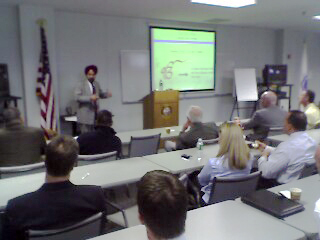 Boston Police Commissioner Ed Davis remarked: “This program has provided officers a tremendous opportunity to broaden their knowledge of the cultural and historical factors impacting the Sikh community. The city of Boston is a melting pot of diversity. Therefore, it is critical that our officers are exposed to a curriculum that includes cross-cultural awareness that strengthens community relations and prevents cultural misunderstandings.” Beginning in January 2007, SALDEF New England Director Navjeet Singh and a group of dedicated community activists and volunteers have been training law enforcement officers every week to increase cultural awareness of the Sikh American community and develop an ongoing partnership between law enforcement and the community. “It’s important that police leaders in our community are aware of and have an understanding of the diversity in the City of Boston,” said Mr. Singh. “The completion of this training is a first step in working more with our fellow Americans to ensure they understand who we are and what we believe.”
  The training is part of SALDEF’s Law Enforcement Partnership Program which has trained over 95,000 law enforcement officers over the past eight years. In 2007 alone, SALDEF training efforts have already reached over 14,000 law enforcement officers in cities across the nation including Washington, DC; Columbia, MO; Des Moines, IA; Greensboro, NC; Charlestown, WV; Portland, OR; and Pittsburgh, PA. Additionally, all 43,000 Transportation Security Officers in the United States will view On Common Ground by year’s end as part of their mandated training. SALDEF would like to thank the U.S. Department of Justice and acknowledge the Boston volunteers: Satnam Singh, Sarbjit Singh Thiara, Kanwaldeep Singh Arneja, Jaswant Singh Chani, KaviRaj Singh, and Achint Kaur, for their dedication to ensure this training endeavor was carried out to its successful conclusion. If you would like to conduct a similar training in your area, please contact SALDEF at training@saldef.org or (202) 393-2700.
English and Spanish calendars available to help educate the community Washington, DC: November 20, 2007 – As 2008 nears, now is the time to place your order for the Sikh Awareness Pocket Calendars. The calendars are a popular and easy-to-use tool to increase awareness about Sikhs and Sikhism in your local community. In their fifth year of production, the 2008 calendars have full-color images of Sikh Americans, along with examples of core Sikh values and facts about Sikhs in the United States. On the back, the calendars have a 2008 calendar in a small, handy, easy-to-use design. The calendars are available in packages of 100 for $10 plus shipping and handling fees.
| “The Pocket Calendars are a great way to introduce myself to my customers. They are a must have for all Sikh businesses.” An Oregon Small Business Owner |
To help you reach out more effectively to your community, friends, and neighbors, Spanish language versions of the 2008 pocket calendars are also available. The calendars are perfect for distribution at your workplace, schools, convenience store, gas station, senior citizens center, or public library. Sikhs across the nation have shared them with their friends, neighbors, customers, and local officials. Finally, SALDEF is again offering community members the opportunity to order personalized Sikh Awareness cards. These cards will have the design of the purchaser’s choice on the front and will have information about Sikh Americans on the back. This option is great for college students, professionals, and anyone else wanting to expand understanding of the Sikh religion. Please contact us at pubs@saldef.org for more information. SALDEF commends the Sikh American community for taking the initiative to inform their friends, co-workers, customers, and acquaintances about their culture and faith.