LIVINGSTON — Hardeep Rai’s turban-wrapped head bobbed as the 40-year-old ambled along Peach Street beneath the shadows of the pointed golden bulbs of the Sikh Temple. With rich brown farm fields behind him and the garlic clove-shaped domes of the house of worship ahead, he almost could have been walking in his native India. God, as during many other moments in the day, was coursing through his thoughts as he strolled to one of the city’s two gurdwaras to pray for his wife, three daughters and everyone else. Admittedly, with a house, a 30-acre ranch in Cressey and his own business, he enjoys a life he’s thankful for. And he’s carved it out with grit and will in a land that promises rewards for just such virtues. Rai is just one of the estimated 1,500 Sikhs who’ve settled in Livingston seeking opportunities for themselves and future generations. Their presence has been marked at once by a willingness to assimilate with their Latino and other neighbors and by a desire to preserve their distinct religious identity. Although Sikhs have been streaming into the Central Valley for more than a quarter-century, contributing measurably to the region’s economy and culture, they remain an enigma to many residents. Whether they join other immigrant groups in America’s vaunted melting pot or, like some émigrés, become separate ingredients in an ethnic mixed salad, Sikhs will continue to influence events and trends throughout the community. “By accepting people at the fringes and people that are different, you are accepting the notion of democracy,” UC Merced sociology professor Simón Weffer said. “Each individual person has a say, and that can be shaped by whatever religion, ethnic or cultural background they have.” Sikhs in America stand at a crossroads where there’s a call to imprint their heritage on their children. They want the next generation to succeed as doctors, lawyers and politicians — all while retaining their religion. At the same time, Sikhs are trying to distinguish themselves from Muslims in a post-9-11 nation that’s watchful and fearful of men with bushy beards and turbans. Though they’ve been a fixture in some areas of California for more than 100 years, many residents know little about Sikhs, their culture and their beliefs. Punjabis first fled their fertile agricultural state in India during the late 1860s, though it wasn’t until a 1970s immigration boom that they began settling in Livingston. Most of the nation’s 500,000 Sikhs hail from the state of Punjab, which borders Pakistan in northwest India. Stoked by the dreams shared by almost all immigrants, their journey to the Central Valley town was guided by the prospect of better-paying jobs they heard could be found by working in Foster Farms’ chicken factory — a clear improvement over toiling in Punjab’s torrid wheat and sugar cane fields. The Sikhs and their temples decorated with portraits of their gurus can be found from Live Oak down to El Centro. California boasts the largest Punjabi population in the country with about 125,000 followers. Back at the Livingston temple, Rai knelt before a painting of the sacred Golden Temple that stands on the other side of the world. As Sikh hymns droned around him, he began to pray. The job heard across the world Sometime in early 1970, Foster Farms hired a Sikh woman from Winton to work in its chicken processing factory in Livingston, a city with a population then of about 2,000. One Sunday, while worshipping in Stockton’s temple, she told the other Sikhs about her new job. Fewer jobs were being found on the farms in Stockton and Yuba City, and the news shot across the Pacific Ocean. It may have been a steady paycheck for the woman, whose name has been lost over the decades, but she pinpointed the city as a prime destination for Punjabis seeking work in America. India, a 36-hour plane ride from California, has 1.2 billion residents and is one-third the size of the United States, which has about 300 million residents. Punjab is home to about 24 million and is considered the Indian equivalent of the Central Valley. It has a dry and hot summer climate, and its rich soil produces much of the country’s food. For many Punjabis, surviving every day is a challenge, said Nirinjan Singh Khalsa, executive director of the California Sikh Council, which was formed to educate Americans about Sikh culture after the attacks on the World Trade Center. There are thousands of small farms where families grow enough to eat and just a little to sell. “Nothing goes to waste,” Khalsa said. “It’s a struggle just to get a little bit.” In India, the Samras were growing wheat and sugar cane when, through their local temple, they learned of the jobs at Foster Farms. They’re believed to be the first Punjabi family to abandon the agrarian life for Livingston, and they didn’t see another Indian in the city for six months. The father, mother and two sons stepped off the plane on May 21, 1970, and weaved their way to what would become home. Sarwan Singh Samra was hired at Foster Farms, where he worked nights on the processing line to support his family, which lived in an apartment on Simpson Avenue. Though Samra retired after 30 years there, the 72-year-old still manages the apartments he bought in Merced and basks in his sons’ successes. One produces movies in Southern California, while the eldest, Gurpal, serves as the city’s second Sikh mayor. The family helped to forge a trend that continues today with about 20 Sikhs moving to the city every year; Foster Farms remains a magnet. “America has no boundaries,” Samra said. “Where else can you come in and have so many opportunities?” Today, the company employs close to 600 Asian employees in its 2,300-person plant. The majority are Sikhs, though the category includes Chinese and Japanese workers, spokesman Tim Walsh said. The number of Asian employees has grown about 6 percent in the last decade, though no statistics about the company’s work force date back to the 1970s. Foster Farms never made an effort to advertise to any nationalities, and hires the best-qualified candidates, he said. Workers often will refer family and friends to the plant. The West Coast poultry giant celebrates the differences among its employees with its annual Diversity Day event, Walsh said. “It’s not a push against their heritage,” he explained. “We embrace it.” Rai’s journey From the street, Rai’s two-story home in south Livingston blends with all the others in the middle-class neighborhood. His white work truck is parked in the driveway, and the blades of the lush lawn reach toward the sky. Inside, portraits of Sikh gurus and the local priest are arranged next to the flat-screen television playing an Indian soap opera about a woman being unable to decide which man to marry. All this was bought with $20 and an iron-fisted work ethic. After an arranged marriage with his wife in 1990, the couple flew to the United States to live with her parents, leaving India behind. “It’s very hard to find jobs over there,” he lamented. “There’s too much population.” The early years were dismal. Work was hard to find, even though Rai could speak English, and when he did land a job driving a tractor at a Chowchilla farm, he only pocketed $50 a day for 12 hours’ work. After spending four years spinning his wheels, he got behind an 18-wheel truck and began hauling processed chicken and other foods across the West all night long. The job kept him away from home for two or three days at a time, yet he could save money. He soon bought a home and a ranch in Cressey. In 2005, he founded Central Valley Truck School in Turlock, which teaches hundreds of Latinos and Sikhs how to drive freight haulers. Within the next few years, he plans to open more driving schools in the Central Valley. His three daughters, ages 3, 9 and 11, are all learning English and Punjabi, and one already dreams of becoming a dentist. As the family’s second generation in America, Rai wants to ensure that Sikhism burns bright within them, though it’s contending against Western culture. Sikhs are tasked with maintaining their culture, which abhors drugs, alcohol and illicit sex in a country where those habits are almost second-nature. With children in school and parents at work, the temples should offer classes to embed the language and religion in the religion’s youngest disciples, he believes. “If you forget your culture, you don’t know where you came from,” he explains, sitting barefoot and sipping spiced tea. Created for equality Sikhism was founded 500 years ago, making it one of the youngest major religions in the world. An estimated 24 million follow it, making it the fifth-largest creed. Guru Nanak, a high-class Hindu, founded the religion during a moment of enlightenment — he realized that everyone was equal, regardless of their wealth. Sikhism rejected the caste system in India that kept families from progressing socially and economically, and also elevated the importance of women at a time when men owned them like property. Mens’ last name became Singh and women adopted Kaur as a way to eliminate their caste identities. Over the next 200 years, nine more gurus followed Nanak, each building on the teachings of his predecessor. Sikhs believe in one God for everyone and that embarking on a spiritual journey is most important, said Khalsa, the director of the state’s Sikh council. “No ritual can make you holy, it’s your love of God,” he professed. Two main beliefs guide the religion. One, called simran, is a constant meditation on God; the second, sewa, dictates charity and service to everyone. Five articles comprise the faith — long hair, a small dagger, a steel bracelet, a comb and underwear. The uncut hair symbolizes obedience to God, while the the knife represents justice. The comb means cleanliness, and the boxer shorts lead to high moral character. The bracelet is a bond with God with no beginning or end. Battling ignorance While many families are trying to keep Sikhism alive, the religion’s advocacy groups in the United States are trying to chisel away American ignorance of their culture and beliefs. The stereotypes can be mostly harmless, but when heightened by fear of bearded and turban-wearing men, they have caused the murder of Sikhs thought to be Muslim terrorists. Americans unfamiliar with the religious tenets lump Middle Eastern and Asian religions together, ignoring their many fundamental differences. The 24 million Sikhs worldwide believe in one God, follow the teachings of 10 gurus and hold that there’s salvation for everyone — Christian, Jewish or Muslim. The 1 billion Muslims follow Islam, the world’s second-largest religion. They study the Quran, believe in the teachings of the Prophet Muhammad and call Allah their God. Hinduism is the world’s third-largest religion with 811 million followers who recognize many gods and believe that the soul is reincarnated in death. Buddhism has about 325 million adherents who believe that a soul will reach nirvana through thought and self-denial. With America’s attention focused on the Middle East, Sikh leaders are in a race against a ticking terrorist clock to differentiate themselves from fundamentalist Muslims before any events happen that could trigger attacks on their local communities. “There was always this fear of the turban and the beard,” said Rajbir Singh Datta, associate director of the Sikh American Legal Defense and Education Fund. “It’s the unknown and the differences.” Since the Sept. 11, 2001, terrorist attacks, Sikhs have felt compelled to make more of an effort to educate local governments, law enforcement and residents about their culture and beliefs. Locally, an annual Main Street parade brings residents out of their homes and showcases traditions that date back to colonial India. The Livingston Police Department has trained its officers to understand the cultural differences when they interact with the Sikh community. Chief Bill Eldridge said he knew nothing about Sikhism when he took the job 15 years ago and has channeled his own ignorance into bridging the gaps, though he concedes there’s always more that can be done. His officers know that men should be addressed before the women and that the small dagger is a religious symbol rather than a weapon. There have never been any racially motivated attacks reported on Sikh residents, both before and after 9/11, he said. Livingston’s 7,000 Latinos and 1,500 Sikhs have worked long and hard for a good life, and Eldridge thinks that’s why there haven’t been any tensions or fights. “There’s no reason for jealousy or animosity,” he said. “We don’t have the nose-in-the-air syndrome.” During his 15 years in Livingston, Rai said he’s never encountered prejudices either, adding that it’s because so much of the population has deep roots in other countries. Outside the temple, he munched one of the peaches that had been left in a basket there and spoke about how he will never retire or sell his business. Then Rai stripped the pit of all its sweet pulp. In a bountiful country that’s offered him so much, he won’t let its fruits go to waste. Reporter Scott Jason can be reached at 209-285-2453 or sjason@mercedsun-star.com. http://www.mercedsunstar.com/ Merced Sun-Star
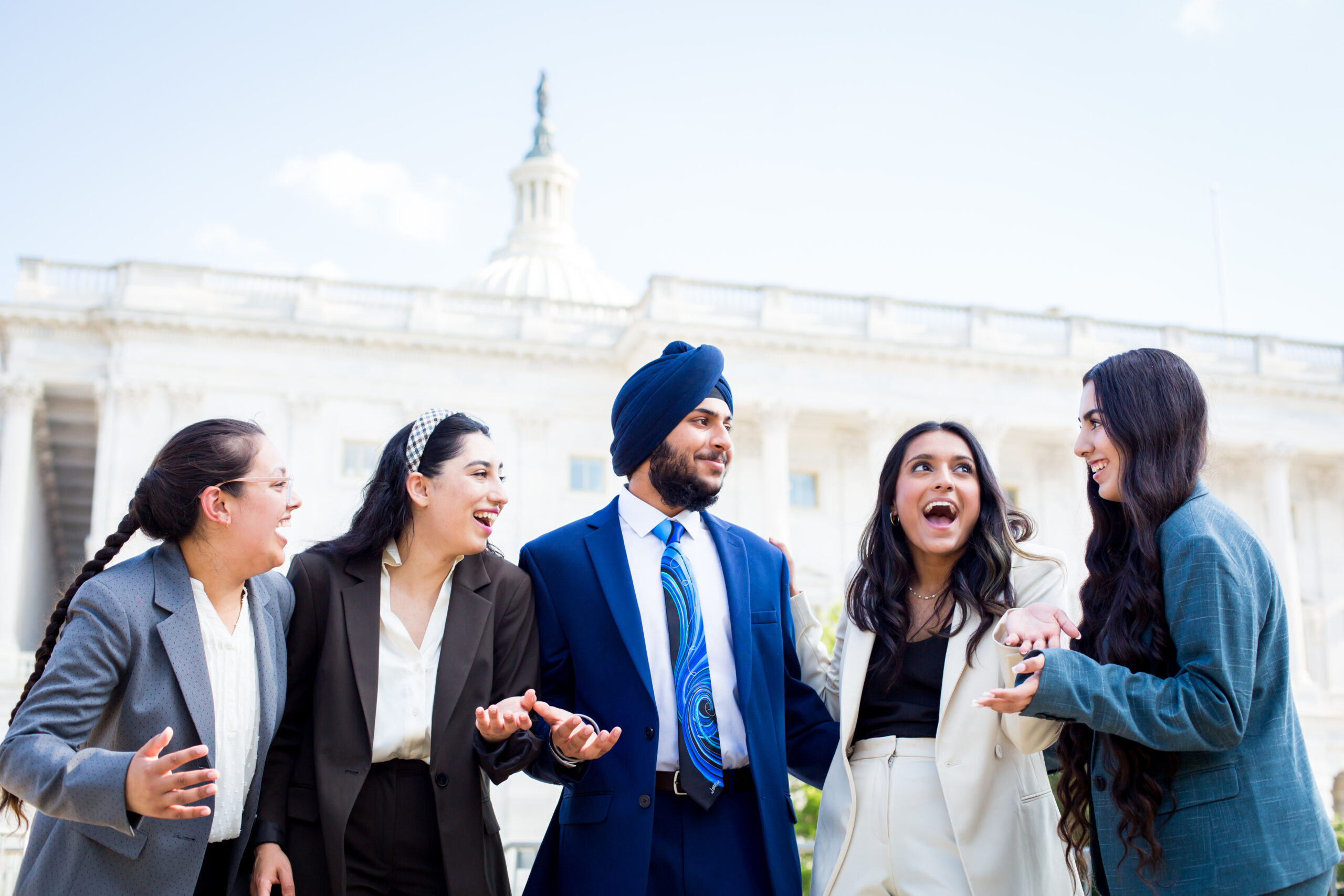
Valley feels like home for Sikhs
Satendar Singh’s alleged murderer flees the United States Washington, DC – August 14, 2007 – The Sikh American Legal Defense and Education Fund (SALDEF), the nation’s oldest and largest Sikh American civil rights and advocacy organization, commends the Sacramento County Sheriff’s Department and District Attorney Jan Scully for the steps they are taking to address the murder of Satendar Singh last month. Last week, DA Scully filed formal charges against Andrey Vusik, for involuntary manslaughter and with committing a hate crime, and Alex Shevchenko, for committing a hate crime and issued warrants for their arrests. “We commend Sacramento authorities for recognizing the nature of the attack on Mr. Singh and charging his alleged assailants with a hate crime,” said Kavneet Singh, SALDEF Managing Director. “Hate crimes are intended to create a sense of fear within a community and must be dealt with in a serious manner to ensure that perpetrators realize that these vile acts will not be tolerated.” Mr. Singh died on July 5, 2007 as a result of a severe brain injury he received after a vicious assault four days earlier. The individuals who perpetrated the attack hurled racially, ethnic and sexually charged slurs at Mr. Singh and his friends. Mr. Vusik, who faces up to eight years in prison, is believed to have fled the United States after the incident. Sacramento County Sherrif’s Department are working with the FBI to secure his arrest. Schevchenko, who faces up to three years in prison, is in police custody at a Sacramento County Jail. If you believe you have been the target of bias, harassment, or a hate crime please contact SALDEF at info@saldef.org or 202-393-2700.
SALDEF and CAIR condemn senseless act of violence Washington, DC – July 16, 2007 – The Sikh American Legal Defense and Education Fund (SALDEF) and the Council of American-Islamic Relations (CAIR) are saddened about the death last week of Mr. Satendar Singh, a 26 year-old Sikh American victim of a vicious hate crime, as he was removed from life-support at a local hospital. On Sunday July 1, 2007, Mr. Singh was beaten unconscious while enjoying a picnic with some friends at Lake Natoma in Folsom, CA. His attackers reportedly yelled xenophobic, anti-religious and homophobic remarks to him and his friends. After being taken to the hospital, Mr. Singh clung to life for four days before family members agreed to remove him from life-support after seeing he was registering little to no brain activity. SALDEF and CAIR are concerned with this senseless murder of a promising young man. Hate crimes are designed to create fear amongst particular communities. Mr. Singh was targeted due to the color of skin, his national origin, and because he was the only one in his group without a female friend present. This attack was intended to create fear in the Fijian, South Asian, Arab, Muslim, Sikh, and LGBT communities. “We strongly condemn this act of violence. Such hate has no place in this country,” said SALDEF Volunteer Attorney Neilinder Singh. “Sadder still, Satendar Singh had lived peacefully in the US since he was 19, only to have his life ended around the Fourth of July, when we celebrate the freedoms and principles of inclusion that this country was founded upon.” Mr. Singh passed away in the intensive care unit at Mercy San Juan Medical Center thousands of miles away from his parents who live in Fiji. He lived with his aunt, uncle, and grandmother in Sacramento. ” The Sacramento Valley community has made a pledge in Mr. Singh’s memory to fight against hate, said CAIR-Sacramento Valley Executive Director Basim Elkarra. “This tragedy shows highlights the importance of the community coming together to fight against hate.” Together SALDEF and CAIR stand in solidarity against all acts of hate. We hope the community and all of America will not tolerate such acts of violence. We hope that the residents of Sacramento will put aside any differences and realize a stronger sense of community after this tragedy. Additionally, a number of local organizations and activists have formed the Satendar Justice Coalition to document and call attention to hate crimes as well as to raise funds for the Satendar Singh Memorial Fund. As of this release, no one has been arrested for this crime. If you or anyone you know has any information about the assailants of this heinous crime, you are urged to contact the Sacramento County Sheriff’s department at (916) 874-5115.
Participants turn out to celebrate their religion and bring awareness to recent hate crimes. By Jia-Rui Chong, Times Staff Writer April 9, 2007 With gold- and orange-fringed parade floats and the sound of harmoniums playing traditional hymns, more than 10,000 members of the Sikh community paraded through downtown Los Angeles on Sunday. Many participants wore traditional Sikh turbans as they celebrated Baisakhi, a harvest holiday that commemorates a key moment in the development of the religion. On the minds of many were recent hate crimes, made all the worse as they were apparently provoked by mistaken identity. “People don’t know. They think we’re Muslims,” said Raj Singh, 66, a Brea resident who was watching a float go by. “I hope, for the people standing on the road, or seeing this from their roofs, this will enlighten them.” Last month, a Redding man rammed a construction tractor into a Sikh temple and reportedly told police that he thought the building was owned by Arabs. Sikh leaders say such incidents have become more common since the terrorist attacks of Sept. 11, 2001. “People see Osama bin Laden with a turban and beard, and they see us as the same because of ignorance,” said Sarbjit Singh, who teaches children about Sikh religion and culture at the Sikh Study Circle in Los Angeles. (None of the Singhs interviewed for this article are related.) Sarbjit Singh, 45, said that he doesn’t blame anybody for the harassment and that the Sikh efforts should not be taken to mean that the community believes it’s acceptable to discriminate against Muslims. “It hurts us when anybody gets harassed,” he said. Kavneet Singh, the Oakland-based managing director of the national Sikh American Legal Defense and Education Fund, said his office gets calls every month about acts of discrimination or misunderstanding about the religion. In one case this year, he said, a man was refused entrance to a bar in Costa Mesa because owners had a policy of not allowing hats — and he was wearing a turban. “There’s a real need for us to be more engaged in our communities,” said Kavneet Singh. “We need to introduce ourselves to our neighbors and make sure local law enforcement know who we are.” Baisakhi, which marks the year’s first harvest and the day when a principal guru in Anandpur Sahib, India, codified the religion’s spiritual and personal codes of conduct. For example, adherents keep their hair long and wear turbans as crowns of spirituality. Sikhism is the world’s fifth-largest religion with about 23 million practitioners worldwide. About 15 Sikh temples around California came together for the event. Daman Singh, 55, of Anaheim Hills said her family comes every year to L.A. to celebrate Baisakhi, which is also considered an auspicious day to get married. “It’s like people celebrate Christmas every year,” she said. As parade-goers talked about how the holiday is celebrated in India, Daman Singh pointed to a small boy who was in her husband’s arms. “This is for our grandson, to show him the culture of our land,” she said. Onlookers leaving the Lakers game at nearby Staples Center were at first puzzled by the glittering floats and sea of people, many of them in fancy embroidered versions of the traditional long shirt and pants known as shalwar kameez. Christian Portillo, 13, of Inglewood wondered, “Weren’t they a bunch of Islamic people?” Christian’s friend Cameron Harris, 13, of Gardena knew the difference. Cameron said he had asked one of the people in the parade what was going on and found out that they were celebrating a Sikh holiday. He said he understood his friend’s confusion because many ethnic groups wear turbans. “I got the message that they were trying to explain themselves and not be seen as outsiders,” Cameron said. “They look like good people to me.”
jia-rui.chong@latimes.com http://www.latimes.com/
(CBS13) YUBA CITY, Calif. If you want to be a police cadet you must shave your beard. That’s what one Sikh man was told in Yuba City. “They said the beard would not be allowed, no ifs and or buts,” said Uppal. A lesson in religious tolerance is playing out in Yuba city after 19-year-old Harvir Singh Uppal was initially told he would have to shave his beard if he wanted to be a police department cadet. “I was not given any reason and that was my last contact with the YCPD,” said Uppal. The Yuba City area is home to a growing Sikh community — and the controversy quickly spread because wearing a turban and beard is required religious clothing. After a civil rights organization in Washington D.C. heard about the case, they sent this letter to the police chief demanding he change his position. “If anything it’s all just a misunderstanding,” said Richard Doscher, YCPD police chief. Doscher says it was an officer, the director of the cadet program, who made the comment and it’s not department policy. The chief has since apologized to the organization and Uppal. At this point Uppal says he’s now too busy being a full-time student to re-apply with the department. But he has not ruled out a career in law enforcement. The civil rights organization is now applauding the chief’s commitment to the Sikh community and hopes other law enforcement agencies follow suite. (© MMVII, CBS Broadcasting Inc. All Rights Reserved.) [http://cbs13.com/topstories/local_story_068013917.html] CBS13 Sacramento
By Rob Young/Appeal-Democrat
A 19-year-old Sikh man was told he would have to shave off his beard to qualify for the Yuba City Police Department’s cadet program, a national Sikh rights group said Wednesday. Police Chief Richard Doscher differed somewhat with the version of events as put forth by the Sikh American Legal Defense and Education Fund, or SALDEF. Nothing in department rules disqualifies a Sikh with a beard and turban – and even with a ceremonial kirpan, or dagger – from becoming an officer, as long as the kirpan is worn under the uniform, said Doscher. A turban the same color as the uniform would be acceptable, the police chief said. SALDEF said the applicant, Harvir Singh Uppal, was told by Officer Kim Slade, director of the cadet program, that “though the turban was acceptable, the beard does not conform to the uniform standards of the Police Department and it would have to be shaved off.” Doscher said SALDEF’s complaint arose from a misunderstanding between Uppal and Slade. He said it was unclear if Uppal was even wearing a beard at the time. Uppal, a Yuba College student, told the Appeal-Democrat late Wednesday that he had a full beard and wore a turban during an interview last fall at the Police Department. According to Doscher, Slade asked Uppal if he intended to wear a beard. Uppal then asked if the beard would disqualify him from the program but did not respond to letters and phone calls inquiring whether he was still interested in being a cadet, said Doscher. Uppal said Slade told him by phone about a week after the interview that the beard was unacceptable. Uppal did not give a religious reason during the interview for having a beard. The subject of Uppal’s Sikh religion did not come up, Doscher said. SALDEF said that, after Doscher and Mayor John Miller were informed of “the discriminatory nature of this policy,” Doscher wrote a letter of apology to SALDEF and reaffirmed the department’s policy of religious diversity. In the Jan. 23 letter, Doscher wrote that Slade “did say he asked Mr. Uppal if removal of his beard would be objectionable (not being fully versed in the significance). No rejection letter was ever sent to Mr. Uppal.” “Please accept this as an unintentional oversight be one of my staff officers, which I take responsibility for. I can assure you that as of this writing there is no misunderstanding any longer,” Doscher wrote. Doscher asked SALDEF to have Uppal recontact the department. Although SALDEF said Uppal was denied employment, the cadet program is made up strictly of unpaid volunteers age 15 and over who are exploring law enforcement careers, said Doscher. Uppal, a full-time student and Home Depot employee, said he was “honored that they’re welcoming me” but is undecided about reapplying. He said he hopes the controversy results in other law enforcement agencies hiring Sikhs who wear beards and turbans. In the post-9/11 world, Sikhs with beards and turbans are still viewed erroneously as terrorists, he said. Uppal said he initially contacted SALDEF, but he now thinks “it was a misunderstanding and that it was blown out of proportion. If I’d spoken with the chief, it wouldn’t have gone this far.” “I don’t blame Slade,” said Uppal. “At least they’re trying to resolve things.” Appeal-Democrat reporter Rob Young can be reached at 749-4710. You may e-mail him at ryoung@appeal-democrat.com. Appeal-Democrat
SALDEF works with city officials to defend the rights of the Sikh American student Washington D.C. – March 7, 2007: The Sikh American Legal Defense and Education Fund (SALDEF), the nation’s oldest Sikh American civil rights and advocacy organization, received a formal letter of apology from Yuba City Police Chief Robert Doscher for denying employment to Mr. Harvir Singh Uppal as he sought to become a police cadet. Mr. Uppal, a 19 year old student and adherent of the Sikh faith, was interviewed by Officer Kim Slade, Director of the Yuba City Police Department Cadet Program, for a position as a cadet. A week later, Mr. Uppal contacted Officer Slade to check the status of his application at which time he was informed upon conferring with the Chief of Police and the City Attorney that, “though the turban was acceptable, the beard does not conform to the uniform standards of the police department and it would have to be shaved off”. SALDEF contacted Yuba City Police Chief Doscher and Mayor John Miller informing them of the discriminatory nature of this policy and recommended the necessary steps to remedy the situation quickly and to the satisfaction of Mr. Uppal. In a letter of apology to SALDEF, Chief Doscher noted, “We [Yuba City Police Department] have no policy which precludes an employee of the Sikh faith from wearing a turban or beard (or possession of a kirpan) during their employment with us.” He added, “Please accept this as an unintentional oversight by one of my staff officers, which I take responsibility for. I can assure you that as of this writing, there is no misunderstanding any longer.” SALDEF thanks Yuba City Police Chief Robert Doscher for his immediate attention to this matter and reaffirming his department’s policy of encouraging religious diversity. SALDEF urges police departments across the nation to follow Chief Doscher’s example of welcoming individuals of faith to serve their communities without having to compromise their religious practices. Additionally, SALDEF commends the courage of Mr. Harvir Singh Uppal for asserting his rights as an American citizen. . If you, or anyone you know, believe they have been the victim of workplace or employment discrimination, please report it on our website or contact SALDEF immediately at 202-393-2700 or info@saldef.org.
The great thing about the OC Turban Flap is this: The actual damage is microscopic, while the underlying principle can be pumped up to Brown vs. Board of Education proportions. The “victim” is not physically or financially injured, but the implications are so menacing that you can, if you try hard enough, see the outline of Jim Crow in the background. As has been widely reported, Sanjum Paul Sing Samagh, a UC Irvine medical student who always wears a Sikh turban in public, was turned away from a Costa Mesa bar that does not allow its patrons to wear hats. Big deal, you say? As discrimination goes, this rebuff hardly ranks with Rosa Parks. Gather your party and go to another joint where hats (and, therefore, turbans) are allowed. Really, who has time to make a federal case out of such a trivial affront? That’s the grumbling get-over-yourself view. But if one is so inclined – and Samagh is, along with his Rancho Bernardo family and the Sikh American Legal Defense and Education Fund – you can take this front-door rejection and rev up the civil-rights engine to the red line. A hat is one thing, they contend, a Sikh turban another. The two are as similar as a Yankee cap and a Jewish yarmulke. The hat can be taken off at will. (Or when your mother lays down the law at the dinner table.) The turban can’t be removed without also removing the faith. For practicing Sikhs, turbans are sacred expressions of identity. Conflating the two types of “headgears” – baseball caps and turbans – does appear to discriminate on the basis of religion, a dicey move under the Constitution. This, you would think, is the sort of issue best broached by the legal bar, not a dance bar. OK, it’s understandable why the Pierce Street Annex might want to enforce a hat-free zone in its raucous confines. Expressive hats among well-lubricated clubbers can be like gang (or, maybe more provocatively, USC or UCLA) colors on the head. A bar is certainly within its rights to impose a dress code that raises the sartorial tone – and preserves the peace – as patrons drink, mingle and dance to hip-hop music. Ironically, in taking a step to improve its image and pacify the mood, the Annex has punched itself in the eye. It is now a lightning rod for the daily slights suffered by the nation’s more than 150,000 Sikhs, a non-Muslim religious group that has been ignorantly subjected to anti-Muslim prejudice. Adding injury to insult, the Annex is a target of a pro-Samagh UC Irvine boycott. It’s unclear what the student stiff-arm will do to the bar receipts, but it can’t help in a competitive nightclub market. So what should the Annex have done on the night of Jan. 25? It’s simple. The management should have realized that its policy did not anticipate someone like Samagh. Every rule has exceptions. This was one such occasion. Think about it. What would the Annex do for a cancer patient wearing an inoffensive cap to hide his bald head? Tell him to go someplace else to dance? If you did, how would you sleep at night? The Annex’s owner reportedly told Samagh and his aghast friends that he was a lawyer and that he had the right to treat all headgear as headgear, period. In a legal sense, that may be true. But in a business sense, it’s self-defeating to defend it. This bar has been open for about 32 years. It’s survived all sorts of changes in a trendy market. In short, it’s adapted. Now it’s time to adapt again. If the no-hat policy is retained, a bright line should be drawn between commercial headgear and a religious turban. Granted, someone in a do-rag might push for “equal” treatment at the door. “It’s an expression of my Rasta religion, man.” That may be awkward to deal with, but nothing like the negative publicity the bar is experiencing now. As civil-rights stages go, the OC bar is, at best, a symbol of more serious confrontations. Sikhs have been taken off commercial flights because of the ceremonial daggers their faith can require them to carry. In Europe, the failure of devout Muslims to assimilate in dress has sent shock waves through France and Britain. Distrust of Muslim immigrants fuels the debate. So far, Samagh is asking for is an apology and a change of bar policy. That should be so easy. That is, unless the Annex has a thing about serving Sikhs. In which case, the bar deserves to lose its hat.
He was denied entry for wearing a turban By Lisa Petrillo UNION-TRIBUNE STAFF WRITER February 9, 2007 A turban-wearing Rancho Bernardo medical school student claims he was discriminated against when he was turned away from a popular college hangout. The bar in Orange County has a “no hat” rule. But Sanjum Paul Singh Samagh, an American-born Sikh, said he tried to explain to the bar owner that his black turban was a centuries-old religious symbol, not a fashion statement. Samagh, a Stanford University graduate, has now joined forces with a national civil rights organization demanding a public apology and a policy change from the Pierce Street Annex bar in Costa Mesa. “It may be a small thing, just getting into a bar to have a beer with my classmates, but it’s the tiny things in life that add up,” Samagh said. “If I don’t fight the fight, then what happens the next time?” His classmates at the University of California Irvine Medical School have declared a boycott against the bar. Pierce Street Annex officials did not respond to media questions about their policy or the incident. It began Jan. 25, a Thursday, generally a popular night of cut-rate drinks at the bar. Samagh, 24, said he and about 20 classmates headed to the Annex to celebrate a birthday and the end of exams for the first-year medical students. Samagh said he reacted with shock when the bar owner barred his entry, telling him that headgear was headgear, religious or not. “He kept saying he was a lawyer and he knew his rights, and I tried to talk to him, one professional to another, but he was adamant,” Samagh said. He and his parents, Pam and Paul Samagh of Rancho Bernardo, said they have joined forces with the Washington, D.C.-based Sikh American Legal Defense and Education Fund, formally requesting an apology. They are pursuing the action, they say, to raise awareness of acts of discrimination against Sikhs. California is home to one of the largest Sikh populations in the United States, numbering more than 150,000 people, according to the Sikh organization. The Samagh family has been active in Poway’s Sikh temple, where an official there said that blatant acts of discrimination against local Sikhs have been rare. Paul Samagh said the biggest problem he experienced living in San Diego County was people mistaking him for a Muslim, because of the turban and beard that he and most Sikhs wear. It became dangerous for Sikhs for a brief period after the Sept. 11, 2001, terrorism attacks, he said. “People . . . threatened to kill me more than once,” said Paul Samagh, who owns gas stations now but ran a gourmet food store in Poway at the time. “I just stopped going to work after 9/11.” The Samagh family said they never experienced outright discrimination while they raised their children in San Diego’s North County. Their son was class president, played basketball and was on Rancho Bernardo High School’s varsity tennis team – always wearing the turban. He also was senior class valedictorian. Nationally, the Sikh American Defense group said they encounter anti-Sikh bias incidents at least a few times a month, although generally the problems can be resolved quickly. Recently, a Sikh youth was turned down as a volunteer for a local police department in Northern California because of a no-beard policy, said Rajbir Singh Datta of the Sikh American Defense group, who successfully fought the rule. “You have to pursue every single one of these cases,” Datta said. “What we want to do is have a society where Sikhs are not looked upon as foreigners. They are part of the fabric of the diversity of the United States.”
By JEFF OVERLEY THE ORANGE COUNTY REGISTER COSTA MESA – Is a turban the same as a hat? That question has stoked a debate about religious freedom that’s pitting a local medical student against a Costa Mesa nightclub. Sanjum Paul Singh Samagh, a 24-year-old living on campus at UC Irvine, says Sikh attire cost him entry to the Pierce Street Annex bar, where the dress code prohibits hats. On Jan. 25, Samagh arrived at the watering hole with about 20 friends. The bar’s owner refused to let him in, citing the dress code, Samagh and several friends say. “It’s not a fashion statement I’m trying to make,” Samagh recalled telling the owner, explaining that his black cotton turban, or dastaar, is worn for religious reasons. The bar’s owner, Doug Adsit, did not return several calls. A woman who identified herself as the bar’s manager declined to comment. Samagh and his friends left Pierce Street Annex after he was denied entry, but aren’t letting the incident slide, instead calling for a boycott. “My classmates are amazing; they stood up for me,” Samagh said. The Sikh American Legal Defense and Education Fund, a national advocacy group, wants an apology and a policy change. “This is blatantly discriminatory,” said Rajbir Singh Datta, the group’s executive director. “You’re trying to have fun with your friends, and you’re forced to stay outside because of your religion.” The incident’s legal underpinnings are unclear. Eugene Volokh, a UCLA law professor, said that under state law, the bar would only be liable if it intentionally discriminated. The dress code “may burden Sikhs … more than it burdens others, but … that’s not something the bar has to worry about,” Volokh said. Under federal law, Samagh might have a case, because rulings have varied, Volokh added. Chapman University associate law professor Lawrence Rosenthal said that if Samagh made clear the turban was religiously important, the bar might need to accommodate him. Friends of Samagh’s who were at Pierce Street Annex say that while they disagree with Adsit, the bar owner was polite. “He was not disrespectful,” friend Paola Case recalled. “He said, ‘Ma’am, this is not a policy intended to discriminate against people.’ ” Nonetheless, Case said the incident was “reminiscent of Jim Crow” laws. “If I have to make an exception for him, I have to make an exception for everyone,” friend Jon Falakassa recalled Adsit as saying.