By: Kiran Kaur Gill – Executive Director of SALDEF – Sikh American Legal Defense and Education Fund
America was founded on the dream of religious freedom. Early settlers embarked on dangerous voyages so they could worship without fear. Our country’s founders enshrined this principle in our Constitution. Today, people flee restrictive governments for the opportunity to worship as they wish.
This summer’s U.S. Supreme Court decision to allow a high school football coach the right to pray on the 50-yard line after each game is a recent endorsement of our country’s right to religion. Writing for the majority, Justice Neil Gorsuch said, “Respect for religious expressions is indispensable to life in a free and diverse Republic.”
Is religious expression innate in our society or is it just an intrinsic right for some? Does every member of our great country feel safe and free to worship? Or do only the chosen few feel emboldened to pray as they wish?
This month, we are observing the ten-year anniversary of the massacre at Oak Creek. On the morning of August 5, 2012, a white supremacist gunman entered the Sikh Temple of Wisconsin intent on killing those inside. Seven Sikh worshippers lost their lives due to his hateful violence. This violent attack was, at the time, one of the worst attacks on a U.S. house of worship in decades.
Sikh communities in Wisconsin and across the country were deeply impacted by this act of hatred. It made it clear that our sacred spaces could become targets at any time and safety was not something we could take for granted. As Sikhs around the country navigated this new reality, many were torn on how to implement safety precautions while still making our gurdwaras open and welcoming to all, a fundamental part of our faith.
Over the past decade, SALDEF has studied the experiences of Sikh Americans within our country. The 2020 National Sikh American Survey found that 85% of respondents do not feel safe practicing Sikhism all of the time. 58% of respondents reported being bullied or harassed because of their Sikh identity. 63% of turbaned respondents reported being discriminated against for wearing a turban. The 2020 Federal Bureau of Investigation Hate Crimes report revealed that Sikh Americans are the most targeted minority according to bias incidents per capita, with an 82% increase over the previous year. Additionally, our advocacy has taught us that in several professional fields, Sikhs have faced significant barriers in serving with their articles of faith, namely wearing the turban. It is clear to many members of our community: that respect and understanding of our religious expression is not an inherent reality.
To address the issue of hate crimes, civil rights organizations are pushing federal agencies to create offices dedicated to eradicating domestic terrorism. We are working to educate law enforcement and prosecutors to recognize and take action against perpetrators of hate crimes. We are fighting to allow all religious nonprofits to access federal funding to enhance their security.
While the data seems grim, our community perspective is not. This year’s Oak Creek commemoration is centered around the message “Heal, Unite, Act.” This is rooted in our belief that America can live up to its promise of freedom of religion and religious tolerance of people of all faiths if we work together.
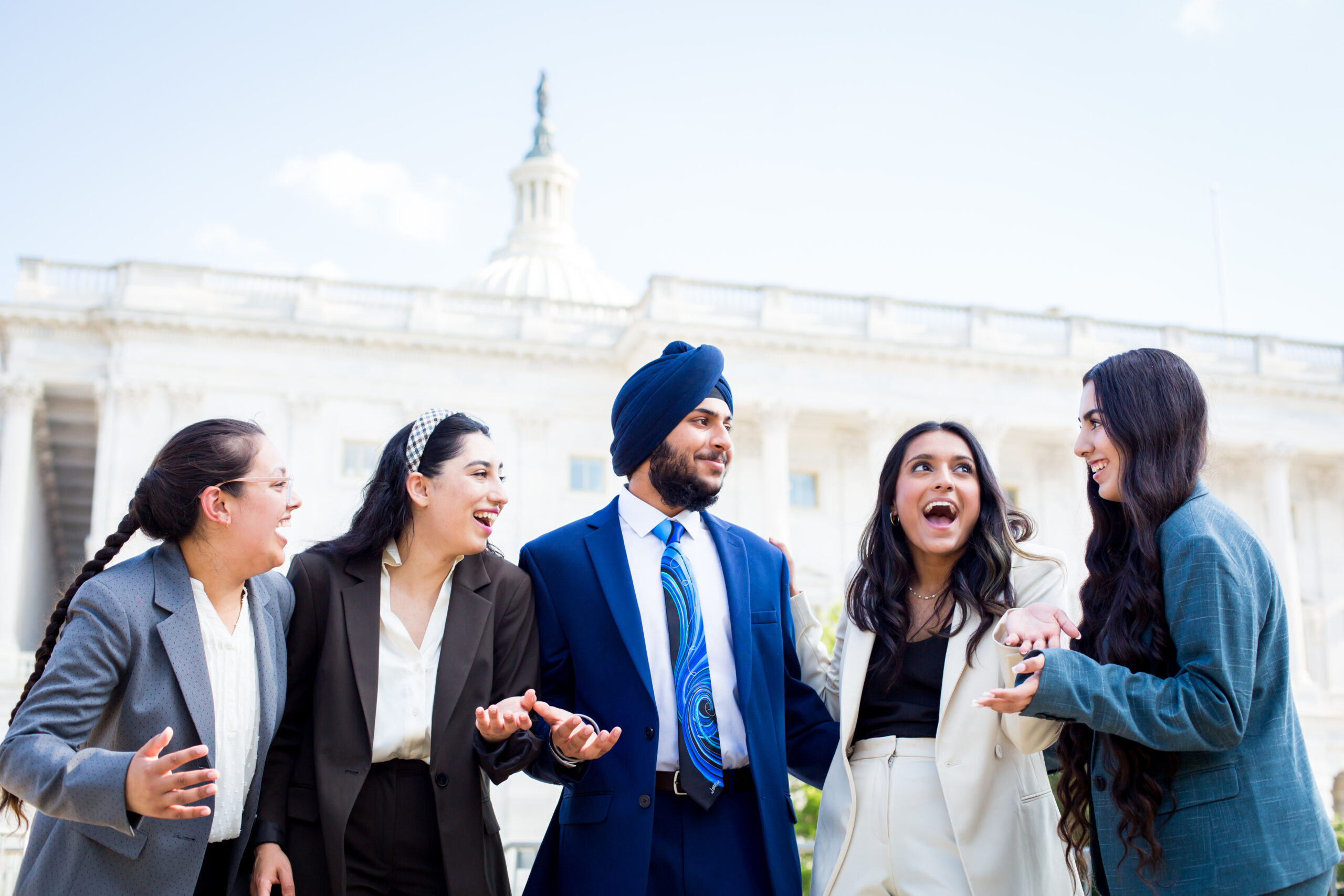
The Sikh faith is grounded in the oneness of humanity and we believe there is divinity within all. It is through our relationships with one another that this change is possible. Guided by that principle, SALDEF’s programs are working across the Sikh community nationwide to improve relationships with law enforcement, government agencies, school districts, and other faith communities. We are emboldening our young leaders to strive for leadership positions so our community is visible and engaged. We are ensuring there are opportunities to build stronger interfaith relations so we better understand one another.
Through tragedy, we find hope. We know there can be a world where people from all backgrounds and cultures can practice their faith freely and, even though many times it has eluded the Sikh American community, we still believe this is possible.
BIO: Kiran Kaur Gill, Washington, DC – As Executive Director, Kiran Kaur Gill leads a team striving to create the best in policy, research, education, civic engagement, and youth leadership for the Sikh American community. Before her current role, she worked with several community nonprofits and ran an environmental consulting firm for 15 years. Ms. Gill has been awarded” Small Business Person of the Year” by the U.S. Small Business Administration (SBA), Best 50 Women in Business and Top 40 Entrepreneurs under 40 by NJBiz, and Top 50 Most Influential People Of Color in New Jersey by ROI-NJ.