I was in 7th grade when I saw smoke bellowing out of the Twin Towers from my history class, just a few blocks away from the site whose destruction would change so many lives. Even at that age, when I saw aftermath images of terrorists with long beards and turbans being constantly flashed on screen, I knew trouble was about to hit the Sikh community. From then on, we’ve all seen or been part of the stories that brown-skinned communities faced. It’s an incident “which has trickled down to the youth of today” – something that I heard from an 8 year old while having a group discussion at the most recent Sikh Scouts event. Sikh Scouts is a mentoring program that aims to provide guidance to at-risk Sikh youth, ages 9–16, by helping them forge and develop long-lasting relationships with older Sikhs, who serve as role models and mentors. It’s a program that needs no complex planning or budget. All that’s needed is one day, a group of enthusiastic sevadars, and a bit of extra sleep the night before (kids have way too much energy) to get this program going. The day and the outcome are always so worthwhile. We take the kids out, eat some pizza, have a group discussion about current events happening within our community, and their faces light up knowing a group of people are willing to listen and help out with anything they need. At each and every Sikh Scouts event, I see what that 8 year old was talking about as I hear about the effects that have trickled down due to the backlash of misconceived hate and ignorance that derived from 9/11. Almost every kid, girl or boy, has experienced or witnessed some type of bullying. It’s painful to see their faces change to looks of embarrassment, confusion, and defeat when we ask them to share their stories with us. However, I believe that knowing they have a mentor, a new friend who they can trust and talk with is a weight being lifted off their shoulders. These kids are going to be the future leaders of the world, the next generation of Sikh-Americans; each child deserves attention, an open ear, and a little guidance. I had heard a lot of plans over the years from older generations of Sikhs in the community who wanted to improve opportunities and support for Sikh youth. However, many times, such plans or expressed sentiments are not acted upon. But I felt it was time for me to act. I realized that in some way, I could be an asset to the kids in my community – my ideas developed into what is now Sikh Scouts. Now, I call upon you to act as well. Go to your local Gurdwara, Masjid, Mandir, or Church; or just contact some kids that you know would benefit from having a big brother or sister. Get a few of your friends together and take the kids out for a day. Tailor the concept of Sikh Scouts however you wish, as long as your efforts can result in friendships being formed. I will close with an anecdote. One of the mentees I had the pleasure of being paired with during the most recent Sikh Scouts event is a very bright individual. Speaking to him, I asked what his favorite books were. Casually he mentioned a Dr. Seuss book. This puzzled me a bit because the series was below his age range. He explained to me that one of his favorite quotes was from a Dr. Seuss book, “you have brains in your head, you have feet in your shoes, you can steer yourself any direction you choose.” So to whoever is reading, steer yourself any direction you choose, but pick the path that will empower the world, even just one child at a time. – Jagdeep Singh, LDP Class of 2012
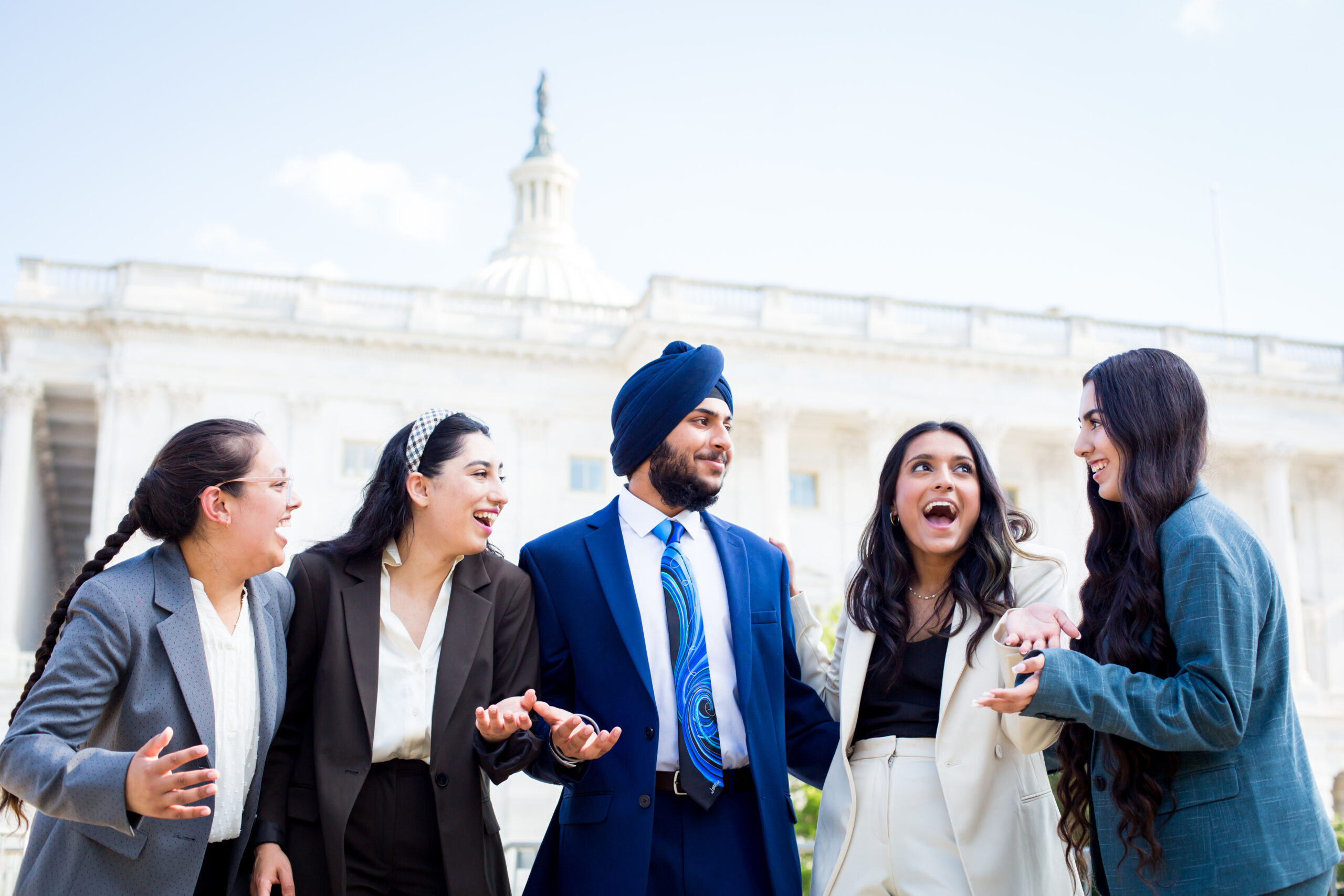
Sikh Scouts – Where the Kids Matter
Join us at the SALDEF National Gala in Washington, DC, on Saturday, October 6, 2012 for an evening of reflection and empowerment. This year’s Gala, “Chardhi Kala: The Sikh American Spirit”, will include a dedication to the Oak Creek Community as well as a perspective on the over 100 years that Sikh Americans have been in this country. We are pleased to announce that Washington, DC Police Chief Cathy Lanier and civil rights leader Karen Narasaki will be recognized at this year’s gala with the SALDEF Public Service Award and the Dorothy Height Coalition Building Award, respectively.
Purchase your tickets online today
 In May of 2012, Chief Cathy Lanier became the first police chief of a major metropolitan department to update grooming standards to allow Sikh Americans to serve with their articles of faith. She is widely recognized for her commitment to reducing violent crimes through strong relationships fostered with partners in the community. Chief Lanier is a graduate of the FBI National Academy and the federal Drug Enforcement Administration’s Drug Unit Commanders Academy. She holds Bachelor’s and Master’s Degrees in Management from Johns Hopkins University, and a Master’s Degree in National Security Studies from the Naval Postgraduate School in Monterey, California.
  Karen K. Narasaki is a nationally-renowned civil and human rights leader. She is the former president and executive director of the Asian American Justice Center (AAJC), a member of the Asian American Center for Advancing Justice. Following the attacks of 9/11, Ms. Narasaki worked with South Asian, Arab American and Muslim community leaders to address racial profiling and establish dialogs with the Department of Transportation and the Department of Justice. Ms. Narasaki’s work has garnered many recognitions; including the American Bar Association’s Spirit of Excellence Award, the Leadership Conference on Civil and Human Rights Hubert H. Humphrey Award and Washingtonian Magazine named her one of the “100 most powerful women in Washington” in 2001, 2006, 2009 and 2011. Join us in honoring Chief Cathy Lanier, Karen Narasaki and others who have worked to protect the rights of all Americans.
Free child care onsite and discounted parking available.
Buy Tickets Now to reserve your seat
See Pictures and Learn More about last year’s sold-out gala
Contact us at info@saldef.org for sponsorship information
Join us at the SALDEF National Gala in Washington, DC, on Saturday, October 6, 2012 for an evening of reflection and empowerment. This year’s Gala, “Chardhi Kala: The Sikh American Spirit”, will include a dedication to the Oak Creek Community as well as a perspective on the over 100 years that Sikh Americans have been in this country. We are pleased to announce that Dr. Amarjit S. Marwah will be receiving our Bhagat Singh Thind Community Empowerment Award this year.
Purchase your tickets online today.
 Dr. Marwah is widely known for his service and leadership to the Sikh community. Whether it was establishing the first Gurdwara in Southern California, working with public service organizations like the Rotary Club, or supporting disadvantaged individuals in South Asia, he has demonstrated the Sikh spirit of seva (selfless service). Additionally, Dr. Marwah has a remarkable life story that allows him great perspective of Sikh American history as he served as a campaign manager of Dr. Dalip Singh Saund’s successful US Congress election campaign in 1957, and his decades of engagement with civic and political leaders in America have positively shaped the landscape for Sikh Americans across the country. In addition to his many professional accolades, Dr. Marwah has served on the board of the Los Angeles World Affairs Council, chaired the Hollywood Arts Commission and the Los Angeles/Mumbai (Bombay) Sister Cities, and was president of the Los Angeles Cultural Heritage Commission. Join us in honoring Dr. Amarjit S. Marwah and others who have been pioneers for the Sikh American community.
Free child care onsite and discounted parking available.
Buy Tickets Now to reserve your seat
See Pictures and Learn More about last year’s sold-out gala
Contact us at info@saldef.org for sponsorship information
 National Voter Registration Day is Today – September 25th! SALDEF’s SikhVOTE Initiative is participating in National Voter Registration Day, today, September 25, 2012. SALDEF encourages all Sikh Americans to fully exercise their civic right and register to vote today! Click Here to Register to Vote! SikhVOTE is focused on increasing Sikh American registration, engagement, and turn out. Join volunteers in California, Illinois, Maryland, Missouri, New Jersey, New York, Texas, Virginia and elsewhere around the country by registering new voters and encouraging voters in our community! Raise awareness in your community with the following SALDEF Resources:
- SikhVOTE Volunteer Voter Registration Toolkit
- Election Day & Know Your Rights Poster (in English & Punjabi)
- Voter Rights Information – in English and Punjabi
For Sikh Americans, the right to vote is particularly important. In 1923, a Sikh American Army Veteran, Bhagat Singh Thind took his case regarding citizenship to the Supreme Court where he was denied citizenship and thus the right to vote. Today, we have the right to vote but estimates put our rate of registration at one of the lowest in the country. Register to Vote Today!  In 2008, 6 million Americans didn’t vote because they missed a registration deadline or didn’t know how to register. In 2012, we want to make sure no one is left out. Please visit www.saldef.org/vote for more information and resources to help with SikhVOTE and National Voter Registration Day. Please contact SikhVote@saldef.org for more information or assistance in setting up your voter registration program, to share why voting is important to you, or to share pictures of your voter engagement team in action. SikhVOTE is a project of the Sikh American Legal Defense and Education Fund (SALDEF) with the purpose of empowering Sikh American voters. SALDEF is a 501(c)3 non-partisan organization that does not advocate on behalf of any party, candidate, or campaign. Use of these materials does not constitute an endorsement by SALDEF or its partners, APALC, APIAVote, or 18 Million Rising.
Who can make the Sikh American voice heard? You. You can do a lot in your own community to empower Sikhs across America. One of the easiest things to do is encouraging people to vote on Election Day, Tuesday, November 6, 2012. Earlier this year, volunteers around the country joined SALDEF to launch SikhVOTE, a national, non-partisan project to increase Sikh American voter registration, engagement, and turn out. College students and SikhLEAD alumni are in the middle of voter registration campaigns in eight states across the country aimed at increasing the number of Sikh American voters. In 1923 the Supreme Court said Sikhs could not become citizens –we could not vote and were denied a voice in our country. Today, we have the right to vote, the right to share our voice and determine the direction of our nation, but estimates put our rate of registration at one of the lowest in the country. Register to vote today to protect your rights in the future. TAKE ACTION: Raise the Voice of Your Sangat – Join SikhVOTE Join SikhVOTE volunteers in California, Illinois, Maryland, Missouri, New Jersey, New York, Texas, Virginia, and elsewhere around the country by registering new voters and encouraging voters in your community. To help SikhVOTE has created a set of resources for you to use:
- Step by Step Voter Registration Drive Toolkit
- Online Voter Registration Application
- Posters, Handouts, and Resources in English & Punjabi
- Voter Rights Resources
- And More!
All of these items are available at www.saldef.org/vote. We will be updating that website with more resources for use as Election Day gets closer. Please contact info@saldef.org for more information or assistance in setting up your voter registration program, to share why voting is important to you, or to share pictures of your voter engagement team in action. SikhVOTE is a project of the Sikh American Legal Defense and Education Fund (SALDEF) with the purpose of empowering Sikh American voters. SALDEF is a 501(c)3 non-partisan organization that does not advocate on behalf of any party, candidate, or campaign. Use of these materials does not constitute an endorsement by SALDEF or its partners, APALC, APIAVote, or 18 Million Rising.
State Registration Deadlines
More state specific information: http://www.rockthevote.com/election-center/
 On September 19, 2012, the United States Department of Justice (DOJ), Community Relations Service (CRS), introduced their newly developed Sikh Cultural Competency Training, “Building Relationships and Engaging with Sikh Americans.” This training, originally developed by SALDEF in 2001, provides information on the history of Sikhism, Sikhs in the United States, the religious articles of faith, and common issues facing the Sikh American community. The training also includes On Common Ground, a law enforcement training video jointly produced by the DOJ and SALDEF in 2007. The unveiling of the training presentation was held at the United States Department of Justice Building in Washington, DC and attended by over 100 participants including members of the Sikh American community, representatives of government agencies and members of the civil rights community. Officials from the DOJ included the Director of CRS, Grande Lum, and the Deputy Attorney General, James Cole. In his remarks, Deputy Attorney General Cole stated, “This training could not be more timely. The tragic events in Oak Creek, Wisconsin just last month are a chilling reminder of the need to do all we can to foster tolerance, understanding, and respect among the diverse faiths, communities and peoples that make up America. Sikh Americans have been part of the American family for many decades – and in fact this year will mark the 100th anniversary of the first Sikh Gurdwara in the United States. Yet many do not understand the long history of the Sikh faith and culture in America. It is our hope that with greater understanding of that rich history and the contributions of Sikh Americans, there will be greater respect for our common humanity.” SALDEF appreciates the work of the Department of Justice and CRS in releasing this training. Community members are encouraged to contact SALDEF if they would like a training to be conducted in their area.
Want to put the SikhVOTE registration widget on your website? Just pick the size of the banner you want and copy and paste the code below onto your website! 100×100  Put this code on your website:
<a class="floatbox" data-fb-options="width:618 height:max scrolling:yes" href="https://register2.rockthevote.com/?partner=18301"> <img src="http://saldef.wpengine.com/wp-content/uploads/2012/09/sikhvote100100.jpg" alt="" /></a> <script src="https://register2.rockthevote.com/widget_loader.js" type="text/javascript"></script>
200×200  Put this code on your website:
<a class="floatbox" data-fb-options="width:618 height:max scrolling:yes" href="https://register2.rockthevote.com/?partner=18301"> <img src="http://saldef.wpengine.com/wp-content/uploads/2012/09/sikhvote200200.jpg" alt="" /></a> <script src="https://register2.rockthevote.com/widget_loader.js" type="text/javascript"></script>
300×100 Put this code on your website:
<a class="floatbox" data-fb-options="width:618 height:max scrolling:yes" href="https://register2.rockthevote.com/?partner=18301"> <img src="http://saldef.wpengine.com/wp-content/uploads/2012/09/sikhvote300100.jpg" alt="" /></a> <script src="https://register2.rockthevote.com/widget_loader.js" type="text/javascript"></script>
Jay-Z said it on Reasonable Doubt in 1996 and J-Cole said it on The Warm Up almost thirteen years later. Eleven years after 9/11, the question still remains. Can I live? I’m constantly asked and harassed on the street for the simple fact that I am: that I am Sikh, more precisely a Sikh American growing up in a largely Islamaphobic and xenophobic world. This was not the America I knew nor was used to. There’s always one question that always bothered me the most, a question that caused me hours of introspection and reevaluating my identity. What are you? The question wasn’t who are you or where do you come from. It was blunt and reminded me of the “Guess my race” game we used to play as kids. It didn’t matter what you were like or how athletic you were or how intelligent you came off to be. It was for the simple fact that my eyebrows were a little bushier than the average and I had a turban on my head that made me an automatic contestant for this game void of winners or losers. They expected me to fall into some neat category, to objectify my entire being into one particular race. For me growing up in a white suburban community, I considered myself to be more American than anything else but for some reason, that wasn’t enough. I had to be exotic or something for me to appease my peers. It is this hyphenated identity that caused me to question who I really was and what I stood for. Eleven years later, I realize there’s nothing wrong with being considered both a Sikh and an American as I am able to play up on my multicultural identity that makes up my self. Because the truth is I see myself as a devout Sikh and a good American. In some sense, when you drop the hyphen, you lose an entire history and ancestral roots that at least for me adds to my sense of pride. 9/11 served as a shock to the core of many Americans, creating for many communities a call for action. Misguided hatred consumed the thought arena for many minorities as we were divided collectively as a nation into “us” and “them.” This very polarization disrupted the way things “were” and Sikhs today are still struggling to correct our misrepresented image, largely perpetrated by the media, which associates our image with scenes from the Middle East. And I reiterate my opening statement: can I just live? Peace out brothers and sisters, Manjot Singh
On September 19, 2012, over 400 people were in attendance at the Senate Judiciary Subcommittee hearing on Hate Crimes and Domestic Extremism. The chairman of this Senate subcommittee, Senator Dick Durbin (D-IL) stated the importance of this hearing; “Since 9/11, Congress has held dozens of hearings on the threat posed by Al Qaeda and its affiliates. But this is the first hearing in recent years on the threat of violent domestic extremists. Of course, we need to continue our efforts to defeat Al Qaeda, but we cannot ignore the threat of homegrown non-Islamic terrorists.” Click here to watch Senator Durbin’s opening statement. Over 80 organizations, including SALDEF, submitted written testimony for the Senate subcommittee. The following individuals testified at the hearing:
- Harpreet Singh Saini, whose mother was killed during the attack on the Oak Creek Gurdwara
- Scott McAllister from the Office of Intelligence & Analysis at the U.S. Department of Homeland Security
- Roy L. Austin, Jr., Deputy Assistant Attorney General at Civil Rights Division for the U.S. Department of Justice
- Michael A. Clancy, Deputy Assistant Director, Counterterrorism Division, Federal Bureau of Investigation
- Daryl Johnson, Founder & Owner, of DT Analytics, LLC
- James B. Jacobs, Professor at New York University School of Law
Click here to watch the entire hearing on C-SPAN. Click here to watch Harpreet Singh Saini’s moving testimony. During the hearing, Roy Austin from the U.S. Department of Justice (DOJ) indicated that in the next month, the DOJ will work with Sikh organizations in making a determination on the inclusion of an anti-Sikh hate crime category on the FBI’s uniform crime reporting statistics form. SALDEF is encouraged by this development. In November of 2010, SALDEF presented to the Uniform Crime Reporting Division of the FBI on this topic. The hearing was followed by a press conference with representatives from eleven organizations representing various communities effected by hate, including; the Anti-Defamation League, the Southern Poverty Law Center, the National Network for Arab American Communities, the Bickel & Brewer Latino Institute for Human Rights Fellow and the Japanese American Citizens They each echoed the words of Harpreet Saini, “An attack on one of us is an attack on all of us.” SALDEF applauds Senator Dick Durbin for convening this important hearing and the Sikh Coalition for their leadership on this hearing.