New Tool Developed to Help Protect Sikh Travelers’ Rights Washington, D.C.– October 26, 2007: On Saturday, October 27, 2007, new airport screening procedures will go into effect with respect to baggy clothing and all head coverings. To help Sikh travelers go through the screening process, the Sikh American Legal Defense and Education Fund (SALDEF), the Sikh Coalition, and UNITED SIKHS, have developed “A Sikh Traveler’s Guide” to screening procedures at American airports. The “Sikh Traveler’s Guide” contains a detailed description of Transportation Security Administration (TSA) head covering screening policy and steps to be taken if you are wearing a turban. The document also describes your rights as a traveler through America’s airports. It is available in English and Punjabi. To help Sikh travelers more easily navigate the screening process, SALDEF has created a simple visual guide available in English and Punjabi. This guide can easily be carried with you while you travel. In response to the efforts of the Sikh American community and concerns over improper searches of the turban, an article of faith, the TSA worked to develop screening procedures which help to ensure the safety of the nation’s airports and respects the religious practices of all travelers. In order to ensure the procedure is being effectively implemented SALDEF requests you document your airport screening experience. Your feedback will give us the data to inform TSA if the new security procedure is effective and respectful of the religious freedom of all Americans.
Sikh Traveler’s Guide for American Airports
SALDEF continues its campaign to address discriminatory DMV policies against the turban
Washington, D.C.– October 24, 2007: The Sikh American Legal Defense and Education Fund (SALDEF), the nation’s oldest and largest Sikh American civil rights and advocacy organization, received a formal apology from Lorna Youngs, Administrator, Oregon Department of Motor Vehicles (DMV) for denying a Sikh American woman from obtaining a driver’s license because she wore a turban.
When applying for a driver’s license in Portland, Oregon, Ms. Meherbani Kaur Khalsa was informed that she would have to remove her turban for the license photograph. Ms. Khalsa immediately contacted SALDEF for assistance. SALDEF wrote to Administrator Youngs about the violation of Ms. Khalsa’s right to wear her turban as allowed by Oregon law.
In a written response to SALDEF, Administrator Youngs wrote, “I would like to reiterate that [removal] is not required when the headgear is part of the applicant’s normal identification and apologize that Ms. Khalsa received misinformation”.
“We are grateful that Ms. Youngs acknowledged the mistake in denying Ms. Khalsa her driver’s license. We are encouraging her to take immediate steps to inform all DMV personnel about the religious and medical exemptions for head coverings in license photographs to prevent another Oregon resident from being denied a license,” said SALDEF National Director Rajbir Singh Datta. “SALDEF is pro-actively addressing this issue by urging the DMV administrators of those states that have a religious head covering exemption to take measures to ensure their personnel are well versed with the policy.”
While many states have exemptions for religious head coverings in license photographs, some DMV employees are not aware of them. This unfamiliarity often results in Sikh Americans not being able to obtain a driver’s license in a timely and uneventful manner. Commonly, the burden falls on the Sikh American applicant to inform and educate DMV personnel that the Sikh turban is a religious head covering and that exemptions exist in the DMV policies.
If you believe you have been denied access or been subject to any form of discrimination due to your Sikh identity, please report it immediately to SALDEF by , by sending an email, or by calling us toll-free at 877-917-4547.
SALDEF receives Congressional Citation from Congressman Chris Van Hollen
Washington, DC: October 19, 2007 – On October 11, 2007, Sikh Americans and civil rights leaders from across the nation gathered to join the Sikh American Legal Defense and Education Fund (SALDEF), the nation’s oldest and largest Sikh American civil rights and advocacy organization, to recognize individuals who have helped in the empowerment and development of the Sikh American Community.
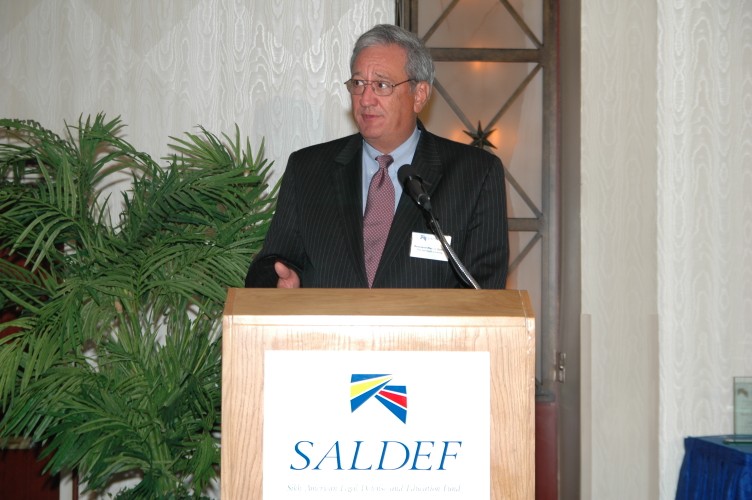 The Reverand Dr. C. Welton Gaddy, President of the Interfaith Alliance, set the tone of the evening with his keynote address, “When the next chapter of the Civil Rights struggle is written, not only will there be the names of King and Height, Bond and Parks, there will be the names Singh and Kaur.” Rev. Gaddy reflected on the recent controversy over the turban screening policy, “Your current struggle in the Sikh community, your current struggle with the TSA, highlights the sad challenge that stems from ignorance about religion, and the fear that is eroding the foundation of our Constitution.” Rev. Gaddy praised the efforts of the Sikh community, “Of all of the religious traditions that I know of in this nation, the Sikh community has done a better job identifying itself to the American public than any other religious group.” View Rev. Gaddy”s remarks .
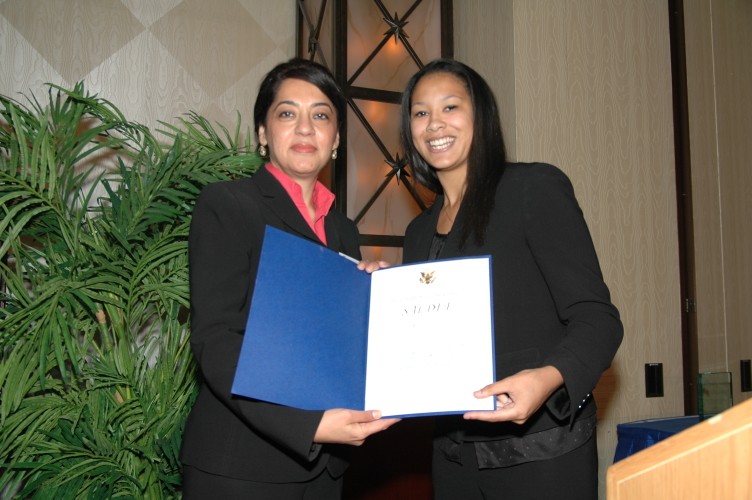 The Office of Congressman Chris Van Hollen (D-MD) presented a Congressional Citation to SALDEF for “working to guarantee civil rights…and encourage[ing] our community to embrace and appreciate its diversity.” SALDEF President Mirin Kaur, accepted the award on behalf of SALDEF and applauded Congressman Van Hollen’s commitment to the protection of Sikh American civil rights in Maryland.
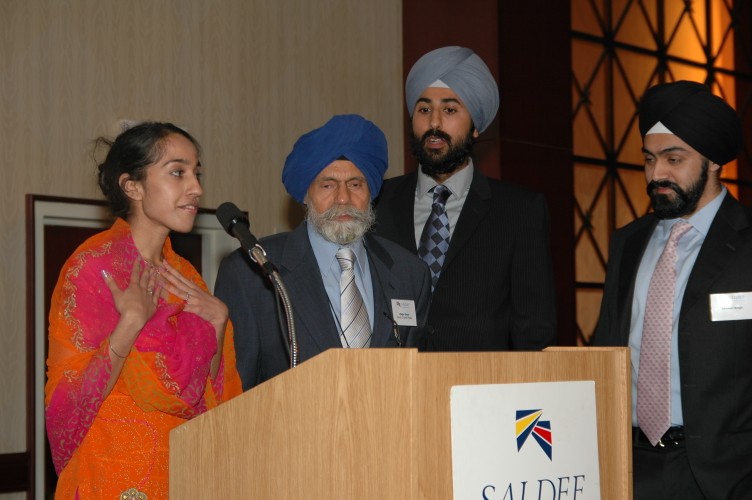 Sardar Ujagar Singh was honored with the Bhagat Singh Thind Community Empowerment Award for his decades of sewa (selfless-service) and dedication to Sikh American youth. Through Camp Chardi Kala, Sardar Ujagar Singh has educated and inspired countless Sikh American youth and filled them with the pride in their faith. Sardar Singh noted the success of his campers and the work SALDEF is doing for the community. Watch Sardar Ujagar Singh”s remarks .
 Danial Sutherland, Officer for Civil Rights and Civil Liberties in the Department of Homeland Security, received the SALDEF Public Service Award for developing a more sustainable relationship between the Arab, Muslim, and Sikh American community and DHS which will help protect minority communities and better safeguard the United States
 Julian Bond, Chairman of the National Association for the Advancement of Colored People, received the Dorothy Height Coalition Building Award for his lifetime dedication to advancing the civil rights of all Americans. Rev. Gaddy praised Julian Bond as “a living example of a reason not to lose hope.” Mr. Bond shared, “You couldn’t help but sit through this evening and not recognize the commonality between us. If you are a human being you have equal rights, and those equal rights must be respected not only by your fellow humans, but by the states in which you live. It is encouraging to see others struggling for this common cause.”
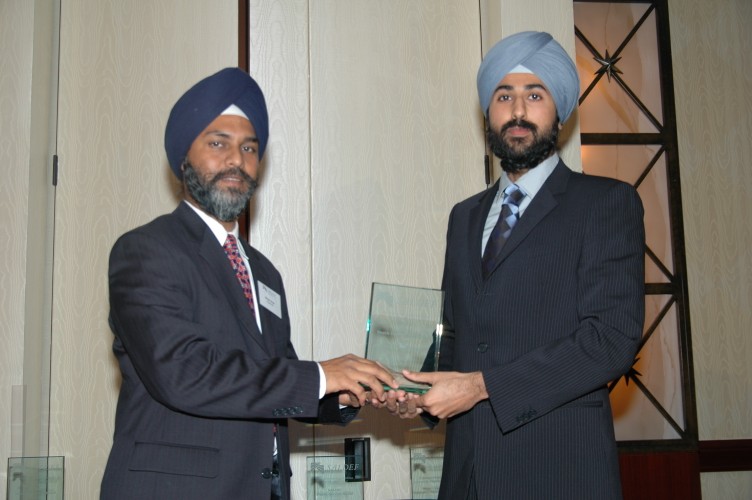 Sukhman Singh Dhami and Jaskaran Kaur, were both recognized with the inaugural SALDEF Youth Leadership Award as co-founders and co-directors of ENSAAF a premier Sikh human rights organization, dedicated to the struggle for justice of our brothers and sisters in Punjab and across the world. Their dedication to the cause of justice and equality is a true inspiration for young Sikhs across the country.
Community Groups Are Cautiously Optimistic, Insist that the TSA Implement Safeguards Against Profiling
October 17, 2007: Washington, D.C. – The Transportation Security Administration (TSA) yesterday announced a new security screening procedure that will apply to all religious head coverings at U.S. airports. The new procedures will go into effect on October 27, 2007. The new procedures, designed to detect non-metallic objects, do not allow a TSA screener to touch a Sikh”s turban without cause unless the Sikh traveler gives the screener permission to do so. The change is a direct response to the concerns raised by Sikhs and Sikh organizations, including the Sikh American Legal Defense and Education Fund (SALDEF), the Sikh Coalition, and UNITED SIKHS over the last two months.
The New Procedure for Detecting Non-Metallic Threat Items
The TSA has instituted new additional screening procedures for non-metallic threat items, like plastics or chemicals. These procedures come into effect after a traveler clears a metal detector. If a screener believes the passenger”s clothing is “bulky” and may be able to hide a non-metallic threat item more easily than form-fitting clothes, the screener can do an additional screening procedure. “Bulky clothing” can include items like jackets, shoes, flowing clothing, or non-form fitting headwear.
Under these procedures, a Sikh”s turban will not be touched during additional screening, unless the Sikh traveler permits it.
Instead, if the Transportation Security Officer (TSO) believes a Sikh”s turban needs to be screened, the passenger now has three options:
The passenger can have his/her head covering patted down in public or in private by TSA personnel;
The passenger can pat down his/her own head covering in public or private, and then have his/her hands swabbed with a cotton cloth to check for chemical residue; or
The passenger can opt to go through a “puffer machine,” if one is available at that airport.
A TSO should always offer a traveler a private area for the secondary screening of his/her religious head covering.
The option of a self-pat down by a passenger will not be pro-actively offered by the TSA screener. Sikh travelers must tell the TSO that they would like to pat-down their own turbans, or must first refuse to allow a TSA screener to do the pat-down, before being told that they have the right to pat their turban themselves.
A Sikh turban or other religious head covering may only be asked to be removed if the traveler wearing it does not successfully clear the additional screening after undergoing one of the three screening options.
Please remember that, along with the new procedure, all travelers must still clear metal detectors. That means that if a Sikh”s turban sets off an alarm while going through the metal detector and/or a metal-detecting wand, the TSO may ask to pat the turban down. If this happens, please request a private screening area for the pat-down.
How Is This New Policy Any Better Than the Post-August 4th Policy?
The new procedure is encouraging and addresses the Sikh community”s concerns in the following ways:
Turbans will not be listed in any TSA guidance as an item that should be subject to additional screening.
The TSA recognized that security screeners should not be allowed to touch a Sikh”s turban indiscriminately, and should seek explicit consent before doing so, if no alarm has been set off.
By accommodating religious head coverings, the TSA has acknowledged the distinction between secular and religious garb, including the Sikh turban.
Before the Thanksgiving 2007 travel season, all 43,000 TSA screeners will undergo the following mandatory training about Sikhs:
View : Sikh American Cultural Awareness Training for Law Enforcement. [To watch On Common Ground ]; and
Receive copies of the Common Sikh American Head Coverings poster. To view a copy of the poster click here.
SALDEF, the Sikh Coalition, and UNITED SIKHS, are encouraged by the steps the TSA is taking to fix the faulty procedure. We thank both the TSA and Department of Homeland Security for their collaborative efforts in finding a solution that guards national security and protects the civil liberties of all people of faith.
Continuing Concerns
Nevertheless, there are some pressing concerns about the implementation of the new procedures.
To ensure national security, screeners have been given discretion on when to perform the additional screening. Some screeners could use this discretion in an inappropriate manner and single out or harass travelers of a certain national origin or religion. Sikh civil rights groups remain concerned that the new procedure could lead to religious profiling of our community. We will continue to press the TSA to collect data that demonstrates that the new procedure does not disproportionately affect any specific national origin or religious groups.
In addition, even if Sikhs are not subject to disproportionate scrutiny, we are concerned about the negative perception created when a Sikh is pulled aside for additional screening. With the three options, a passenger can request the most comfortable screening method for himself/herself. We will continue to work with the TSA to minimize the humiliation that some Sikh travelers could feel when their turbans are screened.
We are also concerned that, because the screening options are not being mentioned early in the additional screening process, many Sikhs may feel pressure to submit to a screener pat down even though they have a right to refuse it and pat down their turban themselves. We strongly believe that screeners should offer the option of a self-pat down at the beginning of the additional screening process.
Finally, while our organizations also welcome the options for secondary screening, we recognize that the ideal solution is for the TSA to install “puffer” machines or other detection technology at all airports. This would help avoid the need for additional screening that involves the handling of religious head coverings like the Sikh turban. We will continue to press the TSA to install “puffer” machines and other detection technology in all airports.
SALDEF, the Sikh Coalition, and UNITED SIKHS will continue to monitor implementation of the new procedure in the coming months. We will take all necessary action to ensure that Sikhs are not singled out for extra screening due to their religious practices.
New procedure sensitive to Sikh turban and other religious head coverings Washington, DC: October 16, 2007 – This afternoon the Transportation Security Administration (TSA) announced a new security screening policy that will go into effect at U.S. airports on October 27 and apply to all religious head coverings. The change is a direct result of collaboration between TSA, Department of Homeland Security (DHS) officials, the Sikh American Legal Defense and Education Fund (SALDEF) and other Sikh organizations in response to the concerns of the Sikh American community over a procedure implemented on August 4, 2007. The August 2007 procedure disproportionately targeted Sikhs for secondary screening due to their turban, an article of faith, like the Jewish kippah (yarmulke) and Muslim hijab. The turban is an integral part of the Sikh faith and identity, and removal of the turban in public is akin to a strip search. The procedure resulted in Sikh travelers being forced to undergo an invasive pat down or removal of the turban. The turban was the only religious article listed as potentially requiring additional screening. Furthermore, the procedure may have resulted in a misallocation of national security resources due to the heightened focus on Sikh passengers solely because of their religious practice of wearing a turban. “The new policy is encouraging and addresses most of the concerns of the Sikh American community,” said Kavneet Singh, SALDEF’s Managing Director. “Our collaboration with TSA has resulted in a solution that strengthens TSA’s ability to protect our nation’s airports, while also respecting the civil liberties of all travelers of faith. We will continue to work closely with TSA to ensure that the implementation of the new procedure does not result in the inappropriate profiling of Sikhs and other travelers of faith.” Under the new procedure, a Sikh traveler’s turban will be accommodated during the screening process by providing additional options to satisfy the security requirements. According to TSA, the revised procedure states: “TSA will now include the screening procedures for headwear within the overall category of bulky clothing and will not call it out as a separate category. Removal of all headwear is recommended but the rules accommodate those with religious, medical, or other reasons for whom removing items is not comfortable. Transportation security officers have several options for screening passengers who choose not to remove bulky clothing, including headwear.” Additionally, all 43,000 TSA screeners will undergo Sikh cultural awareness training before the Thanksgiving holiday travel season.
Local Sikh American community and SALDEF work together to secure apology Washington, DC: October 12, 2007 – Yesterday, the Sikh American Legal Defense and Education Fund (SALDEF), the nation’s oldest and largest Sikh American civil rights and advocacy organization, received a formal apology from Mr. Jaipal Reddy, Chairman and CEO of Radio Salaam Namaste in response to complaints from the Sikh American community in Texas and a letter from SALDEF. On the evening of October 6, 2007, Radio Salaam Namaste DJ’s Sadat and Talha made several jokes and disparaging remarks about ‘Sardars’ (male members of the Sikh faith). They then encouraged listeners to call-in to the station with more jokes about members of the Sikh faith. “Your comments demonstrate a significant lack of judgment and professionalism and perpetuate an extremely hurtful and demeaning stereotype about members of the Sikh faith. [Additionally] such stereotypes not only directly affect Sikh American listeners, but also color the perceptions of your listeners and affect their relationships with members of the Sikh American community,” wrote SALDEF to the DJs and station management. In addition to the written apology, Radio Salaam Namaste is playing a taped apology on the air every hour. Listen to the apology here. “We appreciate the prompt response from Mr. Reddy and his willingness to meet with members of the community,” said SALDEF National Director, Rajbir Singh Datta. “This resolution is a prime example of the positive results that come from community partnership and action.” SALDEF would like to acknowledge and thank Manmohan Singh of World Sikh Council for working locally with the radio station and facilitating a meeting with local community members and the station.
SALDEF commends Montgomery County Police for efforts in apprehending alleged perpetrators Washington, DC: October 4, 2007 – Yesteday, the Sikh American Legal Defense and Education Fund (SALDEF), the nations oldest and largest Sikh American civil rights and advocacy organization, was informed that five teens have been arrested in connection with a string of attacks in Burtonsville, Maryland. SALDEF spoke directly with Chief Thomas Manger of the Montgomery County Police Department who discussed the arrests and indicated that additional arrests are expected. On September 15, 2007, two Sikhs, Darshan Singh Sarang and Bhupinder Singh Nibber, were walking near their home when they were approached by a group of six young men. One of the teenagers struck Mr. Sarang on the side of his face, fracturing his eye socket and causing him to fall to the ground. When Mr. Nibber threatened to call the police, he was also assaulted by the group. Additionally, on September 16, 2007, a Muslim American man also from Burtonsville, was accosted in a similar incident by a group of teenagers while he was standing in front of his apartment complex. This individual informed SALDEF of the attack in order to determine if the attacks were linked. It has also been reported that a third victim experienced a similar violent attack days after these two incidents. “We are pleased to hear that arrests have been made in these string of violent attacks,” said SALDEF Managing Director Kavneet Singh. “The Sikh, Arab, and Muslim American communities have been waiting anxiously over the past 2 weeks. We commend the Montgomery County Police Department for their steadfast dedication to bringing these assailants to justice and showing that hate will not be tolerated in Maryland.” While this is a positive development, and SALDEF continues to work with Montgomery County officials, we urge the community to be vigilant by taking precautions and not placing themselves in vulnerable situations. SALDEF encourages the community to join SALDEF’s programs to broaden awareness of the Sikh faith and community across the State of Maryland, especially for non-Sikh youth. To read more about this incident: